Kirstin Downey: Hawaiʻi Is Rich With History, But Not Historical Markers
The islands rank last among the states for erecting monuments to significant events and places.
September 26, 2025 · 7 min read

About the Author

Hawaiʻi was and is home to iconic heiau, world-famous battlefields, the nation’s only royal palaces and the arrival site of waves of immigrant groups who transformed the population, culture and cuisine of the islands.
But history, even of the most remarkable events, is often swept away in the islands and then forgotten.
Here’s a concrete example: Hawaiʻi has fewer historical markers than any other state.
Hawaiʻi has only 251 historical markers, spread across 6,422 square miles, according to the Historical Marker Database. That’s one for every 25 square miles.

Ideas showcases stories, opinion and analysis about Hawaiʻi, from the state’s sharpest thinkers, to stretch our collective thinking about a problem or an issue. Email news@civilbeat.org to submit an idea or an essay.
States of about the same size seem to treasure their history more, and they show it by erecting public markers that share information about their heritage and culture.
Connecticut has 2,807 markers, Massachusetts 3,406, New Jersey 4,715, and Delaware 1,825, according to the database.
Even tiny Rhode Island, one-quarter the size of Hawaiʻi, has 822, more than three times as many.
“Hawaiʻi, compared to other states, is 50th,” said Devry Becker Jones, a Washington, D.C.-based historian who tracks the numbers.
More Markers On Big Island Than Oʻahu
In an interview at a coffee shop on Capitol Hill, Jones discussed how other places take more forceful and sustained action to recognize their significant sites. State agencies or historical societies erect markers or monuments in conjunction with the state Department of Transportation. These plaques, which can be cast in metal or carved in stone, typically cost $2,000 to $10,000 to erect. They can also be smaller and cheaper.
Almost all large cities have historical preservation commissions that perform this work as well. But Honolulu’s has been in existence for only two years.
Jones cautioned that the database listing for Hawaiʻi may be incomplete, and asked people who know of sites that are marked but don’t appear in the list to share that information with the database’s coordinators.
But it’s not good to be ranked lowest in the country.
Hawaiʻi island shows considerably more respect for its past than Oʻahu, even though many people would argue that more earth-shaking events have happened in Honolulu than say, Hilo or Kailua-Kona.
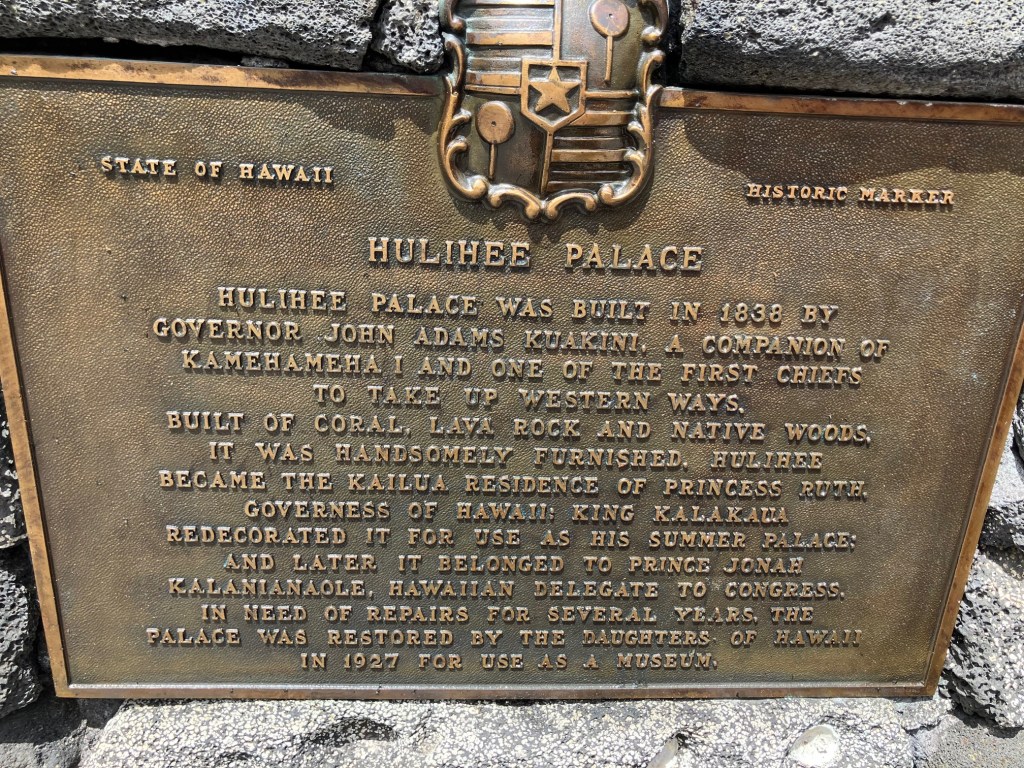
Of the state’s 251 markers, 114 are on the Big Island, mainly commemorating Hawaiʻi’s ancient past, life events of the members of the Kamehameha family and places associated with Hawaiʻi Volcanoes National Park.
Only 91 are on Oʻahu. Most feature aspects of World War II history, such as which ships were located where at what times. Others commemorate early Christian history, often erected by missionary descendants. There are some scattered monuments to famous people, including King Kamehameha downtown and Prince Jonah Kūhiō Kalanianaʻole and King Kalākaua in Waikīkī.
The urban core of Honolulu has a lot fewer than you’d expect.
“It’s not very high, to be honest,” Jones said. He thinks that is odd, given Honolulu’s ethnically diverse history, which he called “unique to any state.”
Are historical events in these other places on the continent more important than what has happened in Hawaiʻi? Are we more negligent about our history? Or are we actually less respectful to other cultures than we pretend to be?
More Recent History Less Valued
Bill Chapman, an architecture professor at the University of Hawaiʻi who leads the school’s historical preservation program, thinks part of the problem is that Hawaiʻi is so conflicted about its history.
He said that the Hawaiian Renaissance movement made much of its subsequent colonial history “suspect,” with many Native Hawaiians more interested in preserving the ancient past than, for example, memorializing the monarchy period.
“They look at it with somewhat jaundiced eyes,” he said.
That wasn’t true in the past, he said, noting for example, that there was wide public support in the 1980s for preservation of the historic buildings at Volcano House, led by architect and historian Boone Morrison, even though that park was established in the territory era.
“Everybody saw it as a common cause,” Chapman said.
But history is always contentious and views of it change with the times. Markers in Southern states commemorating Civil War veterans have been torn down in the past five years. The Cook monument at Kealakekua Bay, though once supported by the Hawaiian monarchy, has been repeatedly vandalized.
Markers can be seen as political statements and fall from fashion.
In Hawaiʻi, much of the historical marker construction has come from efforts related to tourism, Chapman said.
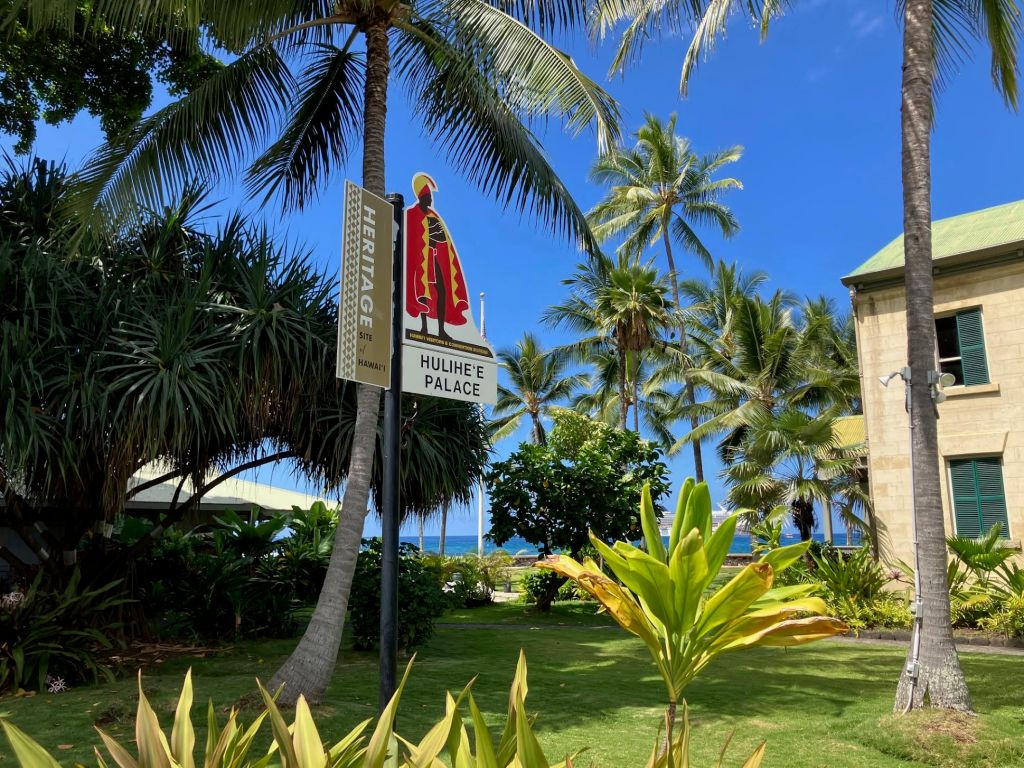
During the 1930s, the Hawaiʻi Tourist Bureau erected what are called the “warrior markers,” which are painted metal signs showing a warrior, mounted on a pole, that point to historical or scenic sites around the islands. Within five years, they had erected at least 25 on each island, Chapman wrote in his book, “Architectural Conservation in Australia, New Zealand and the Pacific Islands.”
Some people in Hawaiʻi are hoping to use historic markers better than that, ideally to richen and deepen people’s understanding of the islands’ past. Much more thorough interpretation is needed in Chinatown, for example, and in explaining plantation life and its ethnic diversity in once-rural areas.
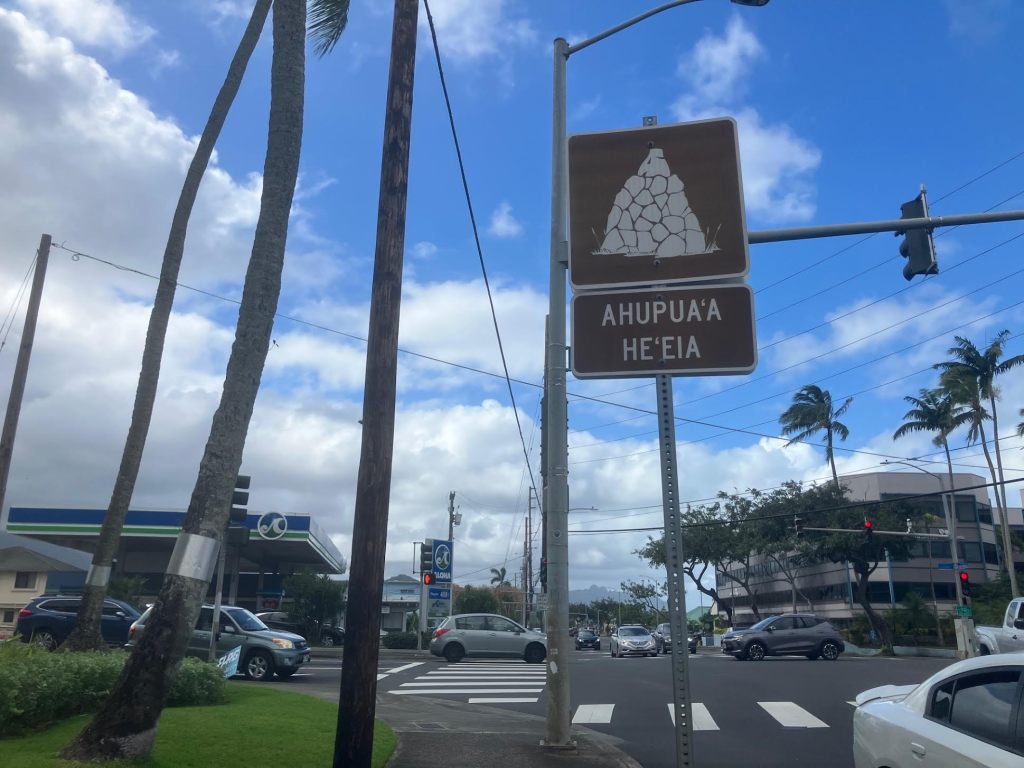
Community activist Mahealani Cypher has been working on establishing markers indicating the sites of traditional Hawaiian boundary lines, known as ahupuaʻa.
The Lei Pua ʻAla Queer Histories of Hawaiʻi project, meanwhile, is establishing historical markers around Honolulu celebrating milestones in Hawaiʻi’s gay history.
Some of these new initiatives have not yet appeared in the Historical Marker Database.
A Battle Worth Remembering
This has all led me to wonder: What properties in Hawaiʻi deserve historical markers that don’t have them?
There is one I would propose.
A monumental battle was fought near what is today known as Pearl Harbor, in an event that changed Hawaiʻi’s history.
In 1794, Kalanikūpule’s warriors on Oʻahu clashed with, and defeated, the army led by Kauaʻi chief Kāʻeokulani, more familiarly known as Kāʻeo. Kāʻeo had spent years fending off Kamehameha’s attacks on Maui and Molokaʻi on behalf of Kalanikūpule and his father Kahekili.
Kahekili, the fierce warrior from Maui who conquered Oʻahu, is vividly depicted in Jason Momoa’s new series, “Chief of War.” Kalanikūpule became chief of Oʻahu when his father died. But then personal ambitions set in, and Kāʻeo and Kalanikūpule, who were uncle and nephew, became enemies.
According to the historical accounts, this family squabble turned deadly. Kalanikūpule killed Kāʻeo and conquered his army in December 1794 with the help of cannon-wielding British ship captain William Brown. The Oʻahu chief then proceeded to kill almost all the survivors.
But Kalanikūpule’s forces were so depleted by the struggle that Oʻahu became an easier target of attack for Kamehameha, when he finally invaded Oʻahu the next year, in 1795. That campaign is much better known, culminating as it did at the Pali lookout and the creation of a largely unified kingdom.
That is well marked at the Pali lookout.
But where did the epic clash occur that destroyed Kāʻeo’s army and paved the way for Kamehameha’s victory?
It’s believed to have happened somewhere near the site of Pearlridge shopping center. That would be a great place for a historical marker, representing as it does the history of Oʻahu, Kauaʻi and Maui.
What do you think? What places in Hawaiʻi deserve markers and don’t have them?
Is this a role that Oʻahu’s Historic Preservation Commission could or should be playing?
 Sign up for our FREE morning newsletter and face each day more informed.
Read this next:
Local reporting when you need it most
Support timely, accurate, independent journalism.
Honolulu Civil Beat is a nonprofit organization, and your donation helps us produce local reporting that serves all of Hawaii.
ContributeAbout the Author