Scott Nago's Bumpy Ride As Hawaiʻi's Chief Election Officer
He’s held the job longer than anyone else in state history and been at the center of controversy nearly every election cycle.
September 14, 2025 · 13 min read

About the Author

On Feb. 19, 2010, an editorial in the Honolulu Star-Bulletin welcomed the appointment of a new chief election officer for Hawaiʻi.
Under the headline “Go, Nago, Go,” the article wished all the best for Scott Nago, a 12-year veteran of the Hawaiʻi Office of Elections who had just assumed the top job under trying circumstances.
Looming ahead that year was an unresolved budget shortfall for the office, the search for a vendor to install new voting machines, a special election in late May to pick a new U.S. representative and competitive races for governor and other major offices in the primary and general elections.
Fifteen years later, Nago is still at his post, having received primarily positive job reviews over the years from the Hawaiʻi Elections Commission and earning hefty pay raises along the way. Except for a stint in 1998 working at the Legislature, the elections office has been Nago’s only employer for 27 years.
But the words “Go, Nago, Go” have taken on a new context. A three-member panel of the commission last month recommended that Nago be fired.

It’s not the first time that calls for Nago’s removal have arisen. This one comes after a different three-member commission panel found vote discrepancies in the 2024 Kauaʻi County general election results. A third panel is looking into allegations that the Hawaiʻi County election might also show discrepancies in what the county counted versus what the state officially reported.
Nago has been at the center of election controversy nearly every election cycle since he became chief election officer.
While he has been credited with shepherding in the state’s conversion to mail-in balloting and other major election reforms, he’s also come under repeated condemnation for his performance over polling places lacking ballots, poor communication and — in one prominent case — the scheduling of a makeup election.
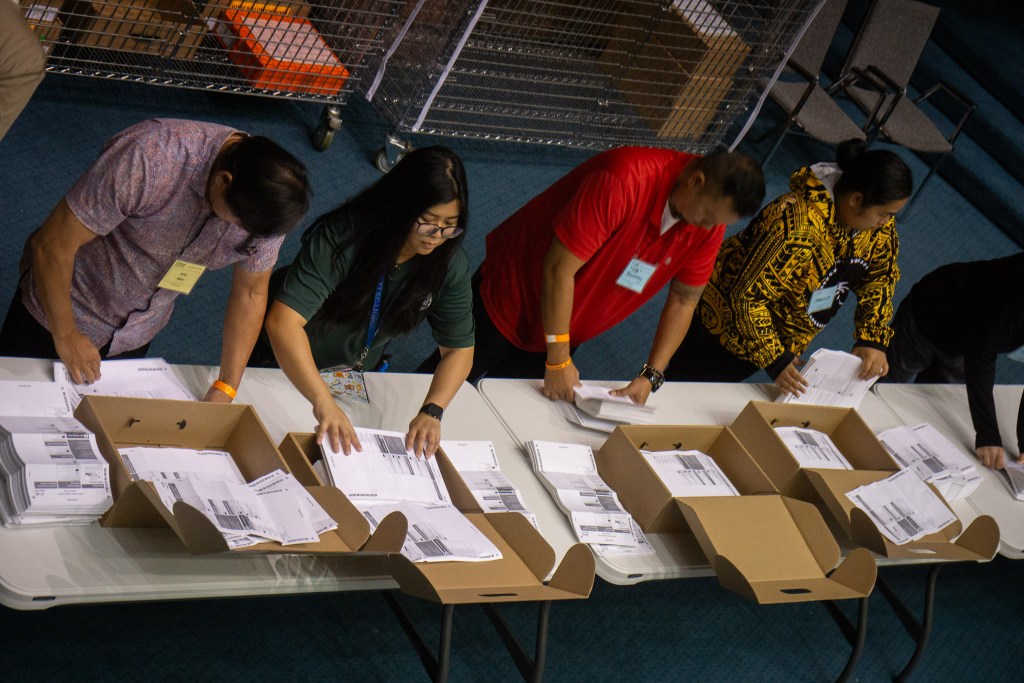
The complaints, which began during Nago’s first year on the job, have come from voters, candidates and elected officials of both parties.
Nago’s tenure coincides with growing discontent nationally among many Republicans, including President Donald Trump, over the way elections are conducted, and a vigorous response from Democrats who defend mail-in balloting and traditional redistricting processes.
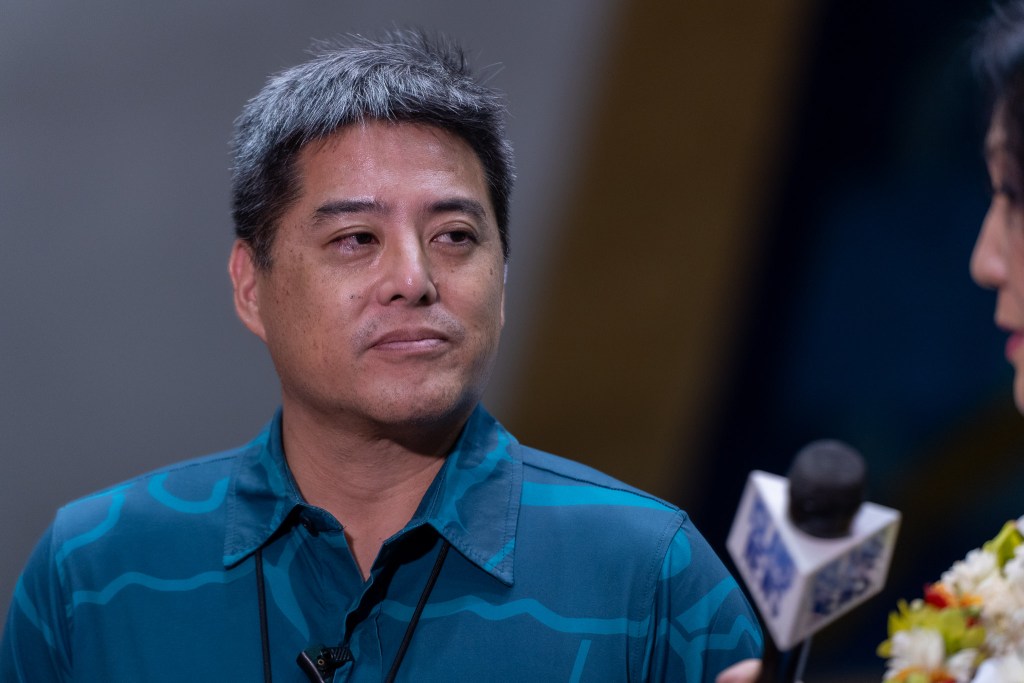
Asked about his current situation and the years of criticism, Nago said he does his best to take it in stride and respond as necessary.
“I think it comes with the job, and it’s just how you deal with it,” he said in a recent interview. “I want to keep my job, of course. I love my job.”
Nago, 51, is a 1992 graduate of Punahou School and a 1997 graduate of the University of Hawaiʻi Mānoa, where he earned a bachelor’s degree in political science. He worked for Rep. Scott Saiki in the 1998 session and went to work later that year at the Office of Elections. Nago’s work centered on ballot operations that included being in charge of candidate filings and proofing and printing ballots.
A dozen years later he was named interim chief elections officer, replacing Kevin Cronin, who had quit the post Dec. 31 after losing the support of the four county clerks who directly oversee the elections for each island.
There was a sense that Nago, then just 36, would restore confidence in the position after Cronin’s time in office, which was described in media reports as tumultuous. Cronin’s predecessor, Dwayne Yoshino, had also come under fire for his job performance, including being sued by a Democratic governor.
At the time of his sudden promotion, Nago led the office’s counting center. The interim appointment in January was called “a sensible choice” in a Honolulu Advertiser editorial, given Nago’s years of experience on the office staff.
In February, the Elections Commission made Nago the official chief. William Marston, chair of the commission, said at the time, “He’s a good man. He’s already shown his worth, and he has our support 100%.”
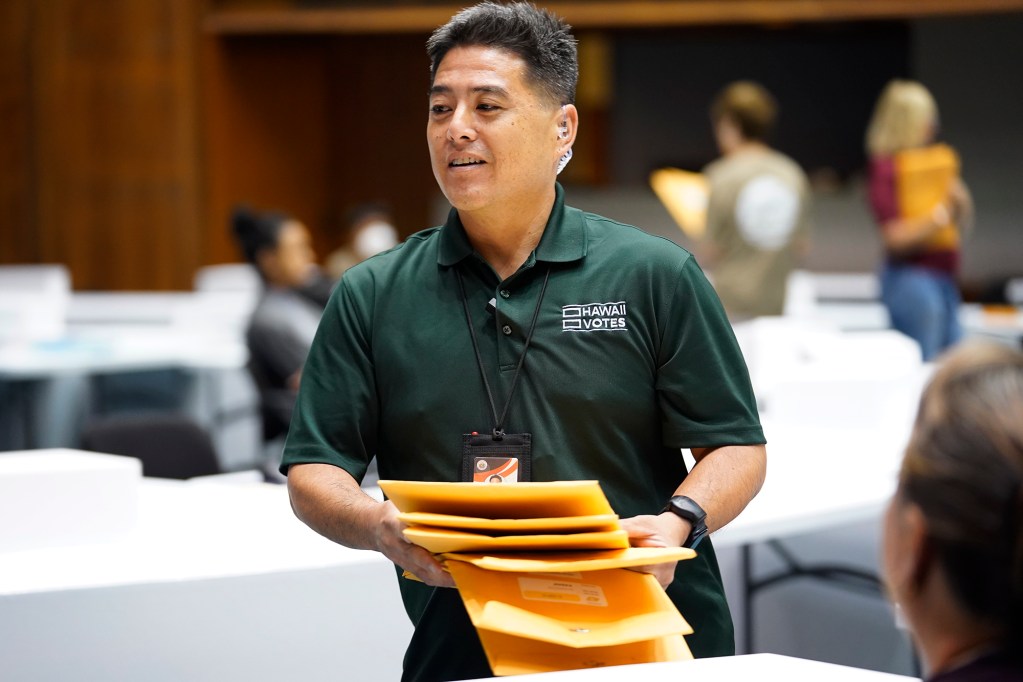
A Shortage Of Ballots
Just two years after he was named chief election officer there were already calls to fire him.
In the 2012 general election there was a lack of ballots provided at dozens of polling places, including in East Honolulu and Mililani and on Kauaʻi and the Big Island. Some suspected the shortage was intentional.
In a letter to the Honolulu Star-Advertiser Nov. 12, Warner Kimo Sutton of Waiʻalae wrote, “This total failure by the elections chief, Scott Nago, should be a possible reason to fire him and look at re-introducing responsibility for elections to the lieutenant governor’s office.” He said the “snafu” further reduced the state’s already low turnout rate and fueled conspiracy theories.
A Star-Advertiser editorial later that month said “the public needs clearer answers” from Nago “as to why the ballot-supply formula failed to anticipate demand, and why it took so long to respond to the request for more ballots.” The editorial also praised mail-in balloting, but noted that it was not perfect and needed reform.
Nago later told the Elections Commission that his office had identified the problems with the ballot shortfall and corrected them. He was, he said, focusing on the 2014 elections.
A Storm Stops Voting
Just days before the Aug. 9, 2014, primary, Tropical Storm Iselle was moving toward the Big Island. The big race on the ballot that year was a primary showdown for the U.S. Senate between Brian Schatz and Colleen Hanabusa.
Iselle prompted the closure of roads in the Puna region and left the area — home to 8,255 registered voters — isolated. Nago, in consultation with the attorney general, canceled voting at Hawaiian Paradise Park Community Center and Keoneopoko Elementary School just two days before the election.
A makeup election for the area was held Aug. 15, but many homes were still without power and fallen trees limited access. There were also reports of counting glitches on Maui. Some 800 mail ballots went uncounted until they were discovered four days after the primary.
Schatz ended up beating Hanabusa by a mere 1,782 votes.
At an Elections Commission meeting the following week, state lawmakers and concerned citizens accused Nago of disenfranchising voters.

“How many mistakes and how many errors are we going to allow?” state Sen. Sam Slom asked after calling on the commission to fire Nago.
Russell Ruderman, a Democratic state senator representing Puna, also called for Nago’s removal, as did the area’s House member, Democrat Joy San Buenaventura.
An Elections Commission investigation concluded that Nago acted appropriately in response to primary election problems in Puna. But the Big Island Press Club in March 2015 bestowed its annual Lava Tube dishonor on Nago for “lack of communication” during the 2014 primary.
The following year, in 2015, the Legislature passed a bill mandating a performance evaluation for the chief election officer after every general election, including a public hearing on the performance and possible reappointment. The measure also ordered a statewide standard for the distribution of absentee ballots.
That July, the commission gave Nago a pay bump of $10,000, raising his annual salary to $90,000. It was his first raise since taking over the agency. Nago currently earns $131,664.
Nago was also appointed in a 6-3 vote to another four-year term. Chair Marston said Nago should not be blamed for problems that occurred in the 2012 and 2014 election.
That shocked Slom, the GOP senator, and Republican Rep. Gene Ward, who wrote in a Star-Advertiser column later that month, “What are the people of Hawaiʻi to think of its government rewarding a chief elections officer with a checkered history of competence by giving him a $10,000 pay raise?”
‘Election Security’ Critical
Ballot counting problems persisted, though they were not widespread. In November 2018, former state Rep. Tommy Waters lost a Honolulu City Council race to incumbent City Council member Trevor Ozawa by just 22 votes. He filed a complaint with the Hawaiʻi Supreme Court charging that Nago and Oʻahu county clerk Glenn Takahashi miscounted or misapplied 39,610 votes in the contest.
The court invalidated the results. In a special election in April 2019, Waters defeated Ozawa 17,491 votes to 16,487.
Later that year, county clerks on Maui, Kauaʻi and Oʻahu geared up to modernize their vote-counting systems in anticipation of the state conducting its 2020 election primarily with mail-in ballots. Honolulu, which had modernized its vote counting in 2014, planned to buy eight to 10 half-ton drop boxes for ballot deposits.
“Election security is of great importance for election officials and voters alike,” Nago wrote in a March 2020 Civil Beat Community Voice explaining how the new voting process would work.
More glitches followed, though. More than 900 primary ballots were not counted because they were received after deadline. And on Election Day in November, thousands of voters waited for hours in line outside the state’s eight voter centers to cast their votes in person.
The next month Nago told the elections commission he planned to ask the Legislature for changes to make the voting system easier, including opening more in-person voting sites.
The 2022 election went more smoothly, then-Elections Commission Chair Scotty Anderson told the Legislature. There was no evidence of fraud or errors, he wrote in his report to the Legislature in December 2022.
“We are very proud of the job done by Chief Election Officer, Scott Nago, and his entire team of staff and volunteers,” Anderson said.

Two years later, in January 2024, one of Nago’s biggest critics, Ralph Cushnie from Kauaʻi, was appointed to the Elections Commission. Cushnie had long sought Nago’s removal and now his concerns are being taken more seriously by some members of the commission.
That same year, Michael Curtis became the commission’s chair. The unabashed animosity between Curtis and Kushnie has pushed dysfunction on the commission to new levels, fueled by rising complaints primarily from conservative factions about possible voter fraud including the chain of custody of ballots, ballot count discrepancies, signature authentication, computer hacking and vote certification.
Last month, one of the commission’s investigative panels concluded that Nago, as the head of the mail-in voting system, had created a culture of “us versus them” — or official versus public — that is manifested at the county level.
“He creates controversy over simple requests for information and suppresses the facts from the public,” said a report written by Cushnie and commissioners Dylan Andrion, long a Nago critic, and Lindsay Kamm. “The officials seem to think they only need to satisfy themselves about election accuracy. They feel free not to produce records or to explain them, and the rest of us are expected to take their word for it.”
Firing Nago, the report said in its recommendation, “would enthusiastically rebuild the Office of Elections to serve the public and restore its trust.”
Asked for comment on his performance as chief elections officer, Nago said, “We have to make split decisions with what information that we have. If we had more time, we would make better decisions, but we have to go with what we have.”
‘He Got The Job Done’
Nago does have his defenders. Janet Mason of the league of Women Voters of Hawaiʻi has known and worked with him since 1996.
“I don’t think he’s incompetent, and I certainly don’t think he’s corrupt, and that’s what I hear a lot — especially the people who come to testify online without any proof of those charges,” she said.
Mason said Nago has been faced with “one kind of external emergency after another and it hasn’t always gone smoothly but he stepped up to it.”
She singled out the responses to Iselle and the Covid-19 pandemic and also having to implement and defend an election system and laws that are not of his design but rather the creation of the Legislature.
“I do think it’s been a situation where perhaps you didn’t get the emergency result right away, but given enough time and resources, he got the job done,” she said.

Nago’s communication style has not helped his reputation, however.
“It’s not forthcoming,” she said. “He doesn’t seem to enjoy talking to the media and so forth.”
Terse might be another word to describe that style. He does not often talk at length, at least not in public.
“It’s something that I hear, and I understand that. It’s just something I’ve got to get better at,” Nago concedes.
Still, people he’s worked with say Nago is well-versed in election law and dutifully follows those laws. He does not, one former co-worker said, let personal or political views get in the way.
By law, elections staff are not allowed to advocate or aid in the election or defeat of any candidate for public office. The chief election officer also must refrain from financial and business dealings “that tend to reflect adversely on the individual’s impartiality, interfere with the proper performance of election duties, or exploit the individual’s position.”
Nago says his role is to follow the laws including deadlines.
An example of that, he said, was the 2020 election, when the elections office still had to implement mail-in balloting even though the state was suffering through the first six months of Covid. The Legislature had initially called for a pilot program on Kauaʻi but later decided to make it statewide — a decision made well before the virus was first detected in the islands that March.
“You didn’t have to file your taxes that year,” he recalled. “There was an extension on things. We didn’t get an extension. We had to operate as normal, like it was happening, even though nothing else was happening in the state.”
If the public pressure on him to resign weighs on him, Nago does not show it publicly. He says little during Elections Commission meetings, for example.
“Everybody’s entitled to their opinion and the right to share it,” Nago said.
 Sign up for our FREE morning newsletter and face each day more informed.
Read this next:
Local reporting when you need it most
Support timely, accurate, independent journalism.
Honolulu Civil Beat is a nonprofit organization, and your donation helps us produce local reporting that serves all of Hawaii.
ContributeAbout the Author