Will Bailey: This Historic Stretch Of Puna Coastline Is Worth Preserving
A long-delayed effort to acquire Honolulu Landing takes on new urgency with its real estate listing.
September 7, 2025 · 6 min read

About the Author

They came in person to the Hilo chamber, with others joining from Pāhoa, filling the hearing with
voices that carried memory and urgency.
One of the first to testify was Lehua Kaulukukui, who began by chanting the opening lines of the Kumulipo, Hawaiʻi’s creation chant. She told the council her great-grandmother had been born at Honolulu Landing in 1876, and that the site remains part of a living genealogy stretching from darkness into light, from past into future.
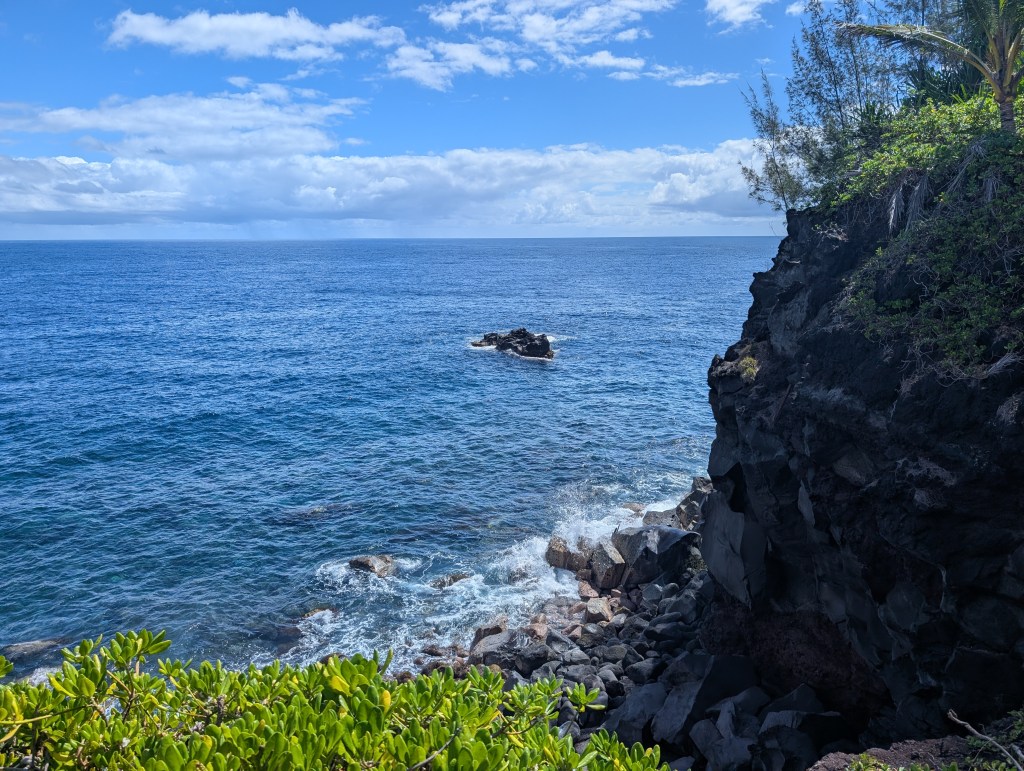
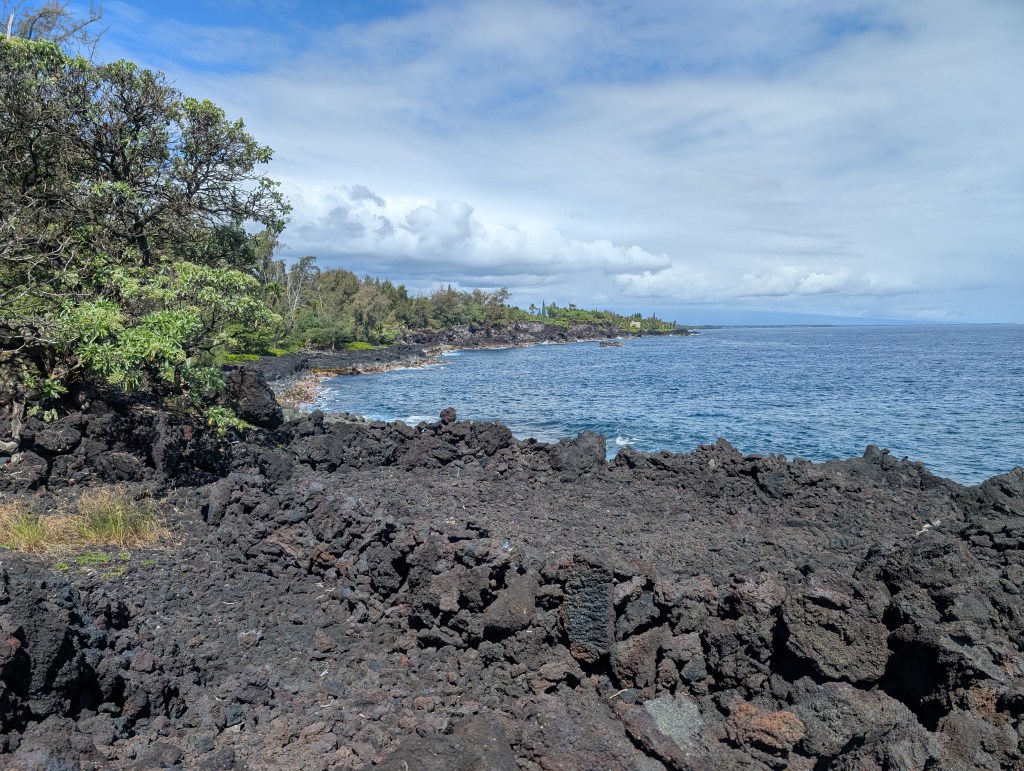
For centuries, Honolulu Landing was a coastal access point within the ahupuaʻa system, where fishing grounds tied directly to farming plots and trails leading mauka. Canoes landed here, and families sustained themselves from reef to forest.
In the late-1800s, as sugar and cattle reshaped Puna, the property shifted into ranchlands. Stone walls and pasture lines from that period still mark the landscape, reminders of how the land was repurposed but never erased. More recently, when lava cut off so many other shoreline places, Honolulu Landing remained one of the few intact windows into Puna’s coastal history.

Ideas showcases stories, opinion and analysis about Hawaiʻi, from the state’s sharpest thinkers, to stretch our collective thinking about a problem or an issue. Email news@civilbeat.org to submit an idea or an essay.
On Wednesday, the Hawaiʻi County Council’s Legislative Approvals and Acquisitions Committee voted unanimously to advance Resolution 286-25, clearing the way for the full council to buy 364 acres of Puna coastline.
The measure urges the county finance director to use the Public Access, Open Space, and Natural Resources Preservation Fund — PONC — to acquire the land, listed for $3.9 million.
The fund holds just under $30 million. What stalled for nearly two decades is now in play because the property is on the open market, vulnerable to private speculation.
‘Living People With A Living Culture’
The testimonies carried the land’s memory better than any report could.
Kaulukukui reminded the council that the ahupuaʻa of Honolulu is not a relic: “To disturb these sites is to break the chain between past and future, between Earth and sky. Between people and the cosmos.”
Another descendant put it plainly: “We are not in the past tense. We are living people with a
living culture.”
She spoke of her children and grandchildren, who deserve a relationship with the land and with their kūpuna.
The resolution itself nods to this truth, calling for lineal descendants to help design and manage
the site’s stewardship if purchased. Protecting the land also means protecting who gets to guide
its care.
Others spoke not of genealogy but of practice.
Amedeo Markoff, who sits on several Pāhoa boards and leads community projects, voiced what
many felt: “The time to act was 17 years ago. The next best time is today.”
He reminded the council that Honolulu Landing was nominated for PONC funding in 2006, ranked high, and then left to languish.
James Kaulukukui Jr., a Vietnam veteran, former DLNR investigator and artist, told his story too. After returning from service in Vietnam, he admitted, “I didn’t know what it meant to be Hawaiian.”
It was only by walking the land, by teaching art, by cutting grass at burial sites and keeping watch along the shoreline that he found his answer. For him, kuleana wasn’t an idea. It was a practice, lived one day at a time.
“Places like this need to be saved,” he told the council.
Memories Of Cattle Drives
Some testimony wandered like a cowboy’s tale and yet stayed right on target.
One longtime ranching family member recalled cattle drives down Government Beach Road, cowboys loading animals onto ships at Honolulu Landing. His account was half laughter, half reverence — proof that this place was both working ground and sacred ground.
Even newcomers spoke with conviction. One resident who has lived in Puna for a decade
worried about market pressures. He warned the council not to miss the chance.
“If we don’t save something, we’re not going to have anything,” he said.
Former council member Eileen O’hara reminded everyone that this fight has spanned decades. She pushed to put Honolulu Landing on the first PONC list in 2006. Eighteen years later, the council is only now moving toward purchase. In the meantime, petitions gathered over a thousand signatures, and still the land sat in private hands until its recent listing.
The county Finance Department has already ordered an appraisal, expected within 30 days.
Deputy Finance Director Malia Kekai said plainly that negotiations cannot exceed appraised
value. If the seller resists, public pressure may be needed. The timeline is two to three months
before clarity.
Not every supporter wanted “improvements.”
One testifier warned against parking lots, porta potties, and anything that might transform Honolulu Landing into a tourist hub: “With Instagram and social media, this area will be flooded with tourists.”
The narrow, one-lane curves of Government Beach Road cannot take 10 times the traffic.
That tension is real: preservation without promotion. Access without erasure. Keeping the
shoreline open for fishers and families without turning it into an attraction for influencers.
A Rare Consensus
No opposition surfaced in testimony. Council member Ashley Kierkiewicz, who introduced the resolution, said the timing was urgent.
“Every other day I hear an influencer online saying, ‘Come buy land with me in Hawaiʻi,’” Kierkiewicz said.
She and others stressed that parcels like this are exactly what PONC was created to protect.
Council member Michelle Galimba called for a progress update in a couple of months, underscoring that delay itself has been the enemy.
This is more than a purchase. It is a choice.
Which Honolulu Landing will define us — the one flipped online as another backdrop, or the one rooted in genealogy, ceremony and memory?
The Kumulipo begins in the deep darkness, when Earth and stars first came into being. When the chant was invoked in the council chamber, it tied a shoreline in Puna to the very origins of life.
On Wednesday, the county finally caught up to its own list from 2006. The time to act was 17 years ago. The next best time is today.
The voices were clear: ancestors, veterans, cowboys, artists, newcomers. They asked the county to keep the chain unbroken.
Now the decision lies with the full council. What kind of island do we want to be when no one’s left to tell the story but the land itself?
Civil Beat’s coverage of environmental issues on Hawaiʻi island is supported in part by a grant from the Dorrance Family Foundation.

 Sign up for our FREE morning newsletter and face each day more informed.
Read this next:

Local reporting when you need it most
Support timely, accurate, independent journalism.
Honolulu Civil Beat is a nonprofit organization, and your donation helps us produce local reporting that serves all of Hawaii.
ContributeAbout the Author