Denby Fawcett: Neighbors Chafe At Shangri La Museum's Plan For More Events
The oceanfront institution is proposing a big increase in the frequency and size of evening receptions.
October 21, 2025 · 9 min read

About the Author

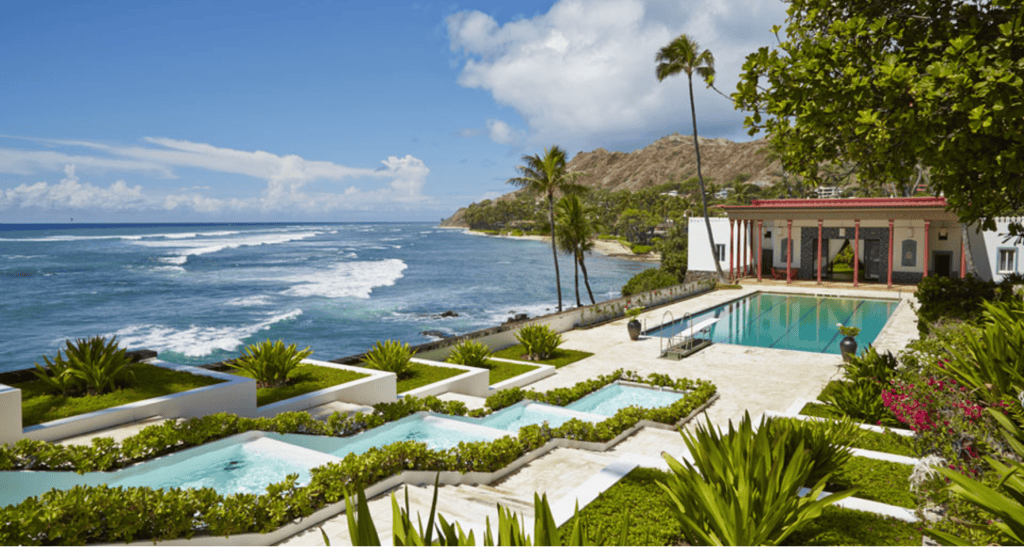
For more than 20 years, the Diamond Head neighbors of Shangri La, the oceanfront estate of tobacco heiress Doris Duke, have been at peace with Dukeʻs dying wish to transform her private residence into a public institution for the study of Islamic art and culture.
They say up until about a year ago their neighborhood has remained mostly tranquil with four shuttle vans traveling up their street during the day to deliver groups of 24 visitors to meetings and tours at the museum, along with only a few nighttime receptions.
But for the first time since Shangri La became a museum in 2002, many neighbors directly adjacent to Dukeʻs property and on its street, Papu Circle, are at odds with the organization and have joined forces to oppose its application for a modification of its conditional use permit to allow a large increase in evening receptions.

Ideas showcases stories, opinion and analysis about Hawaiʻi, from the state’s sharpest thinkers, to stretch our collective thinking about a problem or an issue. Email news@civilbeat.org to submit an idea or an essay.
“I get low level anxiety when I hear the neighbors are upset,” said Ben Weitz, executive director of Shangri La Museum of Islamic Art, Culture and Design for the last two years. “We are not asking for a new Shangri La but to provide more access to the museum.”
Gary Johnson, whose family has lived for more than a century on property directly adjacent to the western border of Shangri La, walked the neighborhood last week collecting signatures of 53 neighbors in 35 homes who oppose the changes.
He claims the museum has not complied with its conditional use permit on various evenings since last year, hosting more large events with louder noise and more traffic congestion and event parking on neighborhood streets.
Bigger Receptions, More Evenings
Johnson and other neighbors showed up at a Waiʻalae-Kāhala Neighborhood Board meeting Thursday to urge board members not to support Shangri La’s application for more nighttime events, as the board appeared ready to do at its Aug. 21 meeting.
Shangri Laʻs current permit allows seven evening events a year with up to 96 guests per event, an annual maximum of 672 evening guests
Its application to modify its permit calls for an increase to 36 evening events — with more people at three different-sized receptions amounting to up to 6,624 evening guests a year. .
Opponents say the evening receptions can be loud and would bring more vans and vendors such as caterers and entertainers into the neighborhood to support the events.
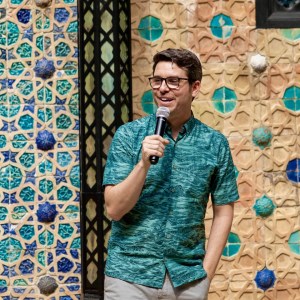
Shangri Laʻs Weitz says “our mission has not changed, All we are asking for is more flexibility to maximize the capacity of the 4.3-acre estate.”
“We are leaning in to becoming more than just a museum,” he said. “Shangri La is becoming an international center for transformation — to promote conversations of local, national and global significance.”
He said the museum aims to expand its reach to allow more people, especially local residents, to experience Shangri La when the temperature is cooler and the estate is most beautiful at sunset.
Visitors to the museum now for the daytime tours are about 60% tourists and 40% local residents.
Shangri La recently launched a partnership with Bishop Museum to provide more options for local residents to visit in shuttle vans from that museum on Saturday daytime tours, as well as the usual tours from the Honolulu Museum of Art.
All money from the tickets to the art tours at Shangri La goes directly back to the museums. Since its inception, Shangri La through the Doris Duke Foundation has given Hawaiʻi $120 million for grants, sponsorships and other contributions to nonprofits.
‘A Small Residential Neighborhood’
Shelby Frangk, the planner at the Honolulu Department of Planning and Permitting reviewing Shangri Laʻs permit modification application, said in an email to Civil Beat that the modifications the museum is seeking in its so-called “CUP application minor” are in fact not minor changes but major, meaning they could prompt a requirement for a public hearing.
Ed McCall, who lives on Kaiko‘o Place, directly adjacent to Shangri La, called the proposed increases in evening visitors “unreasonable”
“I can’t imagine 36 events per year running into the evening some with 250 people at a time,” McCall wrote in testimony to the neighborhood board. “This is a small residential neighborhood, not a venue in Waikiki or downtown Honolulu.”
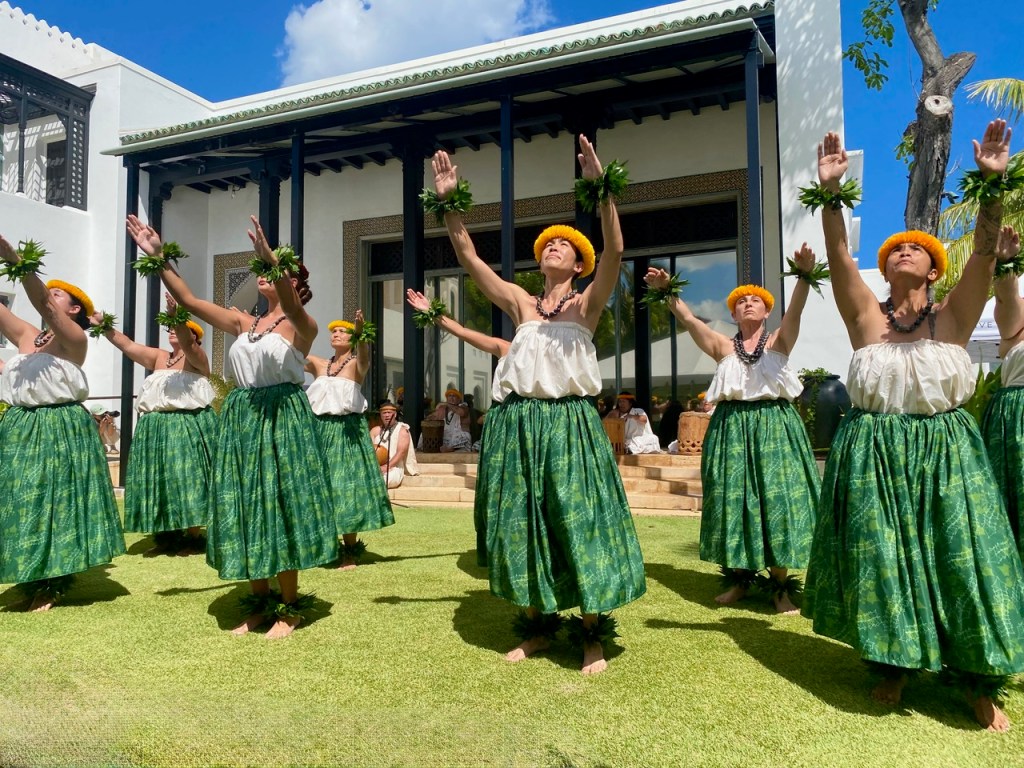
The museumʻs application makes clear that the 36 evening events would be different sizes, some smaller with up to 76 guests. But 12 times a year it wants the ability to host up to 300 people at large gatherings — arriving in 13 vans, an increase in the currently allowed four vans.
Since its inception as a museum, Shangri La has required all visitors on tours or at daytime meetings and evening receptions to arrive by vans to avoid parking issues in the neighborhood. This stipulation would remain the same.
Weitz said as a sign of respect to neighbors, the new permit application stipulates all evening events would end before 9:30 p.m., not 10:30 p.m. as currently permitted.
Weitz said vendors servicing the museum for receptions and other needs are not allowed to park on neighborhood streets, but Hugh Guerrero, whose family has lived on Papu Circle since 1954, said the vendors do not always follow the restrictions. He said he has protographed street activity not allowed by the permit.
Some Neighborhood Support
Not all residents oppose the proposal.
Kahala Diamond Head Neigborhood Security Watch coordinator John White said he gathered signatures from more than 16 residents in favor of Shangri Laʻs visitor and evening event increases.
White, a Papu Circle resident, said Shangri La has been respectful to the neighborhood with frequent receptions for neighbors and offers the community valuable insights into Islamic art and culture.
Architect John Black lives on nearby Kulamanu Place and was among those who wrote in support of the museumʻs plan.
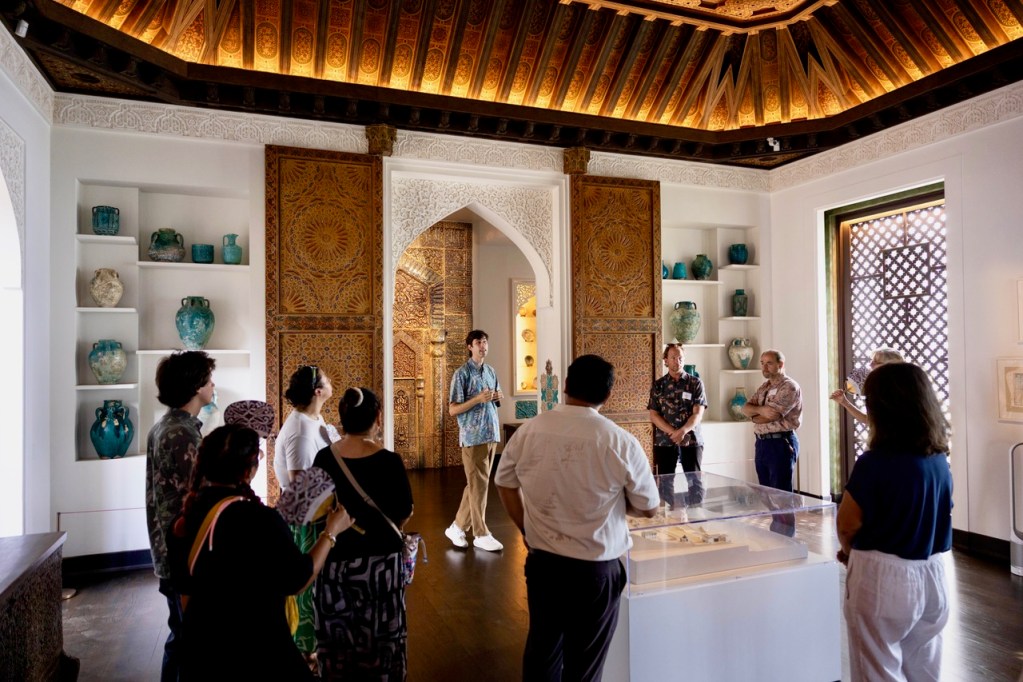
“The proposed changes are thoughtful and considerate, modestly expanding programming while maintaining quiet hours, limiting noise impacts and ensuring access remains by van only,” Black said.
Shangri Laʻs application said the evening events would result in an increase in noise and exterior lights staying on longer, but the museum would make sure the noise meets allowable standards. It has been using a sound level meter to measure the intensity of noise coming from gatherings.
Weitz said after complaints about loud music, the museum moved its events featuring amplified music to the Capitol Modern and Honolulu Museum of Art downtown.
Susan Fuller has lived on Papu Circle directly across the street from Shangri La since 1970 and was there when it was granted its original permit to operate as a museum. She had reservations at the time about allowing a museum in a residential neighborhood but did not object then. Now she does.
She said she is disappointed that the museum did not invite neighbors to a formal meeting to carefully outline the proposed expansion of visitors and evening events.
“This is a major change,” Fuller said. “They should have invited us over to discuss it before they filed the CUP. We received a letter but it had no specifics. A focused meeting with actual numbers would have been the neighborly thing to do like the museum did when there were major changes before such as erecting a fence around the harbor fronting Shangri La to prevent kids from jumping in dangerously.”
‘Not Trying To Pull A Fast One’
Weitz said Shangri La has gone beyond what it was required to do by the Department of Planning and Permitting to inform the neighbors, including sending letters to affected homes in August, weeks before the first neighborhood board meeting. But neighbors said the letters had no numbers to explain the magnitude of the increases.
Weitz said he also he walked door to door on his lunch hour one day to inform neighbors about the proposed changes and Shangri La hosted a pau hana reception for neighbors Aug. 27 before the application was submitted.
Fuller, who attended the pau hana, said no specifics about expansion were offered at the event.
“The proposed increase in events is definitely big enough to have an impact on the neighborhood. I hope we in some way can reach a compromise.”
Susan Fuller
Weitz said the numbers were not provided then because the museum was still working on them with plans to present them in detail at the neighborhood board meeting.
“We were not trying to pull a fast one,” Weitz said in an interview Friday. “The last thing we wanted was for the neighborsʻ voices to be unheard.”
Stephanie Gruenert, who lives on Papu Circle next to the Shangri La entrance gate, testfied against the proposed increases to the neighborhood board Thursday.
She said her concern is if DPP approves Shangri La’s permit modification, it needs to contain a mechanism to independently monitor and enforce against possible violations that could impact the neighborhood. As it is written now, Shangri La would be policing itself.
Neighborhood board members postponed a vote on the proposal and urged neighbors and museum staff to get together at a meeting to try to iron out their differences.
Even though Frangk of DPP said the proposed modifications are major and could require a public hearing, the department did not respond to emailed questions from Civil Beat asking if it would do that.
Weitz said he hopes to gain the support of neighbors so the museum can proceed with the changes it wants without the need for a public hearing.
But Fuller said, “The proposed increase in events is definitely big enough to have an impact on the neighborhood. I hope we in some way can reach a compromise.”
 Sign up for our FREE morning newsletter and face each day more informed.
Read this next:
Local reporting when you need it most
Support timely, accurate, independent journalism.
Honolulu Civil Beat is a nonprofit organization, and your donation helps us produce local reporting that serves all of Hawaii.
ContributeAbout the Author