Makana Eyre: The Big Five's Blueprint For Hawaiʻi Still Shrouds The Islands
In many cases, the business interests of the Big Five evolved rather than vanished. The problems they sometimes caused followed as well.
October 27, 2025 · 8 min read


About the Author

In the lore of my Chinese forebears is a story about my grandparents, Walbert and Ethel Chong, and a small investment they made to help establish Maui Savings & Loan.
As the story goes, the bank’s founder, Shiro “Sam” Hironaka — whom they knew because he had worked with Ethel at the Hawaiian Commercial & Sugar Co. — approached them in the early 1960s with a simple yet compelling vision: to start a bank that would serve plantation workers in central Maui, offering loans and savings accounts.
For about a decade, Maui Savings & Loan did just that. And even though it was a short-lived outfit — American Savings Bank acquired it in 1973 — its founding represented something colossal to the community.
For decades, O‘ahu banks had ignored, even excluded, Hawaiian and Asian communities. They were known to withhold the basic services we all take for granted like mortgages or small business loans, essentially on the grounds of race. People like Hironaka did the only thing left for them: they built their own institutions.

Ideas showcases stories, opinion and analysis about Hawaiʻi, from the state’s sharpest thinkers, to stretch our collective thinking about a problem or an issue. Email news@civilbeat.org to submit an idea or an essay.
This bit of family history has been on my mind a lot these days, mostly because the year 2025 marks the 85th anniversary of the Eagen Report, a crucial yet nearly forgotten document. Commissioned by the National Labor Relations Board a touch more than 20 years before my grandparents’ investment in Maui Savings & Loan, the report was meant to investigate dubious labor practices by the Big Five.
What it revealed was something far more damning: a version of Hawai‘i I struggle to recognize, a place animated by race, status and virtually unopposed corporate power. The report also helps explain why people like Hironaka, alongside my grandparents and other local families, were so motivated to start their own banks.
Now you may be wondering, all good news pegs aside, why revisit this report? Why look backward when our islands are facing such acute challenges now?
The reason is that our history — particularly as it relates to the Big Five era that Eagen studied — deserves a larger presence in how we consider solutions. This period is a blueprint for how our islands are set up. From land ownership, dispossession and development to water control, tourism and shipping, the Big Five’s fingerprints are everywhere. And despite decades of valiant legislative and community effort attempting to undo their deeds, their influence continues to shape our infrastructure and society. We ignore the past at our peril.
So what did E.J. Eagen find when he set foot on O‘ahu in 1937? An American territory over which an oligopoly of five sugar concerns — Castle & Cooke, Alexander & Baldwin, C. Brewer & Co., Theo H. Davies & Co. and American Factors — possessed near total control.
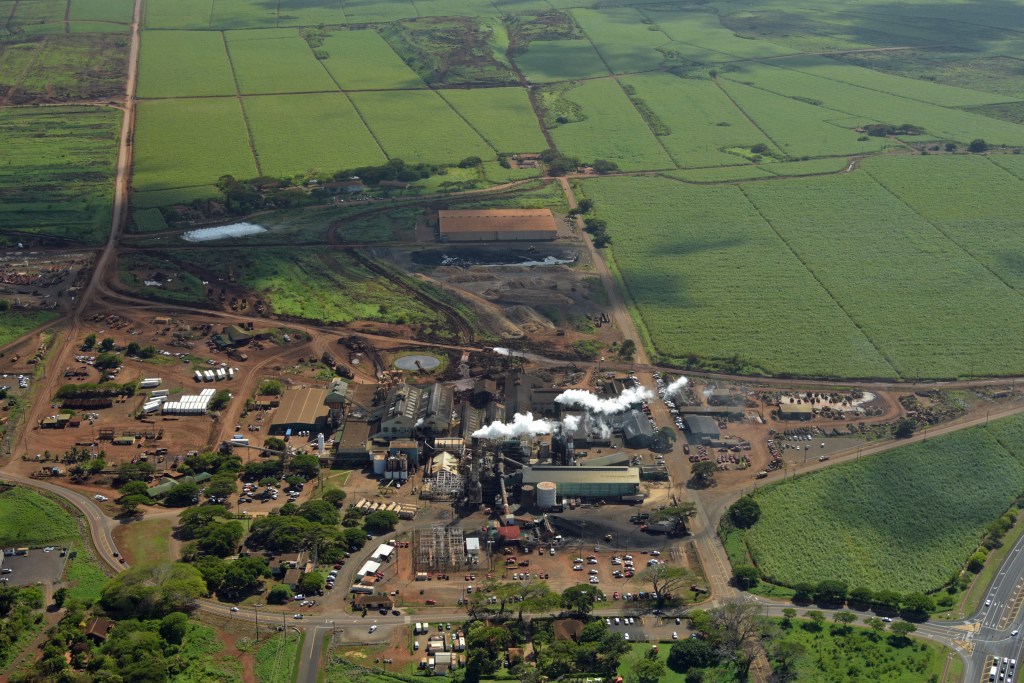
From banking, land, transportation and hotels to police, telecommunications, media and the military, these companies, known collectively as the Big Five, had their fingers in everything. The majority of legislators were under their influence as was the judiciary. Even the governor, nominally appointed by the president, was, according to Eagen’s investigation, rumored to be chosen from a list drawn up by the prominent Big Five-linked attorney, Frank E. Thompson.
Eagen completed the report in 1940. Not long after, The New York Times published an article about it, reprinting his most scathing line: “If there is a truer picture of Fascism anywhere in the world than in the Hawaiian Islands, then I do not know the definition of it.” A groundbreaking Fortune magazine article, published a few months later, described Hawai‘i of this time as a place of “paternalistic semifeudalism.”
Admittedly, when Hironaka founded Maui Savings & Loan in the 1960s, Hawai‘i was in flux. The Big Five were beginning to lose their grip on the newly minted 50th state. Antitrust actions, labor organizing and rising agricultural costs thwarted profitability. New legislators, elected as part of the Hawaiʻi Democratic Revolution of 1954, also began to exert scrutiny over their corporate practices. Yet in so many ways, the mechanisms of discrimination existed all the same.
Ask any Asian or Hawaiian businessperson working at this time, and they’ll tell you about exclusionary practices at top firms, especially the Big Five and their affiliates. In fact, it wasn’t until 1966 that Castle & Cooke hired Mitsuyoshi Fukuda, its first “upper officer” of Asian descent.
Much of Hawai‘i’s media was firmly held by families with deep links to the Big Five, from the Baldwin family’s ownership of The Maui News, which they sold in 2000, to Thurston Twigg-Smith’s control of The Honolulu Advertiser. Twigg-Smith, the grandson of Lorrin A. Thurston, a key organizer of the overthrow of the Hawaiian Kingdom, published the newspaper until 1992 when he sold it to Gannett in a deal of stock and the assumption of debt worth a reported $250 million.
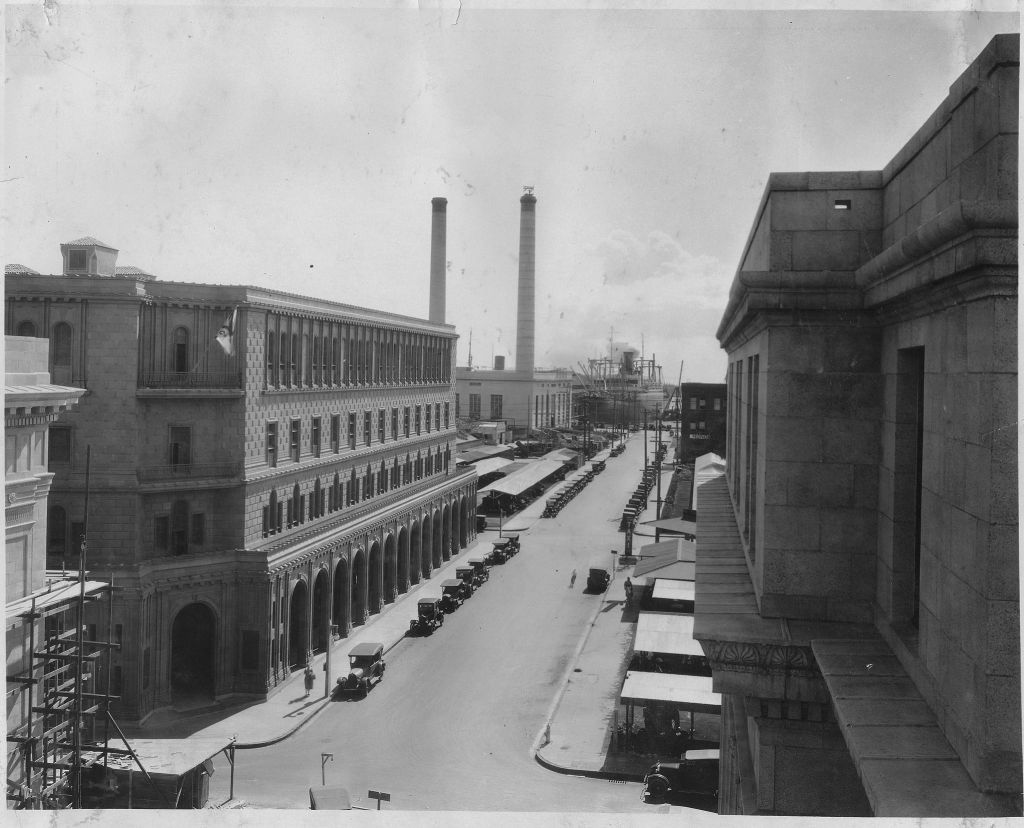
Barriers in education also existed, notably at Punahou, which enforced a 10% quota for Asian pupils until school President John Fox gradually phased it out, likely in the late 1940s or early 1950s. In a 1991 oral history, he explained that the change was met with “grudging assent from the trustees,” and they only acquiesced once he’d explained that not doing so would put Punahou’s tax-exempt status at risk.
In my own family, people in my grandparents’ generation loathed Hawaiian Airlines, which for much of the first half of the 20th century, was in the habit of bumping Asian passengers from flights and refusing to hire non-white pilots and flight attendants. Discrimination by Hawaiian even made it into a 1955 Time magazine article, in which the airline admitted the possibility of prejudice but glibly attributed it to “a wartime, military measure.”
It is futile to cover the breadth of this history in a single, 1,300-word essay. I hope my point is clear. Before any uproarious readers fill the comment section or my inbox with notes telling me to leave the past in the past, that these facts, while disagreeable, have been atoned for, let me tell you, I’m not convinced.
In many cases, the business interests of the Big Five evolved rather than vanished. They were passed on to successor entities like Kaanapali Land in the case of Amfac or Mauna Loa Macadamia Nut Corp., which C. Brewer and Co. sold in 2000 and is now part of the Hawaiian Host Group. Matson, once owned by Alexander & Baldwin, still operates in a tight shipping duopoly with Pasha Hawaii, an eerie parallel to the anticompetitive world Eagen described 85 years ago and a factor experts say perpetuates high prices for groceries and consumer goods.
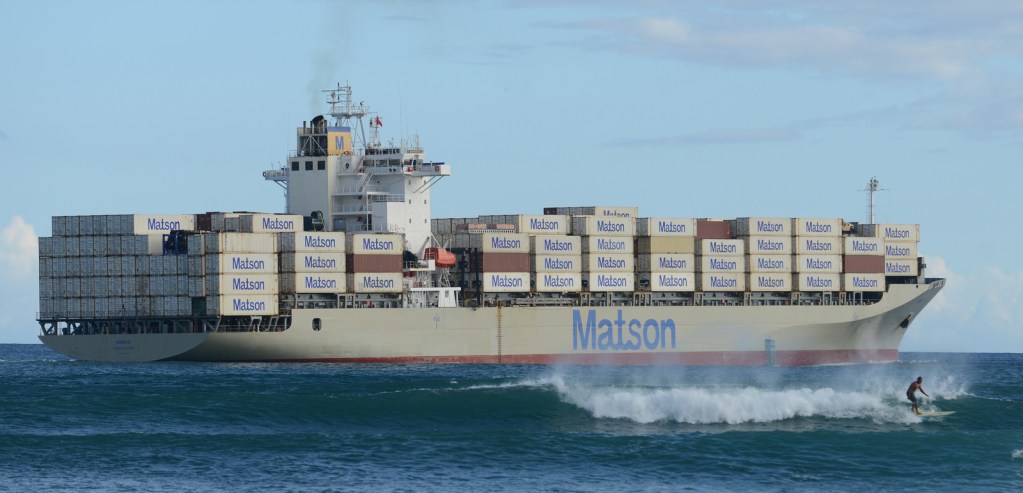
And as the Big Five did not truly disappear, the controversies linked to their operations did not either. Matson has been the center of several scandals over the last 15 years, including a 2013 molasses spill and alleged wrongdoing related to fuel surcharges. Dole Food Co., a Castle & Cooke successor, was fined in 2021 for safety violations at Wahiawā Dam and in 2018 as part of an EPA probe into cesspools at Puʻuiki Beach Park. The company has also faced criticism over heavy pesticide use.
The world Eagen documented also lives on in the collective memories of the families who experienced it. So many of us are but one generation removed from this point in history. Others lived it themselves, though their ranks are dwindling. The stories of indignation, including from beloved institutions still active today, run deep in the islands.
Simply revisiting the past won’t solve the troubles we face. But I sometimes wonder whether our leaders, well-intentioned as they might be, fail to drill to the heart of them because they don’t take stock of the root causes.
As the anthropologist Carol MacLennan argued in her book, “Sovereign Sugar,” so many of our most pressing and controversial issues can be tied to Hawai‘i’s era of industrial sugar. The way the Big Five shaped our islands is exceedingly relevant today. We would all do well to revisit this history.
 Sign up for our FREE morning newsletter and face each day more informed.
Read this next:

Local reporting when you need it most
Support timely, accurate, independent journalism.
Honolulu Civil Beat is a nonprofit organization, and your donation helps us produce local reporting that serves all of Hawaii.
ContributeAbout the Author