We’re more than half way to our campaign goal of $100,000! Give now and your donation will be DOUBLED thanks to the George Mason Fund of the Hawaiʻi Community Foundation.

Mahalo your continued support!

Double my donation

We’re more than half way to our campaign goal of $100,000! Give now and your donation will be DOUBLED thanks to the George Mason Fund of the Hawaiʻi Community Foundation.

Mahalo your continued support!

Double my donation

Cory Lum/Civil Beat/2022

About the Author

Lourdes Scheibert

Lourdes Scheibert is retired from Scheibert Energy Company, a small business awarded 1998 Island Business Magazine "Small Company of the Year for Energy Conservation and Efficiency." She is a passionate advocates at the Legislature for energy conservation and efficiency that created Hawaii Energy today.

An ordinary owner’s view on why education and accountability matter more than numbers.

Like many people in Hawaiʻi, I live in a condominium community that’s managed by a volunteer board of directors. They’re our neighbors — regular people trying to do their best. The board meets, votes are taken, the majority wins, and decisions move forward.

That’s how it’s supposed to work. But over time, I’ve learned that majority rule isn’t always right. When the majority votes for something that breaks the law, ignores professional advice, or delays critical repairs, that’s not democracy — that’s dysfunction.

‘Speak With One Voice’ — Or Stay Silent?

When directors are afraid to speak up, the community loses vital checks and balances. Honest disagreement isn’t the problem; silence is. And when problems are hidden, small issues grow into costly ones.


Ideas showcases stories, opinion and analysis about Hawaiʻi, from the state’s sharpest thinkers, to stretch our collective thinking about a problem or an issue. Email news@civilbeat.org to submit an idea or an essay.

Deferred Maintenance: A Statewide Issue

Across Hawaiʻi, many condo buildings are showing their age. Leaking pipes, aging elevators, cracked concrete, and outdated wiring are becoming all too common.

Professional Reserve Studies are supposed to be our roadmap — a plan for repairing and funding building components before they fail. Yet too often, boards treat them as optional. Repairs are postponed, timelines stretched, and costs pushed to the next group of owners.

The Legislature, the Real Estate Commission, and groups like the Community Associations Institute have long recognized this statewide backlog of deferred maintenance. But the pattern continues: kick the can down the road, then scramble when systems fail.

Majority Rule Is Not Just a Number

Here’s something every condo owner should know: majority rule is not just about numbers.

A vote only has real authority when it’s made within the framework of the law and the association’s governing documents. Without that framework, even a unanimous vote can be wrong. When a board acts outside those boundaries, it fails its fiduciary duty — the obligation to act in the best interest of all owners.

Majority rule works only when grounded in compliance, responsibility, and transparency. Numbers alone don’t make a decision legitimate — the law does.

The Real Fix: Mandatory Education

Condominium law is complex. Directors are expected to understand HRS 514B, city permits, safety codes, insurance requirements, and financial planning. Most are volunteers with little or no training, yet they’re responsible for millions of dollars in shared property.
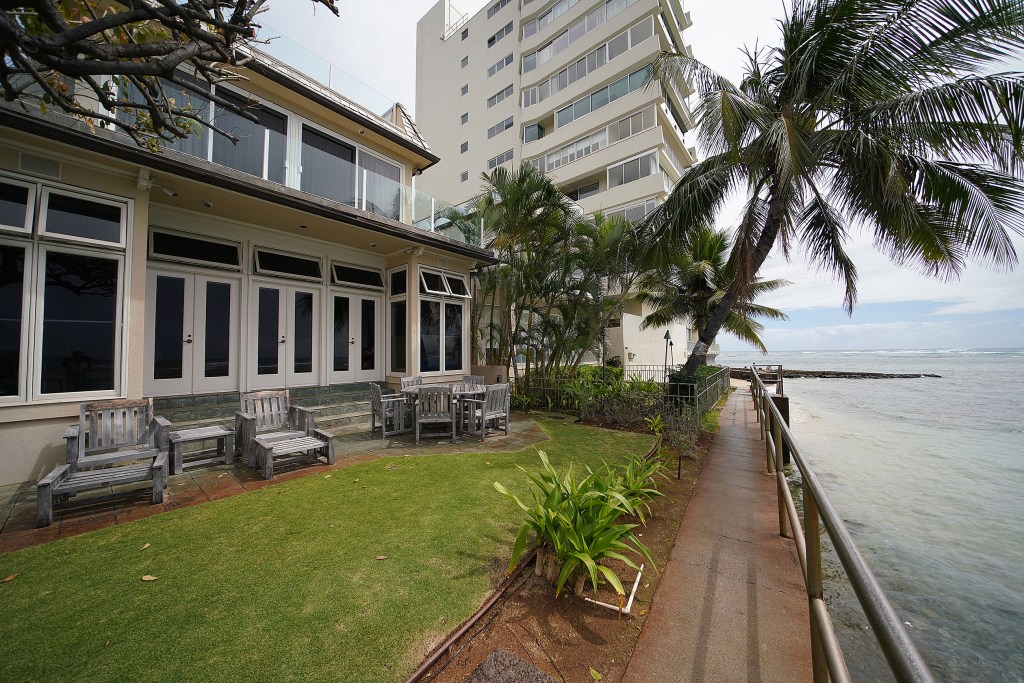
Waikiki Gold Coast and walkway on the beach side near Coconut Avenue condominiums. Editor note. No addresses on the condominiums pictured.
Advocates are hoping to introduce legislation in the 2026 legislative session that would strengthen rules governing condo associations. (Cory Lum/Civil Beat/2020)

That’s why education should be mandatory. Hawaiʻi already has a solution: the Condominium Education Trust Fund, managed by the Real Estate Commission, which funds courses and training for board members. But right now, participation is voluntary — and many directors never attend.

Every board member should complete basic training in condominium governance within their first year. Presidents, who lead meetings and set agendas, should take advanced courses in fiduciary duty, reserve planning, and legal compliance. Educated boards make better decisions — and reduce conflict, confusion, and costly mistakes.

Looking Ahead to 2026

Advocates are working toward new legislation for 2026 that would strengthen Reserve Study enforcement, protect minority directors from retaliation, and require board education. These changes would help ensure that decisions are based on knowledge and accountability, not politics or pressure.

A Call for Common Sense and Integrity

Condominiums are more than buildings — they’re communities where families grow, retirees relax, and neighbors share their lives. We deserve boards that understand their responsibilities, respect professional guidance, and communicate openly.

Speaking with “one voice” should never mean ignoring the law or silencing dissent. Majority rule only works when decisions are made within the law and governing documents. That’s where real leadership — and real integrity — begin.

If Hawaiʻi’s condominiums are to remain safe, affordable, and sustainable, education, transparency, and accountability must come first. As owners, we have the right to expect more than votes. We have the right to expect wisdom.

Community Voices aims to encourage broad discussion on many topics of community interest. It’s kind of a cross between Letters to the Editor and op-eds. This is your space to talk about important issues or interesting people who are making a difference in our world. Column lengths should be no more than 800 words and we need a photo of the author and a bio. We welcome video commentary and other multimedia formats. Send to news@civilbeat.org. The opinions and information expressed in Community Voices are solely those of the authors and not Civil Beat.


Read this next:

Helmet Or Hospital: A Choice To Save Your Life


Local reporting when you need it most

Support timely, accurate, independent journalism.

Honolulu Civil Beat is a nonprofit organization, and your donation helps us produce local reporting that serves all of Hawaii.

Contribute

About the Author

Lourdes Scheibert

Lourdes Scheibert is retired from Scheibert Energy Company, a small business awarded 1998 Island Business Magazine "Small Company of the Year for Energy Conservation and Efficiency." She is a passionate advocates at the Legislature for energy conservation and efficiency that created Hawaii Energy today.


Latest Comments (0)

Finding Solutions Pairing Education and an Ombudsman to Fix Condominium GovernanceThe problems described in Civil Beats both, "When Condo Majority Rule Goes Too Far" and "The Brutality of Owning a Condo in Hawai‘i" reveal what many owners already know: condominium boards often silence minority voices and limit transparency. The same silence exists at the Capitol, where lawmakers have yet to schedule a hearing on the Condominium Ombudsman bill.A hearing would not guarantee passage—it would simply let those living these issues be heard. A Condominium Ombudsman would not add bureaucracy; it would provide neutral guidance, help boards and owners understand the law, and prevent costly disputes that arise from confusion, not misconduct.As Brutality noted, attorney Terry Revere said "an ombudsman who can advocate on behalf of owners would be a much better use of public money than the existing education-focused work of the DCCA." It’s time Hawai‘i’s leaders listened.In my humble opinion, we can have both.

lscheibert · 6 months ago

PART ONE.Mahalo 808Beachbum for addressing the importance of reserve studies. Actually, that is where many associations’ current problems began.In 2016, Civil Beat published, "The ‘Brutal Reality’ of Owning a Condo in Hawaii," reporting on some of the associations’ whose managing agents offered free reserve studies for the associations they managed. If a board declined the free study, they could be questioned for not saving their association’s money when the studies were prepared by "experts," a reflection of the business judgement rule in action.Unfortunately, those reserve studies neglected key components and their replacement costs, the most consequential involving the piping system.Back then, the association trade industry’s lobbyists claimed that these major components (e.g., pipe replacement) were omitted from their reserve studies because the anticipated lifetime of those major components exceeded the funding plan’s projection timeframe (usually 20 or 30 years). The experts claimed that their guidebook cited "100 years," then later, "70 years" as the anticipated lifetime of pipes.Even paid reserve study experts erroneously followed that wrong guidance.See part two.

lmower · 6 months ago

PART TWOBasing their studies on the anticipated lifespans of "100" or "70 years" revealed that the "experts" who produced those reserve studies neglected a critical part of the reserve study: the physical inspection of those major components for their remaining useful life.When piping failures recurred throughout Hawaii’s aging condos, the reserve study experts acknowledged that deterioration sooner than projected, revising lifespans to "30" or "40 years." Fortunately for them, the law ignored their dereliction of duty and shielded them from liability. See HRS 514B-148 (d).For many associations, the recognition of shorter key component lifespans came too late.The oversight that was dismissed as a paper error, a mere omission, was a recurring and tangible crisis causing many associations to force unwieldy special assessments and/or huge maintenance fee increases on owners, resulting in financial distress. Some owners lost their properties through no fault of their own because they could not produce special assessments payments as high as $100,000/unit in a few months’ time or pay excessive maintenance fee increases.Those "errors" continue to haunt association’s today.

lmower · 6 months ago

Join the conversation

About IDEAS

Ideas is the place you'll find essays, analysis and opinion on public affairs in Hawaiʻi. We want to showcase smart ideas about the future of Hawaiʻi, from the state's sharpest thinkers, to stretch our collective thinking about a problem or an issue. Email news@civilbeat.org to submit an idea.

Mahalo!

You're officially signed up for our daily newsletter, the Morning Beat. A confirmation email will arrive shortly.

In the meantime, we have other newsletters that you might enjoy. Check the boxes for emails you'd like to receive.

  • What's this? Be the first to hear about important news stories with these occasional emails.
  • What's this? You'll hear from us whenever Civil Beat publishes a major project or investigation.
  • What's this? Get our latest environmental news on a monthly basis, including updates on Nathan Eagle's 'Hawaii 2040' series.
  • What's this? Stay updated with the latest news from Maui.
  • What's this? Weekly coverage of Hawaiʻi Island news and community.

Inbox overcrowded? Don't worry, you can unsubscribe
or update your preferences at any time.