Why Diversity Matters In Health-Related Research
Because a therapy may be more effective on people of one racial group versus another.
October 15, 2025 · 5 min read

About the Author

When the state of Hawaiʻi won a $700 million settlement against two drug manufacturers in May because those companies failed to adequately warn patients and doctors that their widely prescribed blood-thinner Plavix was less effective or not effective on Asian American, Native Hawaiian and Pacific Islander populations, it finally put an end to nearly a decade of contentious litigation.
What may have been lost in the news surrounding this landmark settlement, however, was the broader reality that not all drugs affect all people the same way. In this case, a genetic variation in AANHPI populations apparently impaired the effectiveness of this particular medication in comparison to Caucasians.
This kind of potentially life-saving information is the result of having a diverse participant pool during the research stages of any therapeutic intervention. Participant diversity helps researchers observe whether a therapy seems to be more effective on people of one racial group versus another, for example, and then to do further research to help explain why.

Ideas showcases stories, opinion and analysis about Hawaiʻi, from the state’s sharpest thinkers, to stretch our collective thinking about a problem or an issue. Email news@civilbeat.org to submit an idea or an essay.
The explanation may be genetic, or it may have to do with what we refer to as social determinants of health — social factors that may affect a person’s health outcomes, such as their access to healthcare over their lifetime, their living conditions, educational level or their consumption of healthy and nutritious foods, to name a few.
The challenge for scientific researchers in the health field is how to build sufficient diversity into their participant pool so that they can learn whether there are racial and ethnic differences in health outcomes and why. It has been long established that cardiovascular disease is the leading cause of death in the United States.
However, according to an Aug. 23, 2022, journal article in Frontiers in Cardiovascular Medicine, “Racial and ethnic minority groups remain underrepresented in cardiovascular clinical trials, which has contributed to an incomplete understanding of these health disparities. According to the U.S. Food and Drug Administration’s Center for Drug Evaluation and Research, of the 58,998 participants who participated in FDA registered cardiovascular trials from 2015 to 2016, only about 3% identified as Black or African American and about 8.5% identified as Hispanic.”
Asian Americans, Native Hawaiians and Pacific Islanders are likewise underrepresented in scientific research, although they are the fastest growing racial groups in the United States. From 1992 to 2018, less than 1% of the National Institutes of Health total budget was for AANHPI research.
A Multi-Year Project
In an effort to boost AANHPI participation in scientific research, researchers at the University of California San Francisco and the University of California Irvine proposed a multi-year project called CARE, which stands for Collaborative Research for Asian American, Native Hawaiian, and Pacific Islanders Research and Education. The goal of CARE is to enroll individuals who belong to the AANHPI communities to the CARE registry, which means they would be willing to be contacted by researchers — all of whom are vetted and approved by the CARE administrative team — for inclusion in their studies.
In only a few years, the CARE registry has enrolled more than 10,000 people from AANHPI groups who are willing to participate in research. Participation could involve filling out a survey questionnaire, agreeing to be interviewed or participating in an experiment. Enrollees have the option to decline any offer to participate in research. Although not mandatory, participants are sometimes thanked for their time with incentives such as gift cards.
In the complex arena of health care, safe and effective treatments are based on solid research. But today we know that treatments can be delivered in different ways. The theory of person-centered care regards people as individuals with social histories and identities and not just as undifferentiated masses.
Evidence-based, culturally tailored interventions hold particular promise in helping various ethnic and racial groups receive optimum benefit from health promotion activities by honoring their cultural heritage.
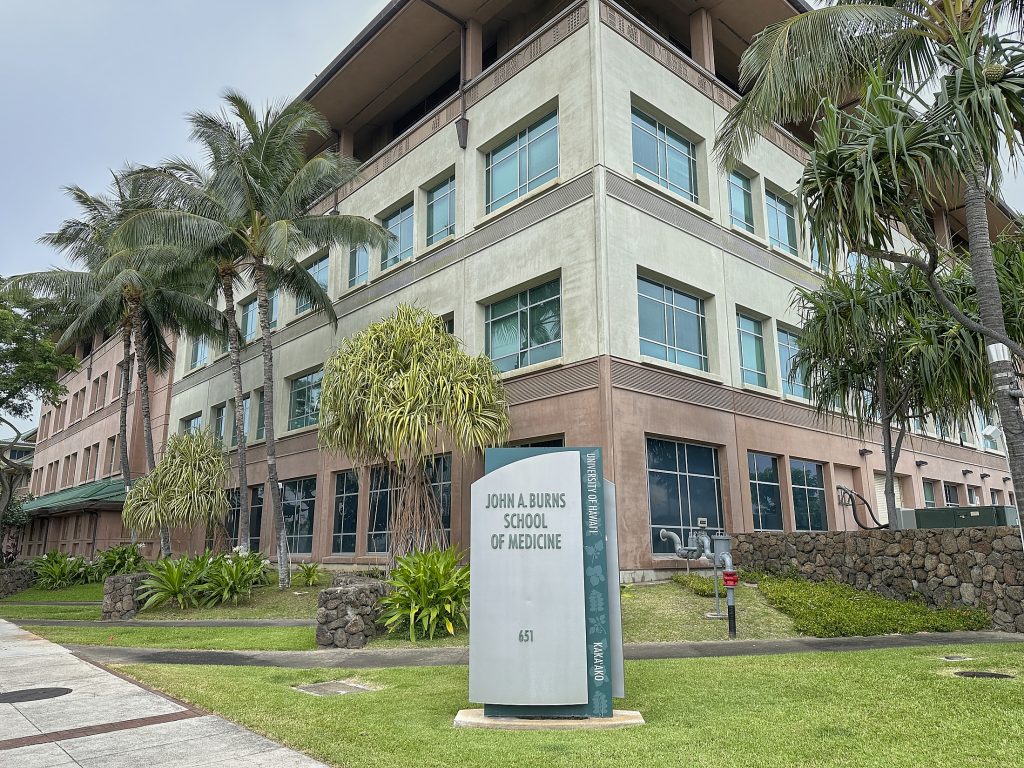
An example of this is a John A. Burns School of Medicine project funded by the National Institute on Aging that studies the effect of culturally informed practices such as hula on vascular disease and cognitive decline.
The expansion of culturally tailored practices for healthy aging and health promotion to other ethnic groups in Hawaiʻi seems like a natural progression of this kind of research. Traditional Japanese dance classes (bon odori) could be offered throughout the year in preparation for the summer o-bon season, for example, providing regular and consistent opportunities for physical exercise, social engagement, memory practice and even the collective sharing of healthy food and beverages.
The Center on Aging at the University of Hawaiʻi Mānoa has joined the University of California San Francisco and the University of California Irvine in helping to build the CARE registry to include even more enrollees, especially from Hawaiʻi where the number of AANHPI communities is significant. In phase one of this project, most of the enrollees came from the U.S. mainland. In the current phase, CARE 2.0, the Center on Aging hopes not only to interest Hawaiʻi residents in being a part of the CARE registry but also to educate AANHPI communities about the value and practical benefits of scientific research.
Educational sessions on topics such as brain health, healthy aging across the lifespan, dementia, caregiving and more will be offered by COA and its partners to help demonstrate the critical link between research findings and health promotion.
Anyone interested in learning more about CARE 2.0 should visit the Center on Aging’s website.
 Sign up for our FREE morning newsletter and face each day more informed.
Community Voices aims to encourage broad discussion on many topics of community interest. It’s kind of a cross between Letters to the Editor and op-eds. This is your space to talk about important issues or interesting people who are making a difference in our world. Column lengths should be no more than 800 words and we need a photo of the author and a bio. We welcome video commentary and other multimedia formats. Send to news@civilbeat.org. The opinions and information expressed in Community Voices are solely those of the authors and not Civil Beat.

Local reporting when you need it most
Support timely, accurate, independent journalism.
Honolulu Civil Beat is a nonprofit organization, and your donation helps us produce local reporting that serves all of Hawaii.
ContributeAbout the Author