Why We Need Hawaiʻi Artists At Burning Man
When our creative voices are represented, both our art scene and Burning Man flourish.
October 7, 2025 · 5 min read

About the Author
Each year during the last week of August, up to 80,000 people gather on the desert floor known as the Playa to build a temporary city out of art, tents, and RVs. Everyone brings what they need to survive.
For one week, money serves little purpose. Instead, a gifting economy cultivates a community, where food, water, art and experiences are freely exchanged, echoing the ʻohana and aloha values rooted in Hawaiʻi.
Burning Man practices its own form of mālama ʻāina through the principle of “Leave No Trace” — everything brought to the desert must be carried back out. And always, there is fire. In Hawaiʻi, fire embodies the Goddess Pele as a symbol of transformation and rebirth. On the Playa, it holds a similar meaning of renewal.

Ideas showcases stories, opinion and analysis about Hawaiʻi, from the state’s sharpest thinkers, to stretch our collective thinking about a problem or an issue. Email news@civilbeat.org to submit an idea or an essay.
The week ends with the burning of a wooden effigy known as the Man, the culminating act that gives the event its name. As founder Crimson Rose explains, “The immolation of the Man marks the ending of the old year and beginning of a new year.”
There is a Hawaiian proverb: e hele me ka pūʻolo — always take an offering with you. In 2014, Native Hawaiian artist Kahai Tate brought hers to Burning Man in the form of Pahaʻohaʻo, a 30-foot volcano that invited participants to descend a 10-foot slide into a chamber where they learned about Hawaiian culture and honored Pele. This was Tate’s pūʻolo, her offering, and it became one of the most iconic installations in Burning Man’s history.
Hawaiʻi artists remain underrepresented at Burning Man.
Tate’s work proved what a Native Hawaiian voice could bring to Burning Man. At the time, she was based in the Bay Area. Had she attempted to ship her volcano from Hawaiʻi, it would have been a logistical and financial nightmare. That reality helps explain why Hawaiʻi artists remain underrepresented at Burning Man.
A decade later, in 2025, I was the only registered visual artist traveling from the islands, experiencing firsthand the hurdles of crossing the Pacific with an installation. Burning Man is the largest open-air gallery for experimental art in the world, showcasing hundreds of installations and thousands more independent works.
But the cost of shipping, on top of other expenses, creates real barriers for Hawaiʻi artists — which is exactly why we must be there. Unlike San Francisco or New York, Hawaiʻi is not seen as an art hub and is too often dismissed as a postcard destination. But creative voices exist here, and our presence at Burning Man affirms them.
For those of us who showed up this year, our pūʻolo carried meaning, enriching both Hawaiʻi’s art scene and Burning Man itself. My installation was much smaller and designed to be modular so it could fit into checked luggage. Even so, at nearly 80 pounds, bringing it to the desert required diligent planning.
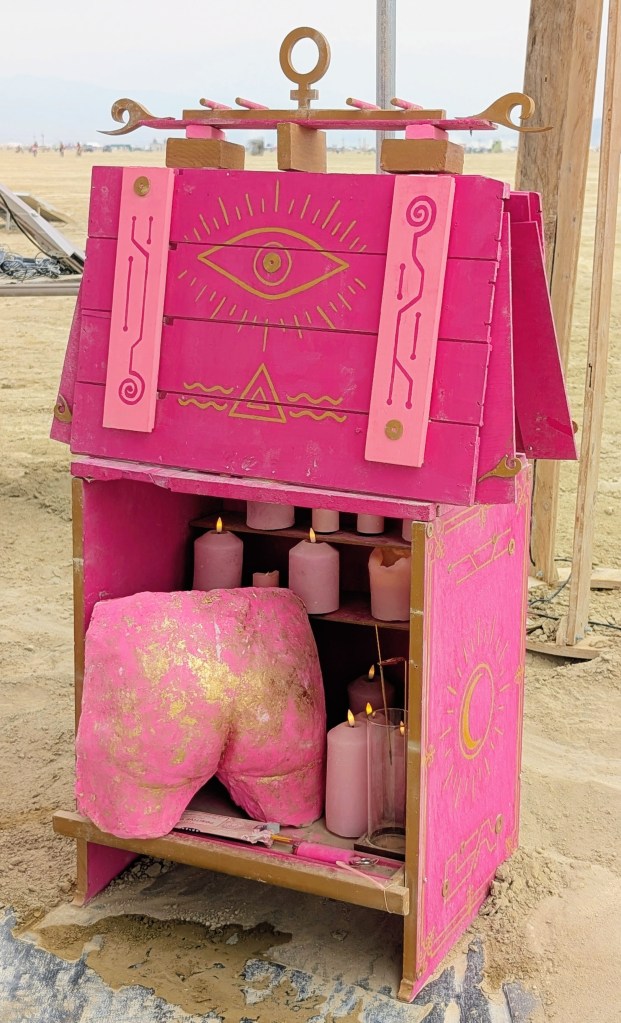
My installation explored body positivity as ritual, inviting participants to meditate and celebrate self-love as a mindfulness practice. It wasn’t a piece about Hawaiʻi, but it was from Hawaiʻi — built on the islands and offered with intention. That was my pūʻolo.
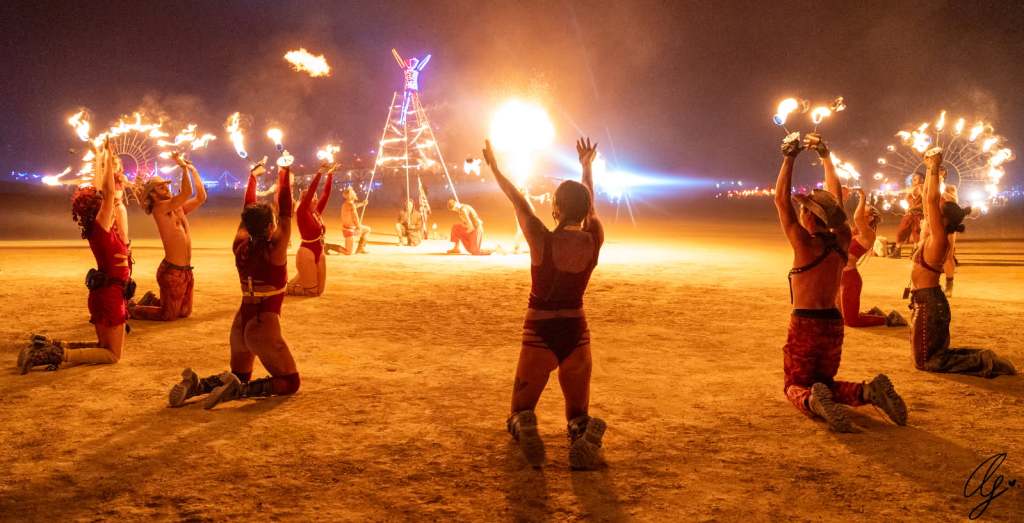
I wasn’t alone. The Hawaiʻi Fire Artists represented the islands’ performing arts scene. Since 2003, they have performed in the Fire Conclave, and this year, alongside 33 other conclaves from around the world, they took the stage before the Man burned.
For decades, fire dancing has been integral to Burning Man rituals, but its Polynesian roots, especially those in Hawaiʻi, are less visible than they should be. The Hawaiʻi Fire Artists were there to change that.
Led by Emily Navarra, known as a “Shin” in the Burning Man community, their performance took months of interisland coordination. The troupe was one of the larger conclaves, bringing together around 50 performers from Maui, Hawaiʻi island, Oʻahu and Japan.
Using concentric rings and steel poles, they built a Hawaiian volcano to honor Pele, as Tate had before. During the performance, fire breathers staged eruptions from the structure. Their dance was a tribute to the goddess of fire and a necessary Hawaiian voice in Burning Man’s fire tradition.
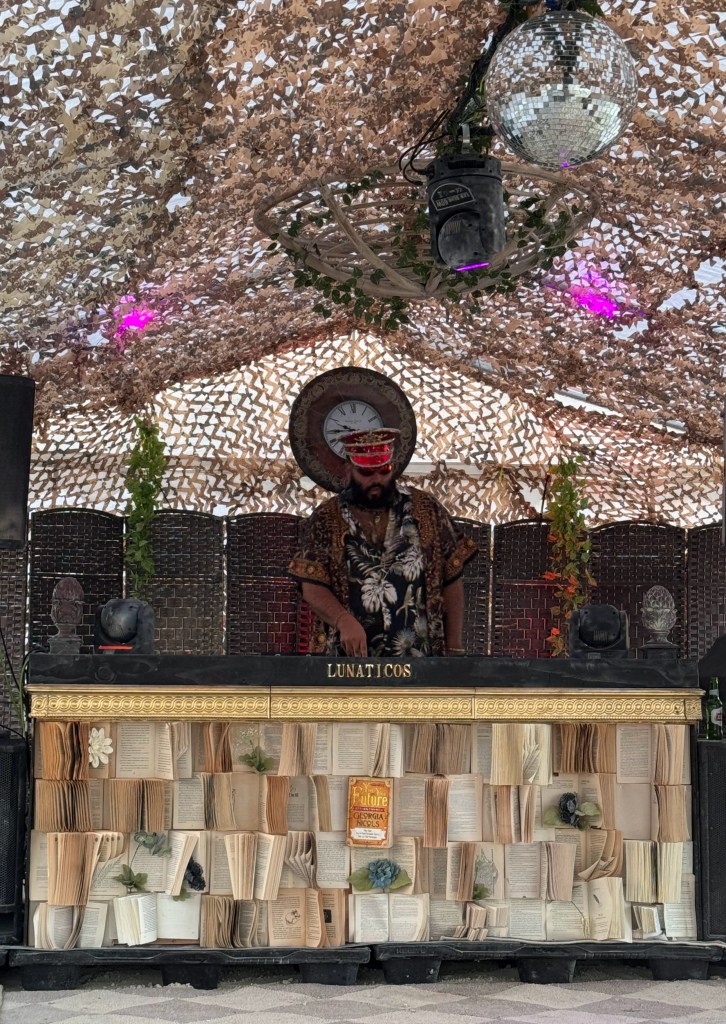
Music carried Hawaiʻi’s voice too. Hawaiʻi-based DJ Gilson F. Dos Santos Jr., better known as Tropic Bomba, brought music as his pūʻolo. Known for producing high-energy rhythms with tropical flair, he can be found spinning in Waikīkī and at venues across Oʻahu.
At Burning Man, he shared those island vibes with a global audience, performing at Funkytown, one of the event’s longest-running and most popular sound camps. His presence showed that Hawaiʻi’s nightlife and underground dance culture has resonance beyond the islands.
When we bring our voices to Burning Man, we’re redefining how Hawaiʻi is valued on the global stage. This year, through our pūʻolo of art, dance, and music, Hawaiʻi artists offered a glimpse of the islands’ creative pulse and paid homage to Pele at an event centered on fire.
If Hawaiʻi is to be seen as more than a vacation backdrop, we must keep showing up with our art. Our presence matters. Because when Hawaiʻi shows up, it reminds the world that, for us, fire has always been sacred.
 Sign up for our FREE morning newsletter and face each day more informed.
Community Voices aims to encourage broad discussion on many topics of community interest. It’s kind of a cross between Letters to the Editor and op-eds. This is your space to talk about important issues or interesting people who are making a difference in our world. Column lengths should be no more than 800 words and we need a photo of the author and a bio. We welcome video commentary and other multimedia formats. Send to news@civilbeat.org. The opinions and information expressed in Community Voices are solely those of the authors and not Civil Beat.

Local reporting when you need it most
Support timely, accurate, independent journalism.
Honolulu Civil Beat is a nonprofit organization, and your donation helps us produce local reporting that serves all of Hawaii.
ContributeAbout the Author