How Hawaiʻi’s Pride Revives The Māhū Spirit
October’s celebration honored and reclaimed a history once nearly erased.
November 19, 2025 · 5 min read

About the Author
For visitors, it might come as a surprise that Hawaiʻi celebrates Pride in October, not June. Locals, however, expect the traffic and the parade rolling through Waikīkī as Halloween decorations appear.
This timing was intentional: organizers chose October to coincide with other LGBTQIA+ awareness events such as National Coming Out Day (Oct. 11) and LGBTQIA+ History Month, as well as to take advantage of Hawaiʻi’s milder autumn weather for the parade.
Around the globe, Pride celebrates a new way of loving: to grow and live beyond traditional ideas of gender, sexuality, and identity. In Hawaiʻi, it does that and something more. Our Pride is a revitalization of the māhū spirit, which has been sacred in Hawaiian culture since ancient times and once nearly lost to colonialism.
Māhū can be translated as “dual spirit” or “third gender” in Hawaiian, existing in between kāne (male) and wahine (female).

Ideas showcases stories, opinion and analysis about Hawaiʻi, from the state’s sharpest thinkers, to stretch our collective thinking about a problem or an issue. Email news@civilbeat.org to submit an idea or an essay.
21-year-old Micah Osofaiga Tutuvanu, a gay Kanaka Maoli student at Kapiʻolani Community College, serves as student council treasurer and previously led as student body president. He clarifies, “Historically, māhū were highly respected members of society.”
They were healers, teachers, and cultural practitioners who embraced both masculine and feminine energy. But with the arrival of missionaries, the māhū identity became stigmatized, and the word was repurposed as a slur for gender-nonconforming people.
Tutuvanu’s student research focuses on integrating Hawaiian values into ethical healthcare frameworks. He highlights the lack of funding for Indigenous LGBTQIA+ research and wants to see māhū history taught in schools from a place of pride, free from stigma.
Though representation in academia remains limited, Pride celebrations in Hawaiʻi are helping fill that gap. Tutuvanu explains, “Pride [in Hawaiʻi] is not just about sexual identity and expression. It’s also about cultural sovereignty, returning to how everything was before colonialism. [Our] Pride gives māhū people the spaces to be seen and celebrated on their own terms, not what Western society wants.”
This reclamation is visible in Hawaiʻi’s art scene. Honolulu Pride is organized each year by the Hawaiʻi LGBT Legacy Foundation. Throughout October, celebrations fill bars and community spaces across the island. On Oʻahu, The ARTS at Marks Garage hosted its fourth annual Arts of Pride exhibit, spotlighting queer artists working across a range of media.
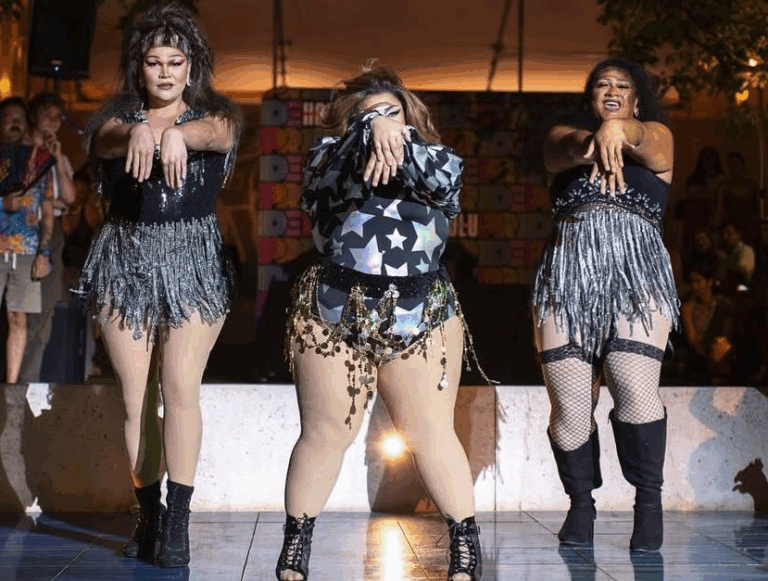
At Capitol Modern, the Hawaiʻi State Art Museum opened its October First Friday with a lively drag show kick off. Drag performances were also featured at various venues throughout the month.
It is through these performances, celebrating the fluidity of gender, that the māhū spirit is powerfully revitalized.
There is an overlooked distinction between drag and māhū: Drag is a performance art form, while māhū is a cultural and spiritual identity. Some drag performers identify as māhū, but not all māhū perform drag. Because both drag and māhū express gender fluidity, the two are often mistaken as the same.
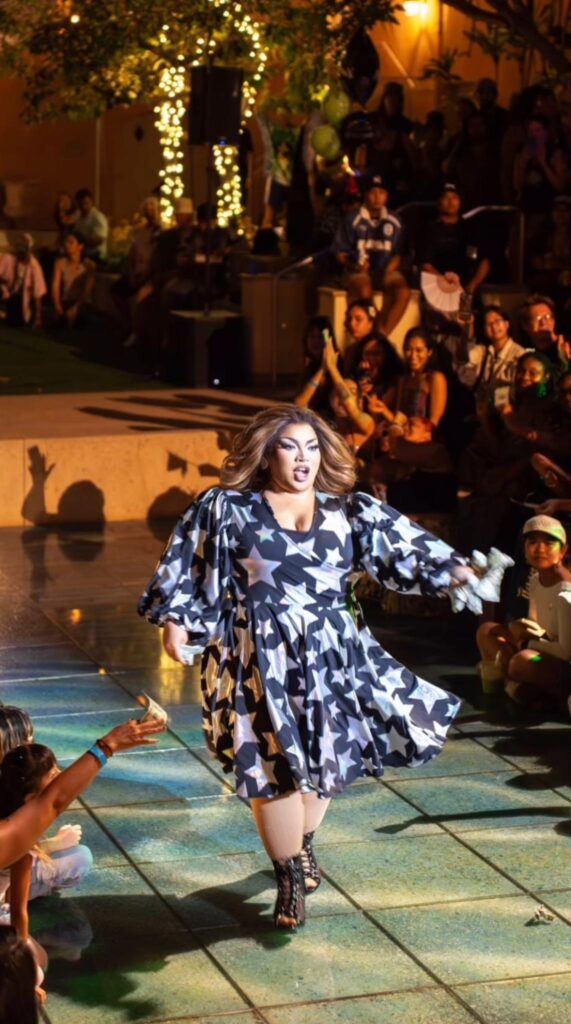
Twenty-six-year-old Raquel Largo, known by her drag name Ke11yPrice, was one of the performers who took the stage at Capitol Modern this year. Born and raised on the west side of Oʻahu, Largo identifies as māhū and is active with UTOPIA Hawaiʻi, a nonprofit supporting māhū and other gender-diverse communities across the Pasifika.
Though she also practices hula, siva, and Tahitian dance, Largo is best known for her high-energy drag performances. Over the past five years, she’s built a reputation as the “lip-sync assassin who can boogie down,” pulling off jump splits and backbends on stage while proudly representing the 96792.
For Largo, performing is not about the money but the impact she has on her audience. “Maybe the person watching you had a bad day, so seeing you made them feel a bit happier. It means a lot in the community because we kind of are healers in a way. By sharing and expressing our truest form, we inspire others to do the same.”
In Hawaiʻi, performance is a living art.
Largo’s impact reached younger audiences when she performed at the 2024 Oʻahu Youth Action Board Pride show, hosted for unhoused youth at Lydia House, a nonprofit working to break cycles of poverty through culturally grounded support. The event invited youth to dress up and perform drag.
Largo recalls, “This little girl was back there with us. I think she was probably 5 or 6. She told me I was her favorite. She said, ‘I want to be like you. I want the makeup. I want the glitter.’”
That moment, Largo says, reaffirmed her passion for performing.
Events like the OYAB show and drag performers like Largo bring more than celebration to Pride. A 2023 federal report revealed that Hawaiʻi has the third-highest rate of unhoused youth living without shelter.
Drag performances not only help revive the māhū spirit, they also bring healing to marginalized communities still fighting to be seen.
This is what makes Hawaiʻi’s Pride more than just a festival of love. When the islands celebrate, we revive a piece of Indigenous history still at risk of erasure today. In a time when queer and trans rights remain under political threat, the māhū spirit continues to heal our communities through art and performance.
In Hawaiʻi, performance is a living art. And through it, we show pride in who we are.
Acknowledgment: Mahalo to Kanaka Maoli scholar and student leader Micah Osofaiga Tutuvanu for serving as the cultural sensitivity reader, helping ensure this article accurately reflects Hawaiian culture and values.
 Sign up for our FREE morning newsletter and face each day more informed.
Community Voices aims to encourage broad discussion on many topics of community interest. It’s kind of a cross between Letters to the Editor and op-eds. This is your space to talk about important issues or interesting people who are making a difference in our world. Column lengths should be no more than 800 words and we need a photo of the author and a bio. We welcome video commentary and other multimedia formats. Send to news@civilbeat.org. The opinions and information expressed in Community Voices are solely those of the authors and not Civil Beat.
Read this next:

Local reporting when you need it most
Support timely, accurate, independent journalism.
Honolulu Civil Beat is a nonprofit organization, and your donation helps us produce local reporting that serves all of Hawaii.
ContributeAbout the Author