Makana Eyre: Can You Still Be 'Local' Once You've Left Hawaiʻi?
Keeping connected with Hawaiʻi culture is a challenge for lifelong residents who move away.
November 10, 2025 · 8 min read


About the Author
The first time someone questioned if I was from Hawaiʻi, I was standing in a Wailuku supermarket, holding the remnants of some poke that had made me sick.
Two days earlier, my wife and I had arrived on Maui from Europe to visit my family. Before long, craving shoyu poke and marinated white crabs, we’d made the short drive to the grocery store. That night, we were both sick.
It wasn’t an especially hard case of food poisoning. We got over it fast. But it frustrated me enough to go back and make a complaint.
Standing there that morning, I explained the situation to the store’s increasingly irritated manager. After some back and forth, he agreed to a refund. But I could tell he was vexed. Just before we were set to leave, he couldn’t resist slipping in a jab. “You know, since you’re not from here, maybe your stomach can’t handle poke.”

Ideas showcases stories, opinion and analysis about Hawaiʻi, from the state’s sharpest thinkers, to stretch our collective thinking about a problem or an issue. Email news@civilbeat.org to submit an idea or an essay.
In retrospect, I wish I’d been more charitable in my response. Why care about such a trivial remark from a stranger? Yet anger rose in me, and in increasing decibel levels, I told him off. I damn near recited my lineage in the islands, which goes back five, maybe six generations.
With the clarity that comes with distance, I know why this man so riled me. In suggesting I was not from Hawaii, he had unwittingly touched something electric. He had at once doubted who I was and struck a sore spot that often lies deep within people who have spent years living elsewhere.
The dig brought forth an anxiety we feel: the fear that we’re no longer of the islands, that we no longer fit into Hawaiʻi society, that we are no longer part of its fabric. Just as important, it opened the door to some of the big questions that run through our society: What does it mean to be local? How long do you remain local once you’ve left? What constitutes being local at all?
It’s been nearly 18 years since I was a permanent resident of Hawaiʻi. During the first six or seven of them — mostly during my college days and a year or two thereafter — I’d come home and life would be trucking on as it had before.
Then something started to shift. I first sensed it in everyday situations, about three years later. I might hear a bank teller or a barber speaking pidgin with clients only to switch to standard English when I approached their window or sat in their chair.
What does it mean to be local? How long do you remain local once you’ve left? What constitutes being local at all?
More wounding was when I realized that two of my siblings, both lifelong residents of the islands, seemed to codeswitch, if only subtly, when I was around. Between them, they had their own way of talking. When I appeared, their expressions, the rhythm and tempo of their talk, their grammar would change.
After a decade gone, something essential about me had changed. Perhaps it was my dress, the cadence of my voice, or some hardly perceptible way I moved in the world.
As with most of my millennial friends, I left Hawaiʻi after high school. My peers and I set off to attend college, to see a bit of the world, to make something of ourselves. With very few exceptions, we remained on the continent.
Curious to get their take on local identity, I called a few of them to ask. With little exception, they echoed my sentiment.

I met Chad Kealoha, a Kailua native and Maryknoll graduate, at the University of the Pacific where we both studied. After getting a degree in engineering, he settled in California, became a father, and ended up working for Johnson & Johnson.
These days, no one thinks Kealoha, who is about a quarter Hawaiian, is from the islands. “It doesn’t feel great,” he told me, a trace of melancholy in his voice, “But I understand it.”
Hawaiʻi, Kealoha thinks, is a place you can only understand — even be a part of — if you’re there, on the ground, in the community. “It moves on without you,” he said.
For many of my peers, losing their local accent marked a painful yet inevitable break from home. Sociologists call this a degradation ceremony, where status or identity is stripped.
In Hawaiʻi we are so attuned to the subtleties of accent, far more so, it seems to me, than communities on the continent. We all joke that where you went to high school reveals your place in our society. Yet I think accent signals much more. It’s a cue about who we are, what our identity is. It often suggests race, economic position, allegiance and social history.
I never spoke pidgin well, even as an adolescent, and I know now not to try lest I embarrass myself. Foolishly, however, when I’m home I give it a go anyway, perhaps out of a certain longing for connection to my place of birth.
Reid Harada, who grew up down the street from me in Kailua and left in 2008 to attend the University of the Pacific, does the same thing when he visits home. Now an attorney living in Pleasanton, California, and the father of two daughters, he lost any whiff of local elocution not long after his departure.
Kealoha, Harada and I, all speaking in our standard American English, now seem to be marked as outsiders. The irony, though, is that for many people like us, being from Hawaiʻi is a defining part of who we are.
In France, I’m proud to say I’m from Hawaiʻi, and I can’t help but enjoy the invariable spark of wonder that follows. In California, everyone knows Harada is from Oʻahu. “My wife introduces me as the guy from Hawaiʻi. In a certain sense, that’s the coolest thing about me,” he said.
The consequence is that many of us feel as though we lack identity. By citizenship or upbringing, I am not French nor Parisian nor a New Yorker, the places where I’ve lived over the last decade. And if I am also not a person with close links to Hawaiʻi, then who am I?
Valerie Shaindlin, now a librarian at the University of Cambridge in England, spent her formative years on Oʻahu. When she visits home, no one believes she’s from Hawaiʻi. “I’m not trying to lay claim to anything, except maybe the occasional kamaʻāina discount,” she told me. Even if she flashes her Hawaiʻi driver’s license, people still doubt her.
Being deprived of this part of her identity has left Shaindlin feeling unmoored. All the same, she tries to maintain links to Hawaiʻi, especially for the sake of her young son — though it’s increasingly untenable.
I know that in many ways, my peers and I are in a position of privilege. We left Hawaiʻi on our own accord. We weren’t forced out to seek higher pay, cheaper homes or fully staffed public schools.
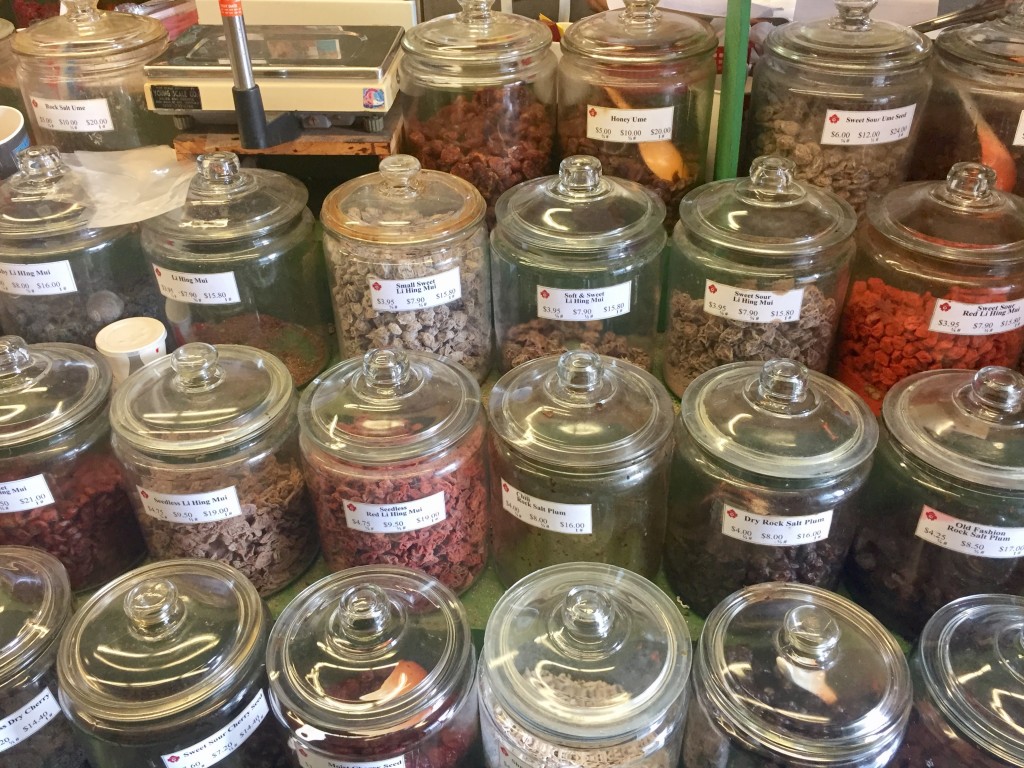
There are thousands of people from the islands who congregate at baby lūʻau or Makahiki celebrations to grill and talk story in dusty Vegas backyards, under the scorching desert sun. Countless others gather around televisions to watch Merrie Monarch in suburbs of Seattle or Portland as cold spring rain falls on the fir and cedar forests outside. No doubt many of them feel this crisis of identity more acutely. They had no choice in leaving.
For me, these feelings intensified when I became a father in 2023. How do you raise a child with ties to Hawaiʻi while living so far away?
Some parents send their children to ʻukulele courses or hālau to learn Hula Kahiko. There are outrigger-style paddling clubs in the United Kingdom, Hong Kong and Japan, and across the continental United States and Canada. Many U.S. cities have Hawaiian clubs and organizations whose members celebrate Hawaiian culture and try to pass it down to the next generation.
Yet is this really enough? Can we truly give our children some sort of cultural inheritance?
The honest if unsatisfying answer is I’m not sure. For now, I can hardly convince my son to speak English, not to mention connect with Hawaiian culture. Yet making an effort seems worthwhile. At the very least, I see value in having these conversations, if only so they don’t fester within us.
In the meantime, I’ll go on as I have since my son was born: playing Gabby Pahinui and Ledward Kaapana and showing him pictures of his Tūtū, auntie, and cousins. And when he gets a little older, I’ll pin to his bedroom walls the same Herb Kāne prints I grew up with. At least, I tell myself, he’ll fall asleep gazing at scenes of this place I so cherish.
 Sign up for our FREE morning newsletter and face each day more informed.
Read this next:

Local reporting when you need it most
Support timely, accurate, independent journalism.
Honolulu Civil Beat is a nonprofit organization, and your donation helps us produce local reporting that serves all of Hawaii.
ContributeAbout the Author