Neal Milner: Aloha Stadium Was A Failure — Except In Our Hearts
Modeling a new stadium and entertainment district on a mainland concept could bring the same problems.
November 13, 2025 · 7 min read

About the Author

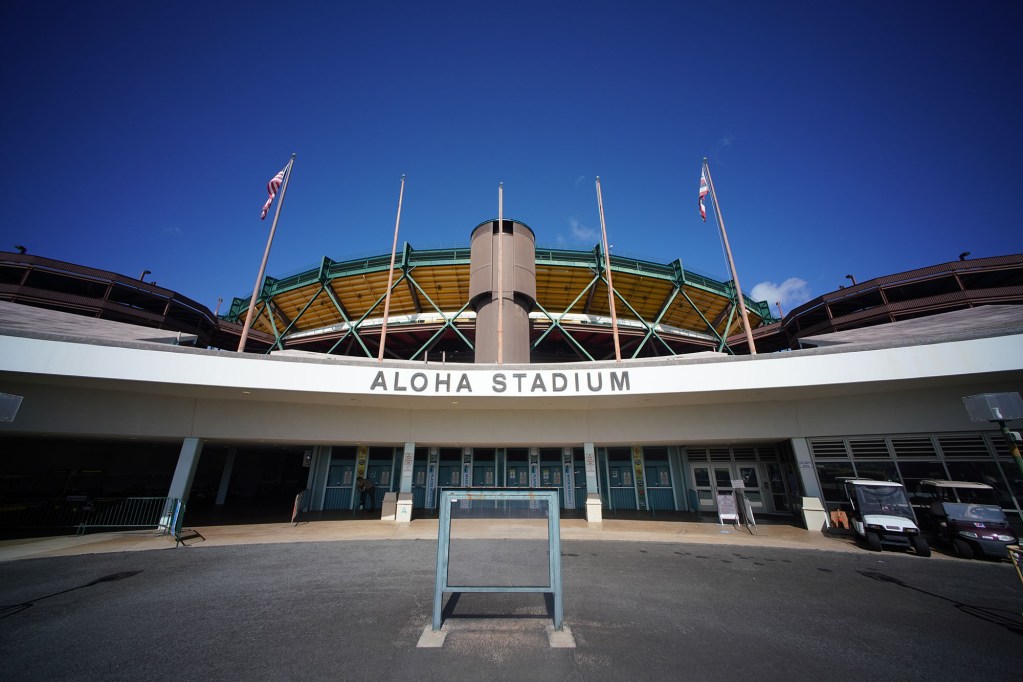
Soon Aloha Stadium will be demolished. Good riddance. When it came to big things, Aloha Stadium was a spectacular failure.
What redeemed it were small things — things way under the radar of boisterous boosterism and inflated fantasies. Many small memories are personal and only-in-Hawaiʻi. And they linger.
Here’s how the stadium failed and what saved it.

Ideas showcases stories, opinion and analysis about Hawaiʻi, from the state’s sharpest thinkers, to stretch our collective thinking about a problem or an issue. Email news@civilbeat.org to submit an idea or an essay.
How The Stadium Was A Big-Time Failure
Aloha Stadium was a mainland transplant. We wanted a stadium just like theirs.
So, Pittsburgh, Atlanta and Philadelphia built stadiums that Aloha Stadium aped — huge, hulking behemoth chasms with 50,000 or so seats.
Watching an event from the upper deck felt like being in a different time zone. Built for both professional football and baseball. Bad for both, especially if there were lots of empty seats.
Aloha was built to be just like that. Their notions of big-time modern became ours. Stepping up.
Except those mainland cities quickly learned their lesson. All of them built new, more intimate, smaller spectator friendly stadiums.
They got new stadiums while, flop, Hawaiʻi got damaged goods.
Aloha’s sleek modern bells and whistles — protective “patinas” of rust and movable seats — did not work.
And over time, Aloha became more and more damaged in other ways, as going big time faded away in our field of dreams.
No major league team, the minor league baseball team that had so much support at the old Honolulu Stadium drew pitifully tiny crowds at Aloha, then left.
Major events like concerts dwindled. Football attendance dropped big time. Bowl games left
And then the biggest damage of all. The stadium suddenly shut down forever, like a secretly failing diner shuttering without telling its workers who only found out when they showed up for work.
The recent “Aloha to Aloha Stadium” celebration had to be held in the parking lot next door because the stadium itself was too unsafe to hold it inside. That parking lot had already become its own kind of vacant and useless asphalt ghost town.
What Redeemed The Stadium
Two things. One is the ability of people in Hawaiʻi to take a shiny but alien object and make it their own.
Students of culture call these behaviors resisting, adopting and accommodating. Think of it as the way Hawaiʻi has creatively dealt with the outside at least since the missionaries showed up. Making Spam musubi out of Spam.
It says a lot about Hawaiʻi that the Hawaiian cultural renaissance movement emerged at the same time the stadium did.

The second thing that redeemed the stadium has been the power of small memories. No surprise that the “Aloha to Aloha Stadium” concert had plenty of reminiscing about the big-time stuff, like football teams and major concerts.
Henry Kapono who opened this last celebration had also opened Aloha Stadium with a concert that close to 40,000 people attended.
Before he stepped onto the stage one of the Mākaha Sons said that football may have been the biggest draw, but graduations at the stadium involved so many families over the years.
“If you go from 1975 all the way through now,” he said, “multiple schools have walked here. A lot of people have walked here in this stadium to graduate.”
Between sets Billy V asked the crowd to call out the neighborhood they came from.
Christian Yrizarry of Hoʻonuʻa, who also performed, said that his favorite song they sang at the celebration was ”Pride:”
“Westside, any side, every side. Doesn’t matter anyway cuz we all got Hawaiian Pride.”
Local memories to the max.
My Own Memories Of Small Things
Here are my stadium memories. I’m sure yours are different. So, don’t see mine as a model. See them as a spark to get you to think about your own. They aren’t just lingering memories. They are important because they linger.
• Baseball at Aloha Stadium was such a downer. The attendance for the minor league Hawaiʻi Islanders got so bad that one game on July Fourth followed by fireworks drew more fans than the rest of the season combined.
A bunch of us, friends and neighbors, with kids would celebrate the Fourth at that game. It was like a picnic with seat backs. The children, who certainly were not going to concentrate on the game for three hours, wandered around, watched here and there, waiting for the fireworks.
The youngest who is now a teacher at Punahou, always fell asleep in her seat. I can still picture her dad carrying her to the parking lot.

When Canadian teams came to play the Islanders, there would be three national anthems. “O Canada,” the “Star Spangled Banner” and “Hawaiʻi Ponoʻī.”
People sang “Hawaiʻi Ponoʻī” the loudest. Not even close.
• I occasionally went to University of Hawaiʻi football games. The most memorable one had nothing to do with the score, which I don’t remember. Our neighbor, one of Fred Von Appen’s assistant coaches, had given us free tickets, which meant we sat with the coaches’ wives.
They knew the game of football, but they also knew the gossip about the team, which they happily shared. And they kept their eyes on one of the coaches’ wives to make sure she didn’t get drunk and do something really stupid.
• It was at the annual Meadow Gold high school marching band festival where I learned about the strength of Kahuku’s community. One of the smallest bands at the festival, but probably the best, with a football-like cheering section that traveled over 30 miles to see their son the tuba player and daughter on the flag team. Or just to support the band.
• Hawaiʻi football fans made tailgating our own. This was not a stretch. You could say that people here never stop tailgating: “Bring food.” My son’s Little League team tailgated after every practice.
I don’t remember when, but one year I had a ticket for a UH football game that began less than two hours after Yom Kippur, the holiest of all Jewish holidays, ended.
We Jews fast on Yom Kippur, so when the synagogue service ended, I rushed out past the delicious break-the-fast buffet that was ready and waiting and drove five miles through game time traffic to get there before kickoff.
I’d packed a bag lunch to eat when I got there. It was about 26 hours since I’d last eaten.
I parked and hurried for the entrance to chow down at my seat.
Except they wouldn’t let me in. No outside food allowed.
So, I sat down on the curb, separate from the pleasant smells and sounds of the tailgaters. A solitary veggie burger-eating Jewish guy with a reminder that I’m part of this place and different at the same time.
“This stadium holds so many memories — great memories,” Henry Kapono said,
“And I’m looking forward to the new stadium and what it will bring for the people of Hawaiʻi.”
With the new stadium, if it gets built, history may repeat itself. The idea of the stadium as being a part of an “entertainment district” is definitely a mainland transplant.
Big Dreams fill the air again as people complain that the new one is too small to hold large football crowds.
We’ll see. Will we make the stadium our own once again?
If we do, it will be because the stadium will be the skeleton. But the small things will be its heart and soul.
 Sign up for our FREE morning newsletter and face each day more informed.
Read this next:
Local reporting when you need it most
Support timely, accurate, independent journalism.
Honolulu Civil Beat is a nonprofit organization, and your donation helps us produce local reporting that serves all of Hawaii.
ContributeAbout the Author