Neal Milner: Emergency Order Over Road Deaths Is A Good Idea That Won't Work
There are so many reasons why issuing a proclamation won’t solve this problem. But it can’t hurt.
November 5, 2025 · 7 min read

About the Author

Gov. Josh Green’s recent emergency order about traffic deaths was absolutely necessary. And absolutely flawed.
It’s full of limitations, yet could not come at a better time. In fact, it’s full of flaws precisely because it could not come at a better time.
Both the order’s upside and limits have the same roots: the idea that the dramatic increase in the state’s traffic deaths constitutes an emergency.
Emergencies trigger responses that are intense but narrow. A crisis needs a laser focus. No time for the luxury of going wide. An emergency is imminent — right now! Things are unacceptable, totally out of hand.

Ideas showcases stories, opinion and analysis about Hawaiʻi, from the state’s sharpest thinkers, to stretch our collective thinking about a problem or an issue. Email news@civilbeat.org to submit an idea or an essay.
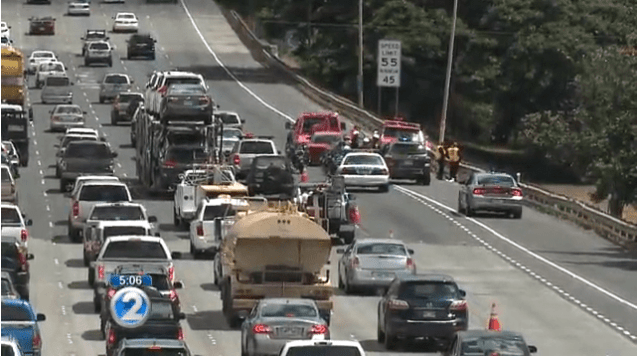
As of Oct. 24, there had been 106 traffic deaths this year in Hawaiʻi, more than the total for all of 2024.
An emergency response like Green’s is an important mobilizer, a call to do something about traffic deaths right here, right now.
This means doing something fast and furious while necessarily ignoring some issues because they are too complicated and there’s too little time.
That’s what’s happening with SNAP benefits, right here, right now.
Due to the national government shutdown, people who depend on the government for food will likely not have enough to eat.
Oregon’s governor got it right when she called this “a food emergency.” Hawaiʻi, like Oregon and many other states, has stepped up to fill this gap.
Good, but overall, both before and after this response, Hawaiʻi will continue to have thousands of families who don’t get enough to eat. Food insecurity is an ongoing problem related to embedded, long-term economic, social and political factors.
But the SNAP emergency response can’t afford to deal with that bigger picture. No time. With people losing their benefits, all that’s important is getting food into their mouths.
Fundamental limits and fundamental necessity. The traffic death situation is a lot like that.

The Limits To Green’s Traffic Order
First, maybe it is not an emergency.
It’s possible that the traffic death increase is just a one-time exception. Statistically, it’s just one data point. The state’s change in traffic deaths is sudden and dramatic.
But an emergency response can’t wait because at this very moment things seem so out of control. Green can’t wait until 2030 to see what the five-year fatality trend line looks like.
Second, the governor’s executive order is hard to implement.
It talks about using law enforcement, existing scientific knowledge and education as ways to turn things around.
As a Civil Beat investigation put it, “the (fatality) issues that need to be addressed are formidable, ranging from an onerous prosecution process that may allow those responsible to escape consequences to longstanding and hard-to-fix infrastructure problems.”
We’ll get to the infrastructure and education issues in a minute. As for fast changes in the criminal justice process, name one.
Third, what seems to work takes time because it involves altering human behavior. Changing driving behavior is messing with both the brain and the heart.
The rise in traffic fatalities is overwhelmingly caused by what a neuroscientist calls the “four horsemen of death: speed, impairment, distraction and fatigue.”
Dealing with these requires a combination of law enforcement — seat belt laws and laws against using your phone in the car — and an educational process to get people to slow down and be more careful.
The governor nods in the direction of all of these. Both the state and Honolulu had already moved in that direction, but the executive order implies that all of this will be stepped up. A good beginning as an emergency response. Maybe simply making people more aware of the traffic death situation will make them better drivers.
But behavior change, whether through law or education, takes time.

Fourth, the most important changes take the most time. The best way to reduce traffic deaths is to change the road infrastructure. The best way to reduce fatalities is not to lower the speed limit.
In many ways Hawaii’s roads aren’t designed for safe driving, not designed to handle the amount or kind of traffic they have to handle. Many have bad sidewalks or none at all.
The Department of Transportation has been working on this. Speed humps are the most visible example. But as its director, Ed Sniffen admits, the emergency order rollout is first focusing on individuals because that is easier to change than the roads.
It’s godawful hard to change peopleʻs behavior. And yet that, according to Sniffen, is still easier and quicker than fixing the infrastructure.
Under the best conditions, roads change gradually in dribs and drabs. And remember when it comes to building and fixing infrastructure, this is Hawaiʻi. Speed humps are one thing. It took years before there was anything close to a network of bike lanes.
And how’s that road-calming roundabout in Kailua coming along?
Fifth, traffic issues involve a combination of politics, culture and resistance: Call these bumps in the road.
Both nationally and internationally traffic safety has become more politicized with fights over speed limit reduction, bike lanes, walkability and other kinds of road changes DOT proposes.
We Drivers Will Decide
None of these has been a big deal in Hawaiʻi, but there are grumblings about speed humps and bike lanes for sure. There are suspicions about the accuracy, fairness and efficiency of traffic cameras.
Besides, with traffic safety concerns, it doesn’t take a political movement to create a backlash. We drivers do our own backlashing all the time.
In many countries, an international traffic expert says, speed limits are considered merely a suggestion, meaning that legal changes won’t usher in cultural ones.
Same in Honolulu, where a 35 mph sign on the Kalanianaʻole Highway through East Oahu is like your choice whether to eat more vegetables when your mother isn’t around.
One other thing particular to Hawaiʻi about culture that comes up all the time when something is not going well: the loss of the Aloha Spirit.
I have always been skeptical of this as a catchall explanation, so I will just toss it out to you as something to think about: Economically and culturally Hawaiʻi has become a place more conducive to those four horsemen of traffic deaths: speed, impairment, distraction and fatigue.
Whether or not you call this a loss of aloha, it may be the ultimate challenge that Green’s emergency order faces.
Two and a half cheers for an emergency response like Green’s for focusing attention, starting the ball rolling and — this is government, remember — doing something fast.
As to that missing half-cheer, even the most optimistic advocates of road safety stress patience.
 Sign up for our FREE morning newsletter and face each day more informed.
Read this next:

Local reporting when you need it most
Support timely, accurate, independent journalism.
Honolulu Civil Beat is a nonprofit organization, and your donation helps us produce local reporting that serves all of Hawaii.
ContributeAbout the Author