As Hawaiʻi Heats Up, Look To Trees As Life-Saving Infrastructure
They are critical infrastructure that make our streets safer, our air cleaner and our communities more resilient.
December 5, 2025 · 5 min read

About the Authors


It is no secret that Hawaiʻi is getting hotter. Rising temperatures across the islands put communities, infrastructure, and public health at risk. The World Economic Forum calls extreme heat the “deadliest climate risk of our time” claiming more lives annually than floods, hurricanes, earthquakes and wildfires combined.
While the scale of the problem can feel overwhelming, one powerful solution is already within reach: protecting and expanding our urban tree canopy.
Urban trees are not just beautification. They are critical infrastructure that make our streets safer, our air cleaner, our neighborhoods healthier, and our communities more resilient.

Ideas showcases stories, opinion and analysis about Hawaiʻi, from the state’s sharpest thinkers, to stretch our collective thinking about a problem or an issue. Email news@civilbeat.org to submit an idea or an essay.
Street Trees Save Lives
Urban trees protect health. They filter air pollutants like carbon dioxide and particulate matter from vehicle emissions — especially important in high-traffic, densely populated areas.
And they help cool our neighborhoods by reducing the urban heat island effect. Research demonstrates that 82% of heat-related deaths in Honolulu are already attributable to climate change.
Shade and evapotranspiration can significantly lower local temperatures, providing measurable relief for kūpuna, keiki, and those most vulnerable to heat-related illness.
Street Trees Make Streets Safer
By visually narrowing roadways, trees naturally slow traffic and make drivers more alert. A study in Orlando found a 45% increase in crashes on streets without trees.
That matters in Hawaiʻi, where pedestrian fatalities remain among the highest per capita in the nation. On Oʻahu alone, traffic fatalities have already surpassed last year’s total, with pedestrians, bicyclists, and motorcyclists accounting for over 70% of those killed.
Trees should be included as an essential part of development, transportation planning, and road improvements and design.
Street Trees Are Infrastructure
Urban trees increase property values and commercial vitality. A Portland study found tree planting increased home values by 9%, delivering a 12-to-1 return on investment through property taxes. Tree-lined streets attract more pedestrians, boost foot traffic, and make commercial corridors more inviting — supporting small businesses and local economies.
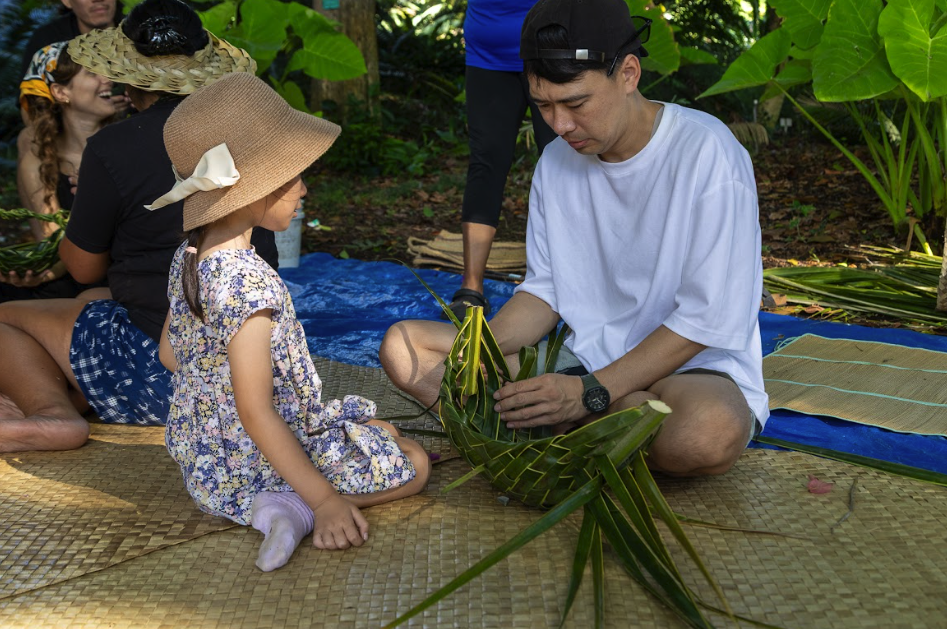
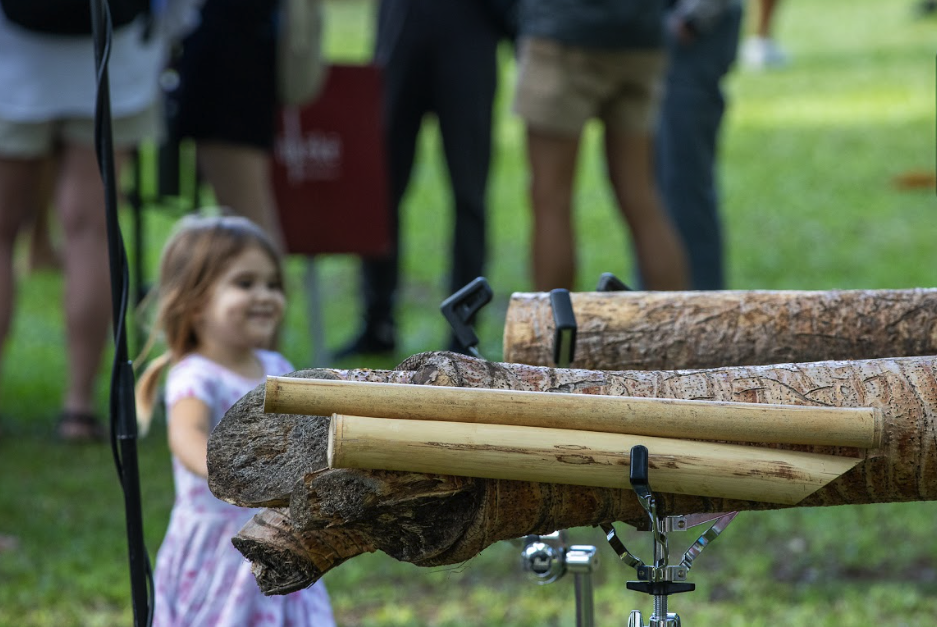
Beyond economics, trees provide social and cultural continuity, which is priceless. They are living landmarks connecting generations. Mango and ʻulu trees planted decades ago still bear fruit for today’s families. Kamani trees that once shaded neighborhoods have been carved into objects that reconnect keiki and kūpuna.
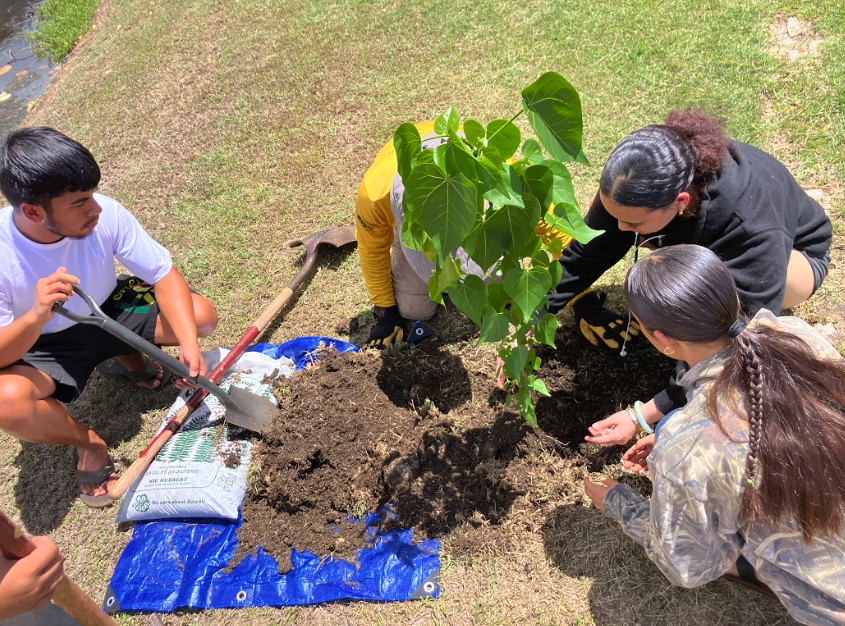
As we replace invasive species with native trees, we strengthen both our ecosystems and our sense of place.
Yet we’re also losing ground. Canopy losses have worsened heat and reduced walkability. Major public investments — like improvements around the Capitol, the Fasi Municipal Building, and other redevelopment projects — are rare opportunities to demonstrate leadership by prioritizing street trees instead of treating them as an afterthought.
Urban Trees Help Climate Adaptation
A healthy tree canopy can capture up to 27% of rainfall, reducing flooding and easing pressure on aging stormwater systems. Trees filter runoff before it reaches our streams, protecting watersheds and nearshore ecosystems like wetlands and coral reefs.
Managed urban forests also reduce wildfire risk by cooling neighborhoods and increasing humidity through evapotranspiration. As drought and wildfire threats increase across Hawaiʻi, especially in leeward areas, strategic tree planting becomes a public safety measure.
But redevelopment continues to erode canopy in places like Ala Moana, Makiki, and Kakaʻako. Replacement trees are often too few or too small to compensate for mature canopy loss. Meanwhile, rapid growth in ʻEwa and Kapolei proceeds with vast parking lots and minimal shade, intensifying heat and discouraging walking and biking.
We can do better by incentivizing developers to exceed minimum tree requirements, extending shade into surrounding streets, and designing urban spaces that allow trees to thrive using modern solutions like permeable pavements and expanded tree wells.
As Hawaiʻi adapts to a warming climate, urban forests must be central to our adaptation strategy. Urban trees are not optional amenities. They protect our people and our ʻāina. They are life-saving infrastructure.
Be Part Of The Solution
- Plant a tree at home at least 5 feet from your house, driveway, and sidewalk. Under power lines? Choose smaller species like alaheʻe or lignum vitae. Right tree, right place. And don’t forget to care for it, they need nurturing like we all do!
- Request a street tree. If you’re on Oʻahu, request that the city’s Division of Urban Forestry (duf@honolulu.gov) plant a tree in the planter strip fronting your home. All you need to do is help water it.
- Call your councilmember on Oʻahu, Kauaʻi, Maui and Hawaiʻi island. Ask them to fully fund street tree planting and maintenance.
- Call your legislators. Tell them all state transportation and education projects must include trees as essential infrastructure — not optional landscaping.
The year 2025 is officially the Year of Our Community Forests. Community partners are celebrating the importance of trees in the wao kanaka: the trees and forests where we live, learn, and play. To learn more or find classroom activities, volunteer opportunities, tree giveaways and more, visit the program.

 Sign up for our FREE morning newsletter and face each day more informed.
Community Voices aims to encourage broad discussion on many topics of community interest. It’s kind of a cross between Letters to the Editor and op-eds. This is your space to talk about important issues or interesting people who are making a difference in our world. Column lengths should be no more than 800 words and we need a photo of the author and a bio. We welcome video commentary and other multimedia formats. Send to news@civilbeat.org. The opinions and information expressed in Community Voices are solely those of the authors and not Civil Beat.
Read this next:
Local reporting when you need it most
Support timely, accurate, independent journalism.
Honolulu Civil Beat is a nonprofit organization, and your donation helps us produce local reporting that serves all of Hawaii.
ContributeAbout the Authors