Makana Eyre: This Ex-Pat Brings Hawaiian Food To High-End NYC Restaurant
Chung Chow never lost his Honolulu roots when he trained with one of the world’s most renowned fine-dining chefs.
December 2, 2025 · 6 min read

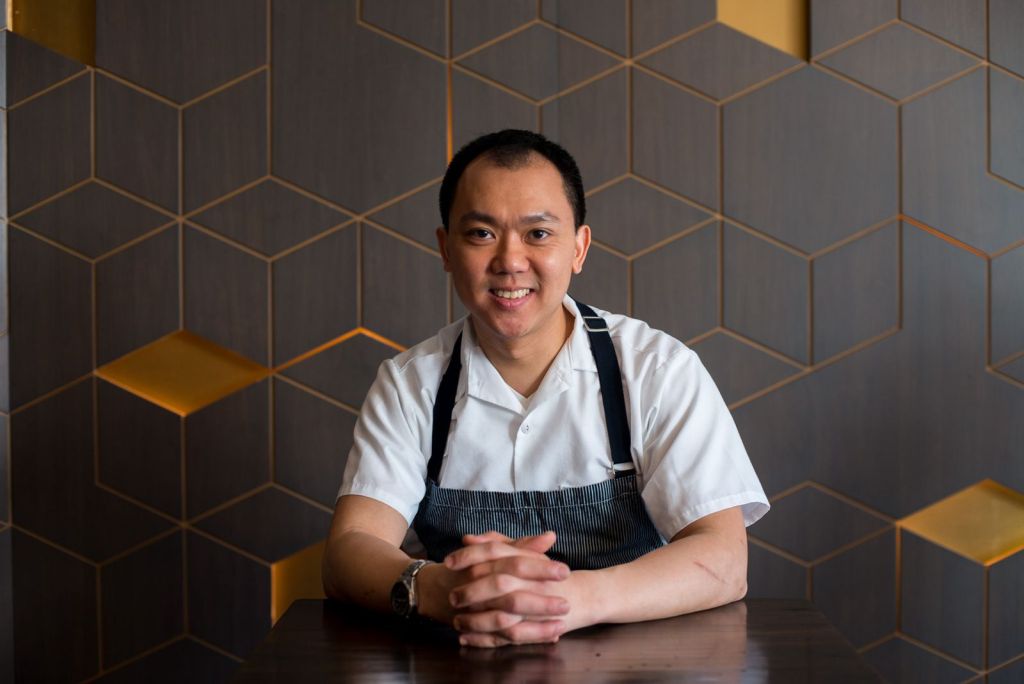
About the Author

With L&L Drive-Inn now a presence in cities across the nation, eating a loco moco in Manhattan, as I did the week before last, is no longer a novel experience. That it was the best loco moco of my life, however, did feel surprising.
The man behind the dish is Oʻahu native Chung Chow, a veteran of the New York fine dining scene. Since 2015, Chow and his partners have run noreetuh, a beloved Hawaiian restaurant in Manhattan’s bustling East Village.
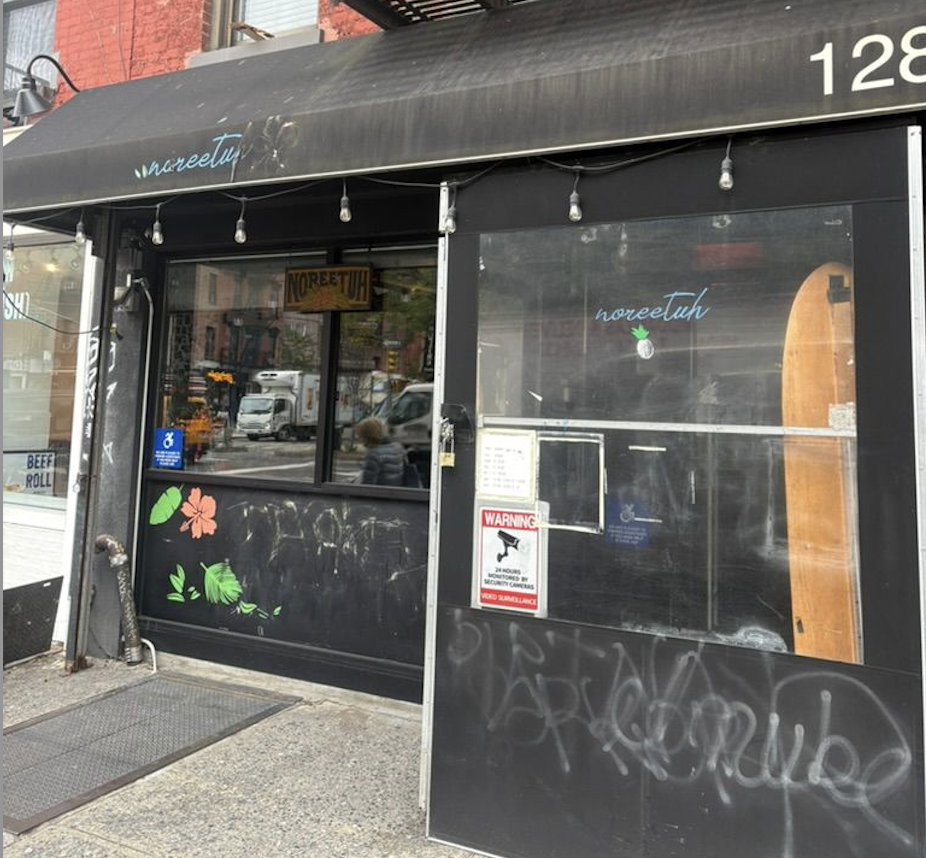
From the outside, noreetuh — which means playground in Korean — is unassuming. It stands on the ground floor of a redbrick tenement building in a neighborhood filled with New York University students and Ukrainian émigrés.
Its facade is black, as is its awning, which is tucked under a fire escape. Nothing except the small hibiscus flower and leaf motif printed beneath its window suggests a Hawaiian restaurant inside. It only becomes clear when you enter and smell the aromas of home: shoyu, sweet dressings and marinades, limu, rice, fish.

Ideas showcases stories, opinion and analysis about Hawaiʻi, from the state’s sharpest thinkers, to stretch our collective thinking about a problem or an issue. Email news@civilbeat.org to submit an idea or an essay.
I first met Chow on a chilly afternoon in November, while he and his team were prepping for evening guests. Over a can of Hawaiian Sun POG, we discussed his approach to cooking, his roots on Oʻahu and his culinary career.
Chow was born in Hong Kong, but when he was 7 months old, his parents emigrated to the United States and settled in Hawaiʻi where they had relatives. A formative place in Chow’s childhood and adolescence was his parents’ noodle factory on King Street where he spent countless hours, sweeping the floors and helping with production. This experience, he says, instilled in him the work ethic needed to thrive in the restaurant business.
After studying Japanese at the University of Hawaiʻi and spending time in Japan, he ended up at the California School of Culinary Arts in Pasadena. A chance encounter with renowned chef Thomas Keller’s brother led to an opportunity in Keller’s culinary empire. Chow quickly packed up his life in his Honda Civic hatchback and made the seven hour drive to Napa County and landed at Bouchon, one of Keller’s restaurants.
Then came an opportunity to head east and join the team that would open Keller’s Per Se, a restaurant that would go on to earn immense acclaim and three Michelin stars. Chow spent the next six and a half years there, doing just about every job in the kitchen. When Per Se’s chef de cuisine left to open Lincoln Ristorante, a fine-dining restaurant focused on Italian cuisine, Chow followed him.
All the while, Chow was developing his technique — and ruminating about opening his own place.
“It’s like being a writer, a lawyer, or a doctor,” he told me. “You want to open your own business, a place that can highlight your experience, your technique, your background, your skill.”
In 2015, Chow and his partners did just that with noreetuh.
Chow’s playbook at noreetuh is rooted in transforming iconic local dishes with first-rate ingredients and the execution only a classically trained chef can accomplish.
Perhaps most familiar to a guest from the islands is the selection of musubi, which are such a hit that noreetuh’s version has made its way into Instagram’s GIF library (search “musubi” and look for the rotating stack of four).
This spin on this post-Little League or beach snack embraces surprising fillings. While Chow does serve the classic spam version (flavored with kombu-infused shoyu), the options with Japanese scallops, Maine uni, or braised bonito flakes are a delightful twist on the original.
Chow’s vision is perhaps most evident in his loco moco, which I tried on a busy Friday night when noreetuh was full of vibrant and hungry New Yorkers.
The noreetuh loco moco has the same architecture as its Hawaiian cousin: rice, meat, egg, mac salad and gravy, presented in seductive layers. Yet Chow selects his ingredients with great care and for their quality — that makes all the difference. He uses mochiko chicken, a jidori egg, and mac salad seasoned with lemon, soy, vegetables, and Kewpie mayonnaise for extra umami. The whole dish is covered in rich gravy, deep in flavor thanks to its base of stock made in-house with roasted chicken bones.
Noreetuh succeeds because of the vision Chow and his partners follow. It has the feel of an insider’s joint, the sort of place where chefs and sommeliers congregate because of the refined yet unfussy food, the convivial atmosphere, and the depth of the wine list (noreetuh is known for its selection of whites, which Chow says go exceptionally well with Hawaiian food).

Over the last 30 years, many chefs have come to prominence for their work elevating overlooked food cultures. Whether it’s Scandinavian chefs rethinking scavenged Nordic ingredients or American chefs bringing Afro-Caribbean or Southern flavors to New York or San Francisco, there has been a revolution in the definition of fine dining.
Chow seems to be the only chef on the continent giving such attention to the ingredients and culinary richness of Hawaiʻi. In his diligent, quietly confident manner, he treats them with seriousness, rigor and respect, cutting away all the kitsch and tikis and plastic lei most Americans associate with Hawaiian restaurants.
Noreetuh celebrated its 10th anniversary in March. In the cutthroat New York City restaurant world, where a few poor social media reviews can sink you, that feels like a sizable accomplishment.
While the work is demanding and the margins rarely as thick as anyone wants, Chow seems optimistic. Just last week, noreetuh was included in the Michelin Bib Gourmand, a distinction for restaurants delivering exceptional food at a good price.
Yet he also knows that nothing in this business is static. Movement must never stop. For Chow and his business partner, Jin Ahn, that means opening a new restaurant a few blocks from noreetuh inspired by huli huli chicken and Asian flavors they’ve mastered. If my luck is good, I’ll be able to visit it on another trip to New York.
 Sign up for our FREE morning newsletter and face each day more informed.

Local reporting when you need it most
Support timely, accurate, independent journalism.
Honolulu Civil Beat is a nonprofit organization, and your donation helps us produce local reporting that serves all of Hawaii.
ContributeAbout the Author