Will Bailey: The Line We Do Not Cross
What the boat survivors tell us about the decay of American military norms.
December 18, 2025 · 8 min read

About the Author
There are lines in war you do not cross — not because the enemy deserves mercy, but because you deserve to come home with your humanity intact.
On Sept. 2, in international waters of the southern Caribbean, a U.S. MQ-9 Reaper drone operating under newly expanded “lethal force” counter-drug authorities fired a missile at a suspected Venezuelan go-fast boat linked to the Tren de Aragua gang, a U.S.-designated foreign terrorist organization. The vessel, allegedly carrying cocaine, was disabled and set ablaze. Eleven men entered the water.
Drone footage later showed that the two who managed to climb atop the overturned hull were injured, unarmed, waving their arms toward the aircraft overhead, and no longer posing an active threat.
The drone fired a second missile.

Under the Law of Armed Conflict — Article 41 of Additional Protocol I, incorporated into U.S. military manuals including DoD Directive 2311.01E — anyone hors de combat is protected from attack. The rule is unambiguous.
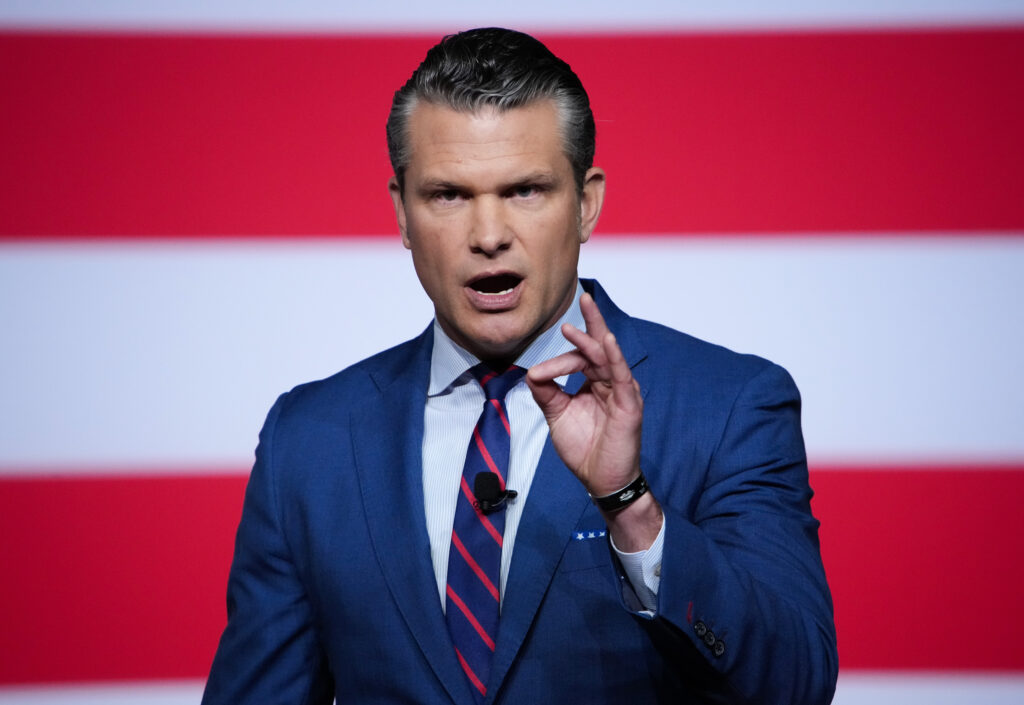
Multiple officers and classified summaries now in the possession of the Senate and House Armed Services and Intelligence committees state that Secretary of Defense Pete Hegseth issued a verbal pre-mission directive to make the operation “lethal” and to “kill everyone on board.”
On Dec. 4, Adm. Frank Bradley, commander of U.S. Special Operations Command, testified in closed session that no explicit “kill them all” order was given after survivors were reported — but that he authorized the follow-on strike to destroy remaining cocaine bales and prevent cartel recovery.
The incident — the first of at least 22 such strikes by December, killing more than 87 people — remains under active Department of Defense investigation for potential violations of the Law of Armed Conflict. The White House continues to describe both strikes as lawful self-defense under expanded counter-narcotics rules of engagement.
This is not politics. It is the thin cord that keeps force tied to law. And it is not isolated.
The Commander
Adm. Frank Bradley is the kind of officer senior leaders rely on when the mission is complicated and the stakes are not theoretical. A career Navy SEAL with command experience spanning DEVGRU, JSOC, SOCCENT, and now USSOCOM, Bradley represents the generation shaped by Iraq, Afghanistan and the layers of oversight, caution and legal review those wars imposed.
He has lived every tier of the military system — from the dust and noise of direct action to the polished briefings of the Pentagon. He is also a physicist by training, known for his technical rigor and methodical approach.
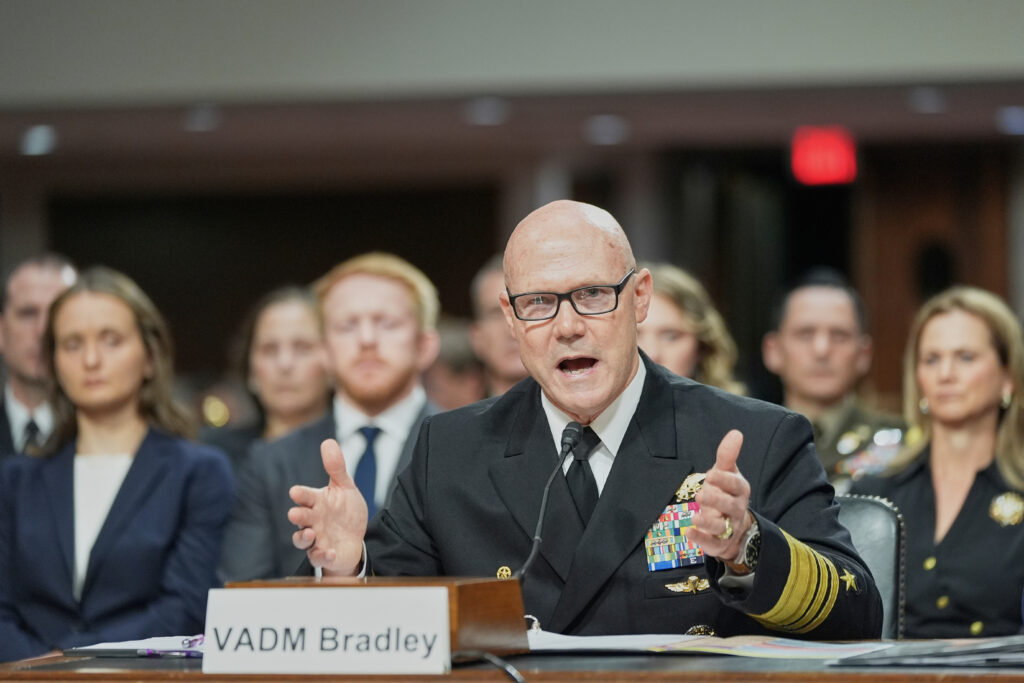
Which is what makes his testimony striking. Bradley did not present the Sept. 2 strike as a misunderstanding. He acknowledged the survivors. He acknowledged he authorized the second missile. He described the rationale — preventing cartel retrieval and acting within the Secretary’s intent — yet left open the legal and ethical questions hanging over the mission.
Bradley is not a politician. He knows the line because he has spent a lifetime operating near it. His testimony made clear: whatever happened that day, it wasn’t routine.
The Defender
If Bradley speaks with operational caution, Sen. Eric Schmitt speaks with confidence that the controversy is unwarranted.
A Missouri Republican and former state attorney general, Schmitt comes to the issue as a national conservative and a member of the Senate Armed Services Committee. His focus is presidential authority and the perceived public mandate to use force against narcotics traffickers.
On ABC’s “This Week,” he made the administration’s case:
“President Trump is acting with his core Article II powers. No serious legal expert would doubt the president has authority to blow narco terrorists out of the water.”
“Seventy-five percent of Americans support us blowing narco terrorists out of the water.”
He dismissed concerns about the follow-on strike, characterizing Democratic objections as political rather than legal, and criticized calls for servicemembers to question or disobey orders.
For Schmitt, the controversy is evidence of misplaced priorities — a legal debate obscuring a security threat. His framing reflects a constituency that sees narcotics trafficking as an act of war and expects an assertive response. It also reflects a widening divide in how lawmakers interpret both presidential power and the rules that limit force.
Where Bradley testified with professional restraint, Schmitt speaks from ideological clarity. Their difference is not in facts, but in interpretation.
The Witness
Sen. Tammy Duckworth offers a third perspective — not ideological, but procedural.
A Democrat from Illinois, Duckworth is a combat veteran who lost both legs flying helicopters in Iraq. She is one of the Senate’s most experienced voices on military law and oversight, and she has been among the first to label the Sept. 2 follow-on strike as unlawful.

On CNN’s “State of the Union,” she said:
“Under all the international laws of warfare, you are supposed to help render aid to that individual. You’re not allowed to go back in and kill them. It is a war crime.”
She argued that once survivors were injured, unarmed and signaling distress, they were hors de combat and protected. She described the second strike as “essentially murder,” and has pressed for the release of unedited video.
Her position emphasizes process over politics — whether the required legal checks were followed, whether Congress was accurately briefed, and whether expanding counter-narcotics authorities blurred longstanding rules of engagement.
If Schmitt argues the mission was authorized, Duckworth argues that authorization does not override the law of armed conflict.
Together, their disagreement reveals a deeper fracture: what binds the American use of force — and who decides when those bindings matter.
The Drift
The fracture is not confined to a single strike. It appears in the pattern that forms when guardrails are treated as optional.
In March, Secretary Hegseth shared SECRET//NOFORN details of planned Yemen airstrikes in private Signal groups — including one that mistakenly included a journalist. The Defense Department’s Inspector General later found “clear violations” of classification and secure-communications rules, concluding the disclosures created operational risk.
Beginning in October, the Pentagon required reporters to sign pledges against “unauthorized” information-seeking. Roughly 60 mainstream outlets forfeited credentials in protest, replaced by a curated cohort of ideologically aligned influencers. The briefing room became less a forum than a set — and accountability narrowed accordingly.
The posture then moved inward. More than 4,000 National Guard troops were federalized and deployed under Title 10 to Democratic-led cities for “crime suppression and migration control,” even as crime rates were falling. Federal courts blocked several deployments as probable violations of the Posse Comitatus Act. The Secretary has since suggested using active-duty Marines against future demonstrations.
The American military is not designed to police American streets. When it does, the relationship between citizens and the institution changes — often irreversibly.
The Cost
I served in a military that treated these limits as more than paperwork. Not because every mission was clean or every decision wise — but because everyone understood what the rules were trying to preserve. Discipline. Restraint. Accountability strong enough to keep violence from becoming appetite.
When the rules bend at the top, the weight does not stay in briefing rooms. It lands on the people below — the ones who carry out orders, the ones who live with them, the ones who come home with whatever they had to become to do the job.
That cost is not abstract. Active-duty suicides rose again in 2024 and early 2025. Recently separated veterans remain at even higher risk. Public confidence in the military has fallen sharply since 2018. Numbers alone don’t explain why — but they mark the direction of strain.
In Hawaiʻi, this distance feels short. Service is common here. Veterans are neighbors. The aftereffects don’t disappear into the background — they show up in clinics already stretched thin, in families balancing care and work, in people trying to stay steady while carrying more than is visible.
When restraint erodes, the burden does not vanish. It shifts — into mental health, into missed work, into strained households, into quiet spirals that never make a hearing transcript.
The Line
Some in Washington dismiss these concerns as partisan. Set aside the rhetoric and look at the law.
The Law of Armed Conflict forbids attacking the hors de combat.
Classification rules forbid leaking SECRET//NOFORN over commercial apps.
The Posse Comitatus Act forbids federal troops as domestic police.
The Inspector General Act forbids firing watchdogs without cause or notice.
These are not suggestions. They are guardrails.
A nation is not tested when power is used responsibly. It is tested when toughness becomes justification, when oversight becomes inconvenience, and when authority is dressed as patriotism.
There is a line we do not cross — not because the enemy deserves mercy, but because we deserve to come home with our humanity intact.
And if we pretend that line is negotiable, we should not be surprised when the cost arrives — not only overseas, but at home.
 Sign up for our FREE morning newsletter and face each day more informed.
Local reporting when you need it most
Support timely, accurate, independent journalism.
Honolulu Civil Beat is a nonprofit organization, and your donation helps us produce local reporting that serves all of Hawaii.
ContributeAbout the Author