

Hawaiʻi Lawmakers Are Full Of Ideas For Improving Schools. Few Will Pass
Lawmakers are prioritizing free meals for students and stronger protections for school employees this session, but less than 10% of education bills become law each year.
Amid federal cuts to health care and food aid, lawmakers are aiming to strengthen school programs supporting low-income students and working families in the new legislative session. But a tumultuous state budget and ongoing uncertainty around federal funding for schools could derail proposals that struggled to gain traction even in years when Hawaiʻi had a rosier economic outlook.
For example, legislators introduced more than 15 proposals to expand access to school meals over the past three years before finally passing a law making more students eligible for free meals last spring. Lawmakers are introducing yet another proposal this year to provide free school meals to all students, only this time with a delayed start of 2029 due to budgetary concerns.
Economists recently projected that Hawaiʻi will face roughly $1.8 billion in federal cuts to Medicaid and the Supplemental Nutrition Assistance Program in the next few years.
Last fall, the department requested $25.8 million in its supplemental operating budget, which included money for school meals, professional development for teachers and support for English Learner programs. While DOE leaders championed the proposal as a lean budget request, the governor’s proposed budget included only $1.6 million in supplemental funding for schools.
Even in years with budget surpluses, education bills have a slim chance of passing— partially because of the sheer number of proposals introduced every year.

Last year, only 11 of the 263 measures referred to the House or Senate education committees — 4% of all education bills — were signed into law. In previous years, the success rate for measures passing through the two committees was roughly 8%, below the 10% average for all bills.
Bills focused on K-12 education made up roughly a tenth of all proposals introduced in 2025 — outnumbering measures related to other popular issues, like housing or higher education.
Dynamics around education in the Legislature are also shifting this year, with an influential senator known for her focus on financial accountability consolidating power over the K-12 and higher education systems. At the same time, leaders at the Board of Education are taking a more assertive role in the policymaking process.
“The bottleneck will be even tighter than it’s been in the past,” University of Hawaiʻi political scientist Colin Moore said about the changes in the Senate.
Finding New Funds
When it comes to school funding, lawmakers are grappling with financial uncertainty while also exploring new streams of revenue to support the DOE.
In addition to a tighter budget for school operations, the department is also facing potential funding shortfalls for the construction and upkeep of campuses. The governor’s budget provided roughly $475 million of the $784 million requested by the DOE for projects such as new locker rooms for female athletes and campus maintenance.
DOE is continuing to monitor potential changes in federal funding, which makes up 11% of the department’s budget, Deputy Superintendent Tammi Oyadomari-Chun said in a legislative hearing earlier this month. The department is bracing for possible federal cuts to programs for English learners and adult education, based on earlier versions of the congressional budget.
“We’re concerned, but the impacts are unknown,” Oyadomari-Chun said.
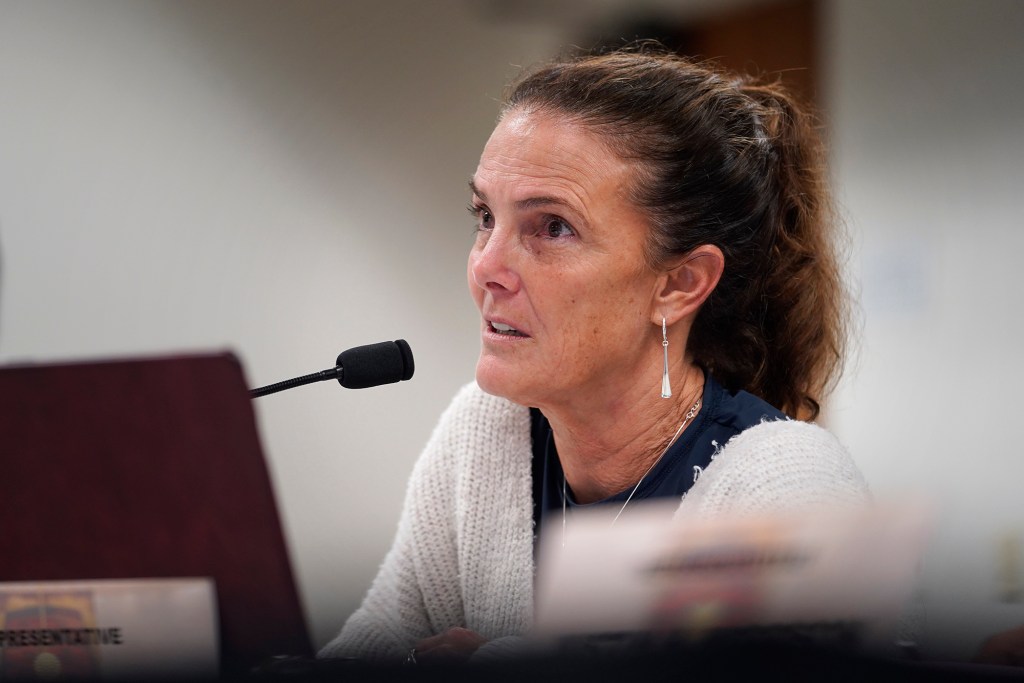
Rather than cutting funding for DOE programs and facilities, the state needs to step up and raise more money for schools, Rep. Amy Perruso said.
Perruso, a former teacher, recently proposed a constitutional amendment that would allow the state to create a surcharge on residential properties valued at $3 million or more. The bill would target second homes and exempt primary residences and affordable housing, Perruso said. She estimates the surcharge could generate $100 million a year, which would go to public schools.
“We really are arguing that we need to have more robust investment in public education,” Perruso said. “Rather than taking an austerity-based approach to the budget, we work on the revenue side.”

Explore detailed legislator profiles, voting records and what happens in hearings on Digital Democracy.
Perruso introduced a similar proposal in 2024, but the bill failed to pass, with some critics arguing that the proposal lacked specificity and could increase housing costs. A related proposal successfully passed through the Legislature in 2018, but the language for the constitutional amendment was struck down by the Hawaiʻi Supreme Court before the public could vote on it.
Other state agencies are also facing pressure to find new revenue sources for education. In a recent briefing, Senate Ways and Means Chair Donovan Dela Cruz pushed back on a budget request from the School Facilities Authority, which is responsible for building new campuses, workforce housing and public pre-kindergarten classrooms.
The authority is uniquely positioned to generate its own revenue by leasing land to private developers, Dela Cruz said, and needs to take more initiative to fund its own construction projects, especially when the state is already spending so much on education.

“Your powers do not justify you asking for general funds in growing your operations because you can generate your own revenue,” he said.
But the authority doesn’t own any land it can develop or lease for profit, said director Riki Fujitani, meaning that the Legislature would first need to transfer land from other state departments to the authority. Late last year, the authority requested $143 million for the construction of new preschool classrooms, teacher housing and a new school in central Maui, but the governor’s budget only included $32 million dedicated to preschool expansion.
Recurring Initiatives
Lawmakers introduce roughly 200 education bills on an annual basis, although less than 10% make it through the Legislature and onto the governor’s desk by the end of session. Not included in these calculations were certain bills related to higher education or early learning that didn’t pass through the K-12 education committees last year.
Many lawmakers are eager to introduce education bills, since it’s a low-cost way to respond to constituents’ concerns and directly impact families in their districts, Moore said. But it’s harder for bills to pass when lawmakers need to commit to years of providing additional funding or staffing to schools, he said, and DOE will often raise concerns about the implementation of new programs that otherwise seem like a good idea.
Of the 11 bills that passed through the education committees and became law last year, only a few required state funding.
One bill set aside more than $3.3 million to expand access to free school meals over the next two years, while another dedicated nearly $1.4 million to establish surfing as a high school sport. Both bills received strong public support but failed to pass in previous sessions.

“HIDOE has tremendous influence in how far these bills make it,” Moore said. “I think that legislators, and education committee members in particular, are reluctant to force something on HIDOE if they say they can’t support it.”
While some bills pass on their first try, many take a few years to gain momentum and draw public interest, said Roy Takumi, who formerly chaired the House Education Committee and now leads the Board of Education.
Even after the pandemic heightened public interest in making school meals free, it took more than a dozen bills and statewide advocacy from teachers and students before legislators passed a law last spring providing free school meals to students whose families make up to 300% of the federal poverty level. The law, which has a two-year implementation period, also prevents the DOE from denying kids food if they have meal debt.
Now, some lawmakers and advocates are hoping to build on the momentum from last session by expanding the same eligibility for free school meals to charter school students, who were excluded from last year’s bill.
Not all charters participate in the federal school lunch program, so the costs of expanding free school meal eligibility would be roughly $206,000 — a relatively small ask from the state, said Daniela Spoto, deputy director at Hawaiʻi Appleseed.
At the same time, she said, advocates are still pushing for the ultimate goal of providing free school meals to all students, even if the full expansion isn’t possible this year.
“We understand it’s a difficult budget period, but we would like to see a firm commitment and plan to get there,” Spoto said. Nearly half of parents said they experienced food insecurity last year, according to a November report from the Hawaiʻi Food Bank.
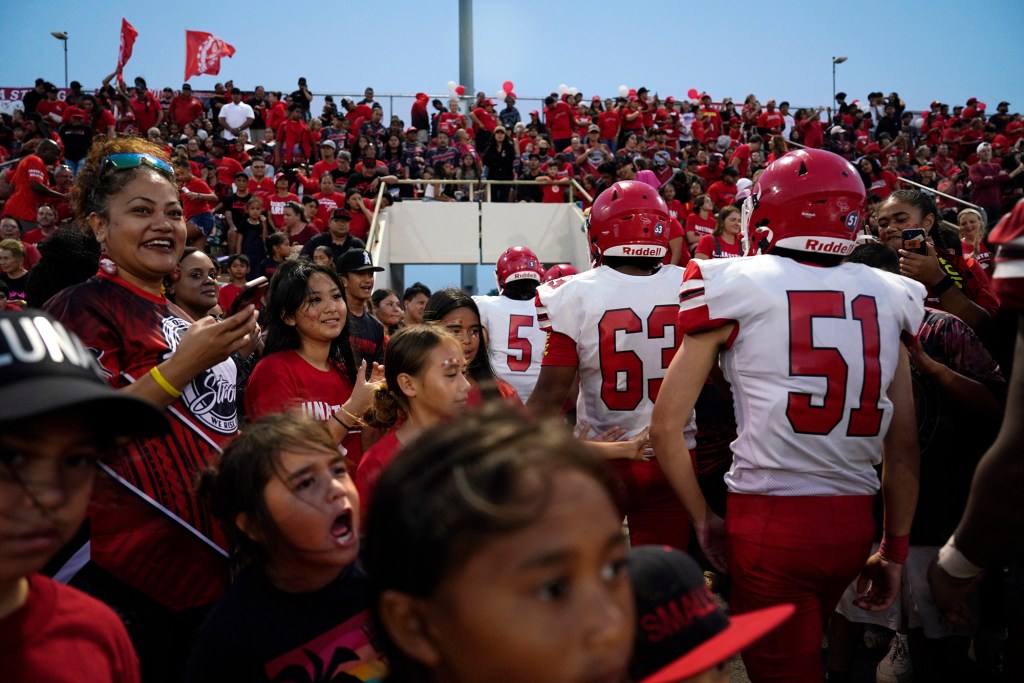
Another set of recurring bills focuses on the harassment of educational workers and sports officials. Since 2022, advocates have pushed for bills strengthening protections for DOE employees, with teachers arguing that schools need more support for workers who deal with threats and violence from parents.
So far, none of the bills have passed, with DOE raising concerns around the costs and challenges of implementing new policies. But advocates are hopeful the proposals will gain more traction this year because of public outrage over the assault on Moanalua High School’s assistant athletic director last month.
House Education Committee Chair Justin Woodson has introduced a bill establishing more protocols around DOE’s response to employee harassment and the support workers should receive when they’re seeking temporary restraining orders. Another bill, introduced by Rep. Andrew Takuya Garrett, increases the criminal penalties for assaulting educational workers and sports officials.
Hawaii Legislators
Explore detailed legislator profiles, voting records and what happens in hearings on Digital Democracy. Visit Digital Democracy
“We created a vehicle and a tool for this moment for lawmakers to act on, and I hope that they do the right thing this time,” said Lindsay Chambers, a former DOE employee who helped draft legislation around the harassment of school workers in recent years. “So I am hopeful, but unfortunately, it takes violence to spur action from our leaders.”
More Changes Ahead
Over the past several years, lawmakers have increasingly asserted themselves on issues that have traditionally been left to the Board of Education, such as graduation requirements and school policies. The volunteer board is tasked with setting educational policy for public schools, as well as hiring the state superintendent.
Last year, lawmakers introduced several bills requiring the board and department to teach financial literacy in schools and set rules around the use of cell phones on campuses. But BOE chair Takumi said the board and DOE are taking a more proactive role in setting policies that should be left to educational officials, rather than lawmakers.
Earlier this month, the department announced it would include financial literacy as part of the coursework students need to complete for graduation. The board also recently discussed establishing more regulations around student cell phone use, such as banning cell phones from elementary and middle schools during the day.
Takumi said he understands lawmakers’ impulse to introduce bills on high-priority issues, but the responsibility of setting policy should fall on the board. It’s harder to amend or update laws once they’re put into place, he said, and many bills don’t take into consideration how schools should implement new curriculum requirements.
“With the current board, there is an awareness and an acknowledgement that issues, whether it’s financial literacy or AI or cell phone use, are issues that the board should grapple with and at least have discussions on,” Takumi said.
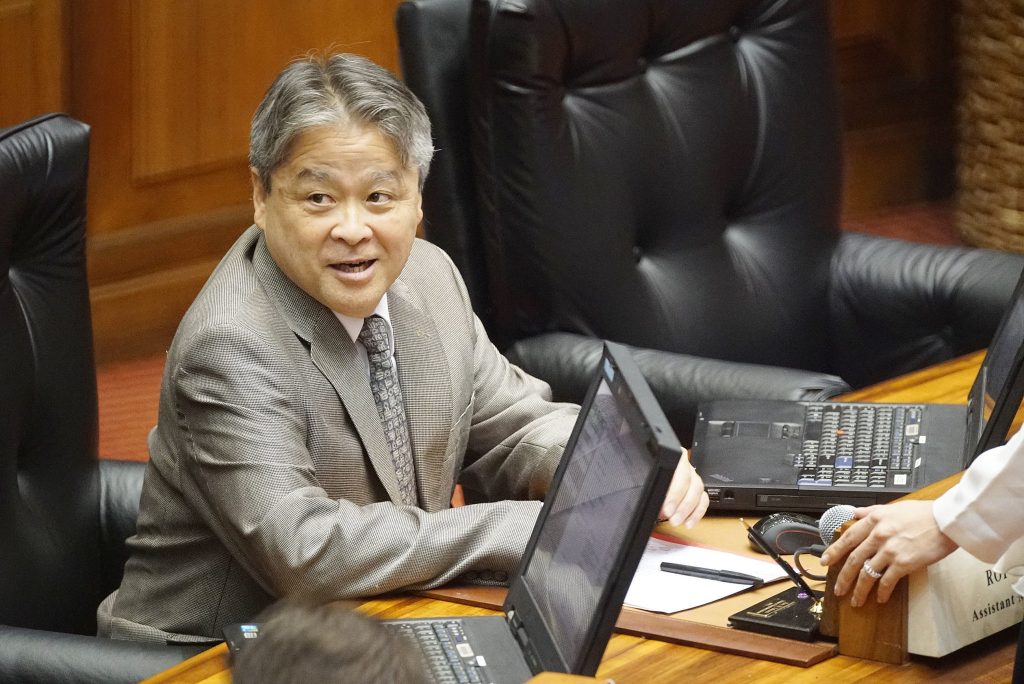
Among the most vocal lawmakers when it comes to educational policy and oversight has been Sen. Donna Kim, who has served as the chair of the Senate Higher Education Committee for several years. But starting this year, Kim will have a huge sway in both K-12 and higher education legislation after the Senate combined the two committees.

Kim is known for her expertise in education and aggressive questioning of state officials on how they’re spending state funds and running their agencies. Combining the two committees means she has even greater influence over education in the state, Moore said, adding that the committee will likely need to be more selective in which bills it hears this year as members are more pressed for time.
Moving forward, Moore said, he expects to see greater scrutiny from Kim and the committee over how the DOE spends its construction funds, especially after the department proposed lapsing millions in construction funds a few years ago.
Already, Kim called a hearing with DOE leaders on Friday, requiring them to brief the education committee on the status of driver education programs and heat abatement efforts in schools after the Office of the Auditor highlighted failures with the two programs last year.
“When public funds are appropriated, especially at this scale,” she said in the hearing, “we do expect transparency, accountability and results.”
Civil Beat’s education reporting is supported by a grant from Chamberlin Family Philanthropy.

