Hawaiʻi's Transparency Problem Isn't Just About Secrecy
Influence becomes difficult to trace not because documents are hidden, but because they are inaccessible in practice.
January 4, 2026 · 4 min read

About the Author

While Hawaiʻi requires a wide range of public disclosures, from lobbying registrations to campaign finance reports to testimony logs, the effectiveness of these systems has not kept pace with the increasing sophistication of lobbying and political influence in the islands. We release more information than ever, yet much of it remains scattered, technical and difficult for ordinary residents to interpret.
With national advocacy groups and mainland firms now entering Hawaiʻi’s political arena, the gap between what is “disclosed” and what is actually understandable has become impossible to ignore.
Secrecy still plays a role in Hawaiʻi politics, from closed-door negotiations to stalled investigations, but even when information is technically public, the structure of our disclosure systems creates a functional form of secrecy. Influence becomes difficult to trace not because documents are hidden, but because they are inaccessible in practice.

This shift became clearer recently when Civil Beat reported that a mainland lobbying firm has opened a Honolulu office, bringing national clients and Washington-style advocacy methods to local policymaking. When firms operating at this scale enter a state where most public information lives in PDFs and disconnected databases, the imbalance between professional influence and public understanding deepens.
Even experienced institutions struggle. This year, the Hawai’i State Ethics Commission found that Hawaiian Electric Co. failed to report several employees who testified on legislation as lobbyists, only correcting its reports and paying a penalty after an enforcement review. If a major corporation with compliance staff can misinterpret the rules, imagine how challenging it is for the average resident to understand who is influencing which bills.
I saw the problem firsthand. I recently tried to answer a simple question: “Who is lobbying on this year’s housing bills?”
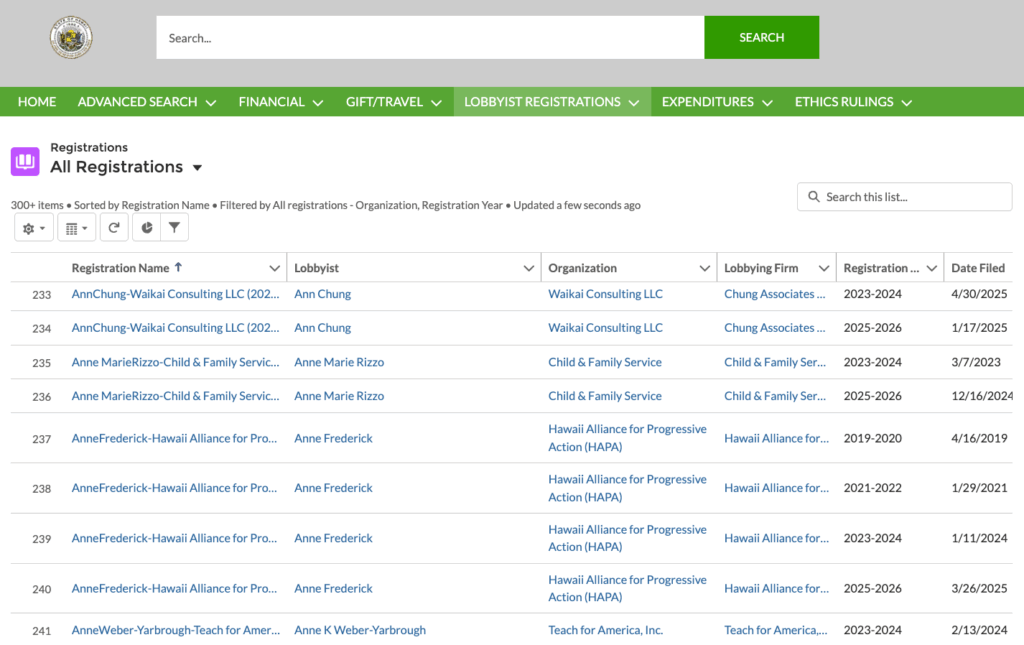
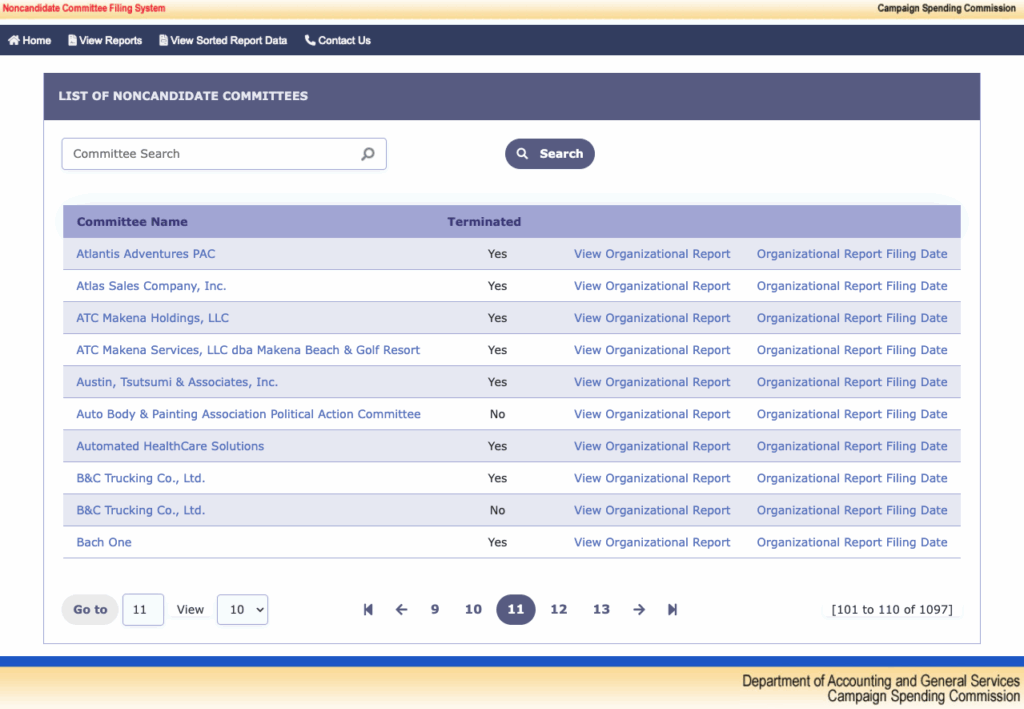
To do that, I had to navigate between Civil Beat’s Digital Democracy portal, the State Ethics Commission‘s lobbying records, and the Campaign Spending Commission‘s contribution filings. I opened pages of PDF reports, scrolled through lists of acronyms and bill numbers, and manually cross-referenced data that should have been integrated.
I ended with fragments of information, but no clear picture. The data was technically public, but functionally inaccessible.
Meanwhile, what legally counts as lobbying is expanding. Under a new law taking effect in 2027, Hawai’i will broaden the definition to include procurement and contract-related advocacy, meaning disclosure will now extend beyond bills to cover influence over government contracts and purchasing decisions.
Recent Civil Beat analysis also showed that a relatively small number of organizations dominate lobbying activity across dozens of major issues. When power is concentrated and policy influence moves across multiple stages of government, transparency must evolve accordingly.
Reform momentum exists, but the focus is still on disclosure, not usability. Watchdog agencies have called for changes to fundraising rules and post-employment restrictions. These are important, but they do not fix the central problem: the public cannot follow influence in real time.
Practical solutions are within reach:
- Add plain-language summaries to lobbying reports so residents understand what lobbyists are advocating for.
- Link lobbying filings directly to the Legislature’s bill pages, the way Montana and Colorado already do, eliminating the need to search multiple databases.
- Publish searchable, sortable data rather than static forms.
- Offer compliance tools for nonprofits and community groups so public participation is not limited to insiders.
Secrecy doesn’t always look like withholding information; sometimes it looks like releasing information in ways the public cannot realistically use. If Hawai’i wants to rebuild trust in a changing political landscape, transparency must move beyond availability and toward genuine understanding.
 Sign up for our FREE morning newsletter and face each day more informed.

Local reporting when you need it most
Support timely, accurate, independent journalism.
Honolulu Civil Beat is a nonprofit organization, and your donation helps us produce local reporting that serves all of Hawaii.
ContributeAbout the Author