Makana Eyre: A Man Of Unyielding Curiosity, Gavan Daws Lived Life Of Words
His work was loudly acclaimed and criticized but news of his death came quietly.
January 12, 2026 · 10 min read

About the Author

Gavan Daws didn’t want an obituary. I’d like to imagine he disliked the form. Obituaries are formulaic, sober, truncating a life into a few hundred words of newsprint. It’s the sort of set-up a consummate writer might resist.
Yet, as is often the case, the simpler explanation might bring us closer to the truth. Daws, as his friends knew, was private. He kept his life to his intimates, and his intimates few. When he knew he was on the final stretch of road, he decided to go forth in silence, in peace.
In an email to me from this time, he turned to John Keats for the right words, “To cease upon the midnight with no pain.” I sensed then that Daws, one of Hawaiʻi’s defining literary voices, had nothing more to say. His books, most still in print, many still for sale at bookstores, would do the talking from then on.
And so, when he died in February of last year, the local press was not informed. Word spread quietly among friends and publishing folks. But the wider public never knew.

Ideas showcases stories, opinion and analysis about Hawaiʻi, from the state’s sharpest thinkers, to stretch our collective thinking about a problem or an issue. Email news@civilbeat.org to submit an idea or an essay.
When journalists do their job well, they face the tension between the interests of their subjects and the public. The writer Janet Malcolm went so far as to describe journalism as morally indefensible. Reporters are confidence men, she wrote, preying on people for their stories, selling them out once they’ve got them.
I’ve always found Malcolm excessive in her reproach. But she does point to a dilemma. Daws didn’t want an article like this. So why have I, someone who knew him well, written one anyway?
Over the course of his life, Daws knew both admiration and rebuke. In the eyes of many, he was a pioneer, an acclaimed author bridging scholarship — often related to our beloved islands — to a national and international audience. Others, though, felt reluctant about his framing of the past.
What isn’t in dispute is his influence: significant, enduring. Even his most acerbic critics concede this. His contributions, his presence are why, with the distance of a year’s time, I have written this essay, why I think his passing deserves a place of distinction in the public record.
All the same, this is neither an obituary nor an assessment of a life’s work. There are no lines like he is survived by or he died after a ___ battle with ___. Instead, what I offer is my reflections of Daws in his multitudes — the author, the professor, the wit, the scholar — ultimately, a man who made an indelible imprint on Hawaiʻi.
From Cub Reporter To Storied Author
First, disclosures. The literary world of Hawaiʻi is small. People know one another, work with one another. So it was between Gavan Daws and the Eyres.
My grandfather, David W. Eyre, edited Daws’ articles at Honolulu Magazine in the 1960s and ’70s. My father, David L. Eyre, collaborated with Daws on a book about the Kamehameha Schools trustee controversy of the 1990s, which eventually forked into two titles, “Broken Trust” and “Wayfinding Through the Storm.” My own friendship with Daws began in 2008, during my final months of high school.
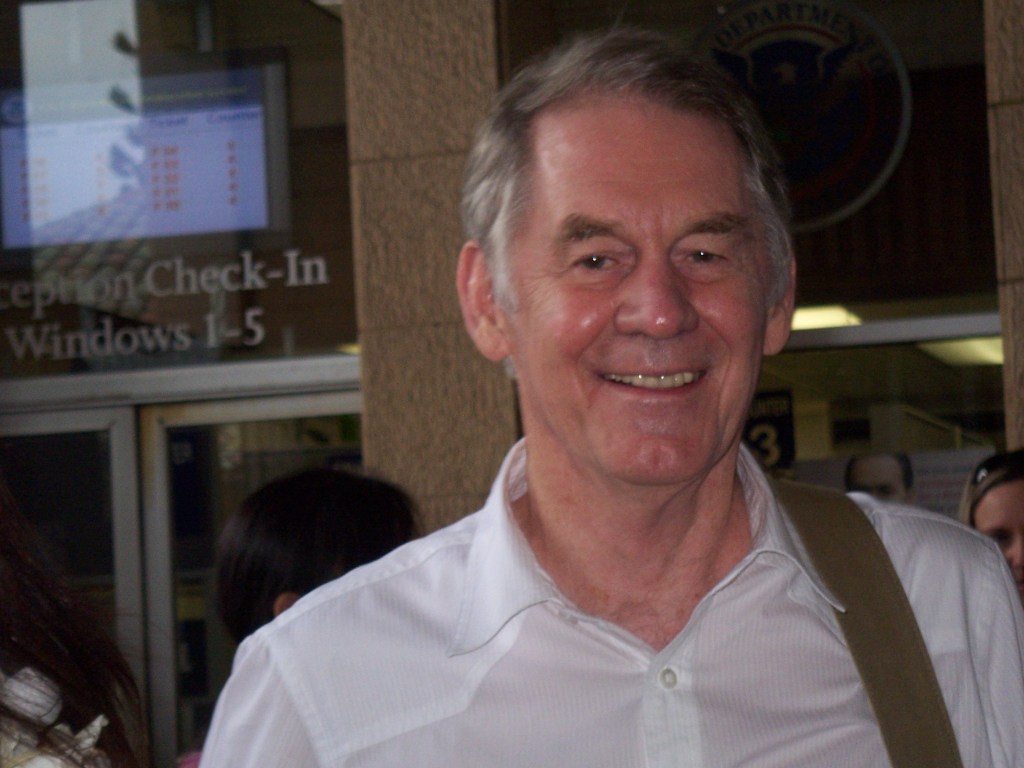
We first met at a now-defunct café near Mānoa Marketplace. I was nervous. I’m sure my conversation was flat. Looking back, I don’t know why he asked to see me. I was 18, he was 75. My attention ran chiefly to sports and departing for college. He was writing another book. Nevertheless, he received me with interest, patience.
That evening, he sent me an email. It was the sort of pithy Dawsian note I would come to know well, and it began a correspondence that would last 16 years.
Over time, and in fragments, he told me about his life. In vignettes woven into letters, he described a rural Australian upbringing, joking that his native tongue was, as a result, “triphthong and obscenity-laden.”
I learned about his teenage stint as a cub reporter for The Herald in Melbourne, about the freighter that brought him, in 1958, to Honolulu and the University of Hawaiʻi. He recalled his decade teaching UH’s World Civilizations course, one-semester classes of 850 students at Varsity Theater — tens of thousands of students in all.
Thrillingly, he recounted how one day, while still a graduate student at UH, the communal phone at the history department rang. He picked it up. On the other end was the editor in chief of the storied publisher, Macmillan, searching for someone to write a Hawaiʻi volume for a series on state histories. Daws volunteered.
“Shoal of Time,” the book born by that chance phone call, would go on to publication in 1968. Major reviews, including in The New York Times, praised its narrative, style and wit. It was to become Daws’ breakthrough work.
What followed was a life of the written word. From his perch on the slopes of Mānoa Valley, Daws went on to a distinguished career: 16 books — nine written alone, five with co-authors, and two as co-editor — alongside screenplays, song lyrics, plays, and dozens of articles for the popular and academic press.
A Discerning Critic — Of Everything
When Daws died, I spent some time sifting through our correspondence. What I found was a man of unyielding curiosity. He read everything, from sweeping novels to crime thrillers, from highbrow book reviews to local miscellanea (he once sent me a note about a lamppost in San Francisco that collapsed due to urine-induced corrosion).
The breadth of his reading made him a discerning critic. The all-time greatest stylist in English, he thought, was Vladimir Nabokov, “a magician with words.” PG Wodehouse and Joan Didion came close behind. He respected many writers at The New Yorker, including Janet Malcolm. Her book, “The Journalist and the Murderer,” from which I quoted above, struck him as particularly significant.
For much of his life, Daws worked to bridge the insights of academia into books with momentum and style that a general reader would warm to and finish.
As my own taste developed, I looked to his judgment. Cole Porter? One of the greatest great ones from the Great American Songbook time. Ernest Hemingway? The world record holder for the number of ands in run-on sentences without commas. Evelyn Waugh? A great stylist, and one of the nastiest human beings imaginable. His preference among local authors? Kaui Hart Hemmings.
Music counted as another passion: Bach, Mendelssohn and Chopin, Oscar Peterson, Art Tatum and Billie Holiday, Edith Piaf, Jacques Brel and Charles Trenet. He liked melody, harmony, themes and variations, music that filled his “wayward mind with thoughts and feelings of shapeliness and forward motion towards a satisfying resolving chord.”
Bad writing rankled Daws, perhaps more than anything. He always spotted repetitions, circumlocutions, inessentials. They pulsed in a text, unmissable to his judicious eye. The lowest rung in the world of writing? The “sludgy swamp” of academic language. “You just have to learn to wade through it — and try not to get any on you.”
For much of his life, Daws worked to bridge the insights of academia into books with momentum and style that a general reader would warm to and finish. To that aim, he drew on the novelist’s toolbox using tension and resolution, storytelling and character. Most important was story, and great stories, he believed, could become parables, carrying meaning beyond just the facts.
Accordingly, he told great stories, too. I marveled at anecdotes about Starling Lawrence, the eminent New York book editor, about his first literary agent, Ivan von Auw, the man who represented Dylan Thomas and Langston Hughes. He explained how all his books got started by accident, like the time he overheard a stranger at a Waikīkī bar talking about having been a POW during World War II. That encounter gave rise to Daws’ 1994 book, “Prisoners of the Japanese.”
These letters say much about Daws. They also reveal something of me. In them I find the record of a writer’s apprenticeship: regrettable attempts at fiction, early magazine pitches, query letters to agents, book ideas. As much as I wince to look back at them now, I know that in their sum, they amount to an education I was fortunate to get. Daws, a famously good teacher, treated everything I sent him seriously, with grace.
History Is Provisional
Some authors are forever linked to a single work. This was the case for Daws.
“Shoal of Time,” his debut, set his career in motion. It also grew into a specter. Scholars like Haunani-Kay Trask and Jonathan Kamakawiwoʻole Osorio loathed it, attacking its tone, sense of irony and portrayal of Hawaiians.
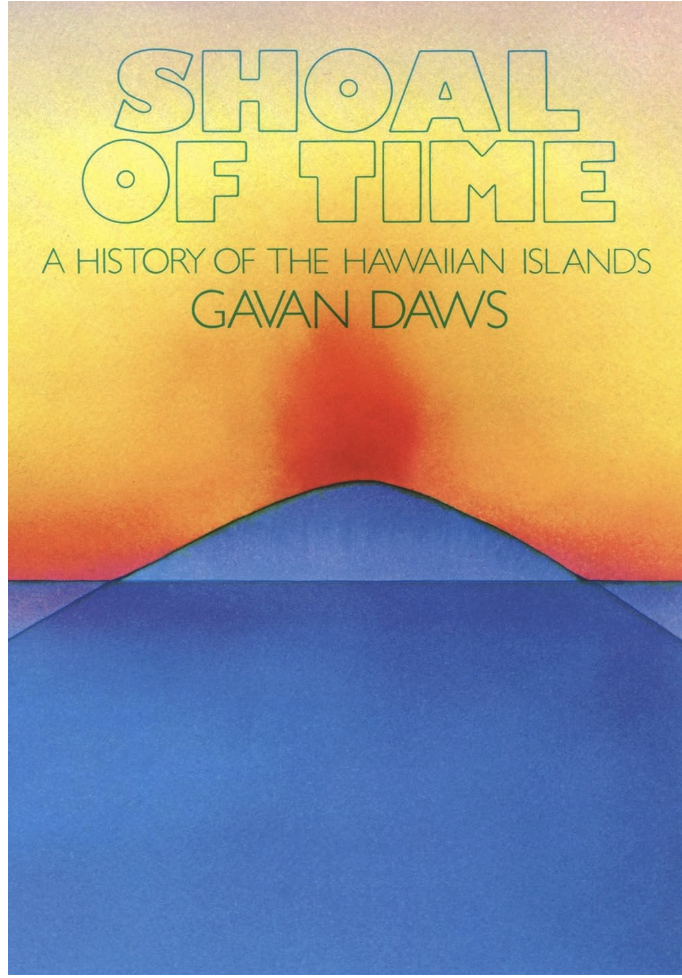
Daws was not blind to these critiques. In public and private, repeatedly and over many years, he acknowledged the need for a book to replace “Shoal of Time.” He believed that history, however authoritative, is provisional, needing to be rewritten every generation. In a 2008 interview on PBS’s Long Story Short, he went even further, saying, “There wouldn’t be a single sentence in this book that would be the same if I were doing it now.”
Regrettably, the mix of acclaim and scrutiny “Shoal of Time” generated overshadowed Daws’ larger body of work. Even Osorio, one of his most vocal critics, has granted this. In the otherwise scathing essay, he called “Land and Power in Hawaii” superb and “Prisoners of the Japanese” magisterial.
Several of Daws’ later books indeed merit more attention. One is “Holy Man,” his attempt to humanize Father Damien whom he felt had, until then, been portrayed as a plaster saint. Another is “Prisoners of the Japanese,” his sprawling, disturbing account of the roughly 140,000 allied soldiers taken captive in the Pacific Theater. A third is “Land and Power in Hawaii.” Co-written with the late George Cooper, it shot lightning across Hawaiʻi, becoming such a sensation that The New York Times covered the story.
As I wrote in a column in October, “Shoal of Time” will turn 60 in 2028. No matter how many broadsides people sling at it, the only permanent rebuke is to make it irrelevant, to banish it to library storage facilities to collect dust. That, it seems to me, will only happen when a new book of its kind, its scope, its literary brilliance emerges.
After my October article, I got word that a few books about Hawaiʻi and its history are in progress. Daws, I’m certain, would be hopeful about their success. I surely am.
Writing Is About Showing Up
My most cherished letters from Daws are about writing. Several of them live with me each day as I work.
In one, he explained his idea of a power-weight ratio in books, that is, does the style, structure, placement and pacing combine to generate enough force to carry the story forward and maintain drive? Will it keep readers interested, keep them turning the page from the start to the finish?
Most essential, Daws shattered an illusion I once held: There is no muse. Writing is about showing up, doing the work, and having hope and faith that something will go from the brain to the fingertips. Every day requires progress. No exceptions, no exemptions.
That was sage advice for me as I aspired to a life of words. I’m glad I got it young, when I was still receptive, before my ideas about the world had hardened.
 Sign up for our FREE morning newsletter and face each day more informed.

Local reporting when you need it most
Support timely, accurate, independent journalism.
Honolulu Civil Beat is a nonprofit organization, and your donation helps us produce local reporting that serves all of Hawaii.
ContributeAbout the Author