Makana Eyre: Extensive Hawaiʻi Consulate System Sparked Early Growth
The Hawaiian Kingdom boasted an international consulate system that helped the islands import labor in the 1800s.
January 5, 2026 · 6 min read

About the Author

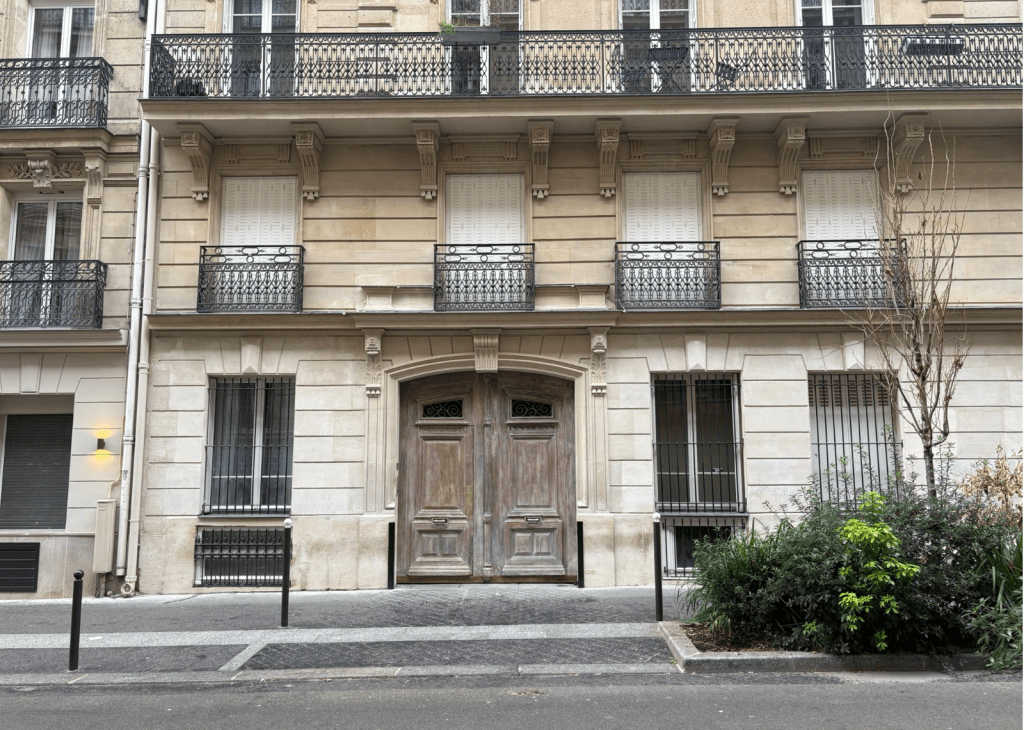
The address 5 Rue du Cardinal Mercier sits halfway down a quiet cul-de-sac in the energetic 9th district of Paris. The building is classic Parisian: Lutetian limestone, six stories tall, wrought iron balconies, huge coach doors with brass fixtures. Today, it is easily missed, one of thousands of others like it across the city.
Except No. 5 is not like all the other buildings in the French capital — at least for someone with an interest in Hawaiian history. Unlike all the rest, this one conceals a forgotten part of the past: during the final years of home rule, when the street was called Rue Nouvelle, it was the location of the Hawaiian Consulate in Paris. And it was no anomaly.
By the final quarter of the 19th century, Hawaiʻi had as many as 100 commissioned ministers, chargées d’affaires, consul generals, consuls and vice consuls, representing the kingdom in major cities and ports and on all populated continents on the globe.

Ideas showcases stories, opinion and analysis about Hawaiʻi, from the state’s sharpest thinkers, to stretch our collective thinking about a problem or an issue. Email news@civilbeat.org to submit an idea or an essay.
The network stretched wide, from political hubs like Washington, D.C., London and Paris to more peripheral outposts like the Falkland Islands, Tasmania, the Peruvian city of Callao and the now defunct Grand Duchy of Baden. In France alone, there were consuls at Marseille, Le Havre, Bordeaux and Rouen, among other cities.
In a curious oversight, the history of kingdom-era consular networks has largely been overlooked by modern scholars, even those focused on the final decades of Hawaiian sovereignty.
One exception is Nicholas B. Miller, an associate professor of history at Florida’s Flagler College. Miller’s research offers a fascinating window into the kingdom’s public administration. It also uncovers the infrastructure that facilitated a policy of mass migration that would go on to change Hawaiʻi forever.
The story begins in the mid-1840s when, facing increasing interference by Britain, France and the United States, the kingdom tasked the American attorney John Ricord to lay the groundwork for a Hawaiian administrative state, including its department of foreign affairs.
During its early years, the Hawaiian consular system resembled a commercial network rather than a diplomatic corps. Composed almost entirely of foreign nationals, consuls promoted and facilitated trade, overseeing exports, issuing permits, and acting as exercised legal and notarial agents for the kingdom abroad.
They sometimes carried out basic consular services, too, such as issuing entry visas and helping Hawaiian citizens return home from abroad, though this was more limited. When treaties needed to be negotiated, the kingdom sent special diplomatic agents.
If we could go back in time and visit the consulate in the 1880s, we’d probably find Alfred Houlé, Chargé d’Affaires and Consul-General and A.N.H. Teyssier, Consul. The space would have resembled a business office, with reports, invoices and reference books all around — all the materials needed for these men to advance their business interests and help the kingdom manage labor flows and consular duties.

If we arrived toward the end of the decade, we might witness preparations for the 1889 World’s Fair. Houlé, Hawaiʻi’s special commissioner, oversaw the installation of the Hawaiʻi Pavilion, a chalet style building that displayed lava, furniture, artwork, shells, portraits of the Royal Family, and a mahiole made of rare feathers that had belonged to Kaumualiʻi, the last aliʻi nui of Kauaʻi.
However much work was done there, the Hawaiian Consulate would not have looked like a modern day embassy. Miller is quick to emphasize that we must not compare 21st century diplomacy — where foreign envoys act as governments in miniature — to that of the 19th century, especially in the case of a small country like the Kingdom of Hawaiʻi.
All the same, the consular network did enable the kingdom to exert a degree of self-determination — or at least presence — on the global stage.
Likely the most consequential example of this is its campaign to recruit contract labor starting in the 1860s. The increasingly catastrophic population collapse caused by disease, coupled with white planters’ need for a large, cheap workforce drove policy.
Starting in the 1870s, and supported by subsidized transportation, contract laborers from Micronesia, Portugal, Norway, Germany and Japan disembarked at Hawaiian ports. Chinese immigrants, of course, had already been immigrating to the Kingdom, yet Miller tells us they were largely recruited without consular or state support.
In 1886, Japanese migration began in earnest, with some 60,000 people (including my own ancestors) settling in the islands by the end of the century.
More than anything, the need for labor explained the wide contours of the consular network. Consuls were the conduit for this migration. They recruited workers and helped them book passage, handling the documentation and bureaucracy. By the time the consular system was abolished in 1900 just after annexation, it had facilitated the migration of more than 100,000 people.
Anyone who grew up in Hawaiʻi heard some version of the melting pot refrain. Yet rarely did we receive any explanation of how it happened practically. Miller’s research helps to fill in the picture.
At the same time, this history raises some uncomfortable questions. When the consular network was most active, Hawaiʻi was in the twilight of its independence. The kingdom — and the increasingly powerful planters — needed manpower.
The solution was a Faustian bargain: drawing labor from coercive global systems controlled by the very imperial powers pressing in on Hawaiʻi. And in time, the people the kingdom recruited would soon come to outnumber Native Hawaiians themselves.
The ultimate reason Miller’s work feels vital is what it suggests: the kingdom was not a far-flung tropical microstate but a nation with infrastructure. The consular network, he says, was evidence of Hawaiʻi’s “integration into an emerging international system of inter-state relations.”
When I stood outside of 5 Rue du Cardinal Mercier last week, I saw a perfectly ordinary Parisian street. There’s no plaque, no engraving—nothing about it signals its past. Yet having grown up in Hawaiʻi, the symbolism of the place struck me because of what it implies about Hawaiian history.
Miller cautions us against the idea that the consular network was primarily aimed at promoting sovereignty. His reading is persuasive.
Even so, if sovereignty means self-determination, if it means a presence on the stage of nations, then the consular network feels like the scaffolding to a nation in development — imperfect, precarious, but real. At least to some extent.
At the very least, this history is a potent reminder of the kingdom’s international standing, a practical example how in some measure, it demonstrated autonomy in a world increasingly shaped by imperial might.
 Sign up for our FREE morning newsletter and face each day more informed.
Read this next:


Local reporting when you need it most
Support timely, accurate, independent journalism.
Honolulu Civil Beat is a nonprofit organization, and your donation helps us produce local reporting that serves all of Hawaii.
ContributeAbout the Author