Makana Eyre: Is Hawaiʻi Worth It? These Returning Ex-Pats Say Yes
Moving home to the islands after years away can be a tough decision.
January 26, 2026 · 6 min read


About the Author

For years, the story about young, bright Hawaiʻi-raised people has been about departure. They leave, so we hear, in search of better universities and job markets, bigger cities and opportunities. And then they stay away once they take stock of the staggering costs of a life in the islands, especially when it comes time to start a family.
I am among this group. Alongside almost all my peers, I followed the well-beaten path, leaving in search of something more, unsure if I’d ever return.
A few years ago, though, and at least in my circle, the pattern has started to shift. One by one, a significant number of my childhood friends have found their way back, leaving behind careers and communities in favor of their roots.
All the same, a return to the islands, even when fully desired, carries weighty practical and emotional challenges. Curious to know what they were experiencing, I called a few of them to ask.

Ideas showcases stories, opinion and analysis about Hawaiʻi, from the state’s sharpest thinkers, to stretch our collective thinking about a problem or an issue. Email news@civilbeat.org to submit an idea or an essay.
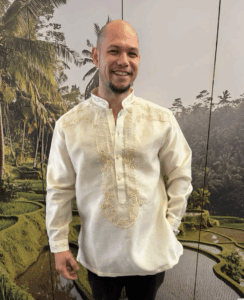
Sean English left Hawaiʻi in 2008 at 18, moving to San Francisco for college. He went on to spend 15 years on the continent, mostly in California and New York. In 2024, he and his partner, Dani Magee, moved to Oʻahu.
It’s hard to reduce English’s motivations for coming home into neat explanations. Yet what struck him repeatedly during his final years away was, simply: the people he cared about did not live on the continent.
Still, the decision was an emotionally charged one. “Moving back can mean you didn’t make it,” he said. “There’s a cultural stigma.”
Work posed an early barrier for English. Even in Honolulu, the job market has limits, though English was quick to say that he wasn’t daunted. He’d lived through several mass layoffs in the Bay Area tech scene. He would figure it out. After some searching, he ended up at the software company WorkBright in a remote role out of Colorado.
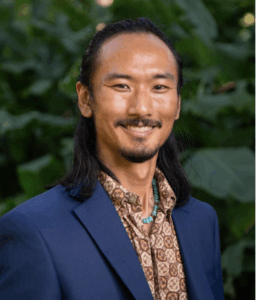
Others are forging their own route into a working life. For Jordan Nakamura, that means running for public office.
Nakamura, a Democratic candidate for state Senate District 13, the seat being vacated by longtime Sen. Karl Rhoads, spent 15 years mostly in Los Angeles working in education technology and as an activist around tenants’ rights.
Nakamura reached a turning point when the Red Hill fuel spills occurred. It was then, he realized, that he could no longer stand by as Hawaiʻi’s water was being contaminated. He flew home for good in 2023, landing at his family home in Nuʻuanu and diving into grassroots efforts to improve environmental policy. That eventually led to his run for a seat in the Legislature.
Nakamura is running on an ambitious platform that includes free care for children and the elderly, housing stability and environmental protection.
It’s banal to say that housing is the central issue to Hawaiʻi. Our islands seem to be the quintessence of a disturbing global problem where locals in desirable places can’t afford to live.
Banal or not, however, housing is still a searing concern for people making a return. This was the case for Imani Altemus-Williams who moved back in 2019 after living for many years in New York, Tucson, New Orleans and Norway.
As with English and Nakamura, Altemus-Williams, who works remotely for the public memory archive nonprofit, the After Violence Project, struggled to find an affordable place when she moved back. This felt deeply frustrating, given Hawaiʻi is where she spent her formative years.
For each of my peers who has returned to Hawaiʻi, one, perhaps two others are on the fence about it. That’s the case for Dylan Botelho, who has been living in California and New York since 2008.
Botelho’s concerns follow a common refrain. He spoke of the infamously high costs for groceries, gas and electricity, all of which soar above the national average, even sometimes exceeding New York City where he lives.
Yet in a strange way, that encourages Botelho to move home. The way he sees it, if he’s paying the same cost of living in New York, why not pay it in Hawaiʻi?
Health care is another headache. Hawaiʻi is experiencing a physician shortage, especially on the neighbor islands. The shortage grows acute with specialists.
All obstacles aside, however, every person I spoke to is unequivocal about one thing: they hold no regret about their decision.
Altemus-Williams has never questioned the choice. She eventually found a place she loves at the base of the Koʻolau mountains. She’s found a new community centered around local organizing.
Nakamura speaks with almost prophetic clarity. “It was destined for me to go and then come back,” he told me.
Even the ordinary things of life please English. “Driving the Pali is just so much better than a California freeway,” he said.
While he’s making less money than he did in the Bay Area, he’s happier, calmer, no longer “draining my blood for work.”
All of the people I spoke to succeeded in moving home. Yet they did so with advantages worth naming. Each of them landed in the homes of family, at least for a time. None of them have children, so schooling and pediatrics weren’t considerations. Several of them work remote jobs. They are not, in other words, a statistically robust sample size.
Yet none come from vast familial wealth either. They are, like most of us, normal, middle-class folks working hard to make ends meet. What they show, it seems to me, is a pathway home, one route toward a destination so many people with roots in Hawaiʻi ache for. That, as I see it, should be cause for optimism, even if it’s cautious.
What stuck out to me as well is how cheerful they all sounded. They seemed to be saying Hawaiʻi is worth it, despite the costs, despite the troubles.
Perhaps the bumper sticker clichés, the hotel slogans, the T-shirt taglines are true after all. Perhaps, as the saying goes, we’re lucky we live Hawaiʻi.
Last week, English and his partner Magee got married. They held the ceremony at Kaʻala Farm deep in the Waiʻanae Valley.
When I asked whether they were planning a honeymoon, English told me they weren’t sure. “We talked about a ton of places,” he said, “but nothing feels better than home right now.”
 Sign up for our FREE morning newsletter and face each day more informed.
Read this next:

Local reporting when you need it most
Support timely, accurate, independent journalism.
Honolulu Civil Beat is a nonprofit organization, and your donation helps us produce local reporting that serves all of Hawaii.
ContributeAbout the Author