What Does ‘Home’ Mean To Those Who Live In Hawaiʻi?
Opposition to housing policies reflects an outcry of a deep cultural and psychological loss for Native Hawaiians.
January 7, 2026 · 5 min read

About the Author

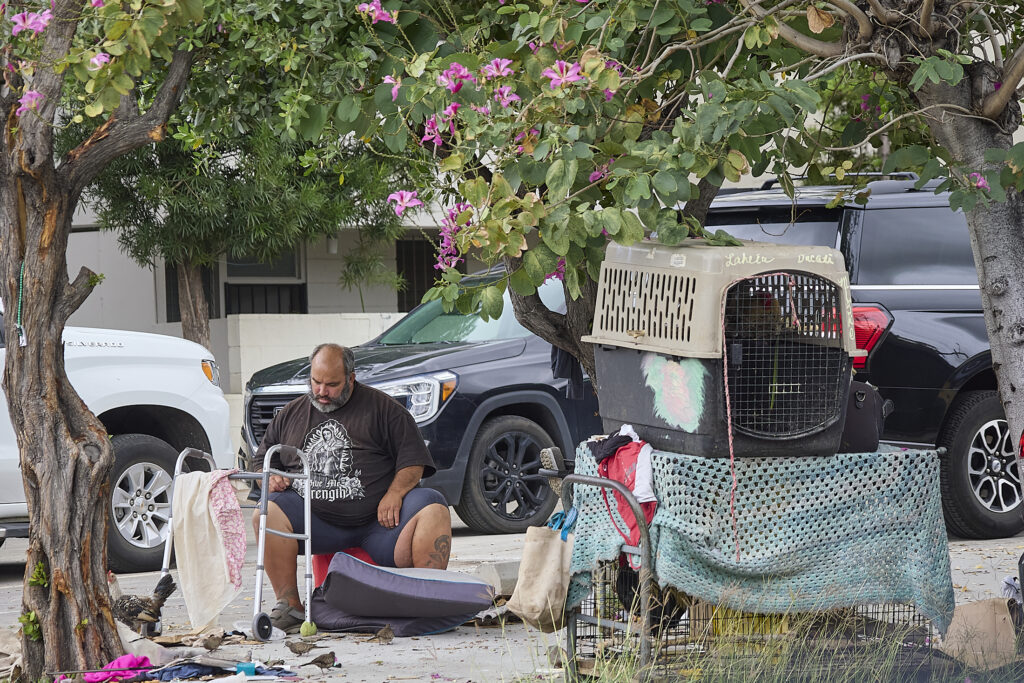
For months, a homeless woman living in the drainage ditch near our home left her trash and belongings on the sidewalk, screamed at random, and trespassed to use our neighbor’s hose. Every time my family and I passed by, we talked about homelessness the same way most residents in Hawai‘i do: a result of too few affordable housing units, the ridiculous cost of living, and insufficient wages.
However, when we finally reminded her that she could not legally stay in the ditch, she broke down and voiced worry about something completely different: “I’m no longer welcome on my own land!”
What the heck is she talking about?

Ideas showcases stories, opinion and analysis about Hawaiʻi, from the state’s sharpest thinkers, to stretch our collective thinking about a problem or an issue. Email news@civilbeat.org to submit an idea or an essay.
Perceiving her merely as a consequence of Hawai‘i’s economic shortcomings, my family and I did not understand that what we thought was hysteria was really an outcry of a deeper cultural and psychological loss.
Having gone to private school in Honolulu, I had learned about Hawaiian values, ʻōlelo Hawai‘i, the overthrow of the Hawaiian Kingdom, and displacement by tourism, but I never understood their practical relevance. Looking back, I now realize that our interaction with the homeless woman was a microcosm of Hawai‘i’s broader housing crisis, our current moment’s repetition of the tragic motif of Native Hawaiian loss.
Two years ago, Governor Green issued the most forceful response to the housing crisis in recent history, the Emergency Proclamation Relating to Housing. It fast-tracked affordable housing development by streamlining environmental, cultural, and public review. Yet, a coalition including Native Hawaiian practitioner groups immediately sued, arguing that it infringed on indigenous values. Unexpectedly, those most affected by Hawai‘i’s housing crisis, as the proclamation highlights, were the very ones opposing its solutions.
Yet, this seemingly paradoxical response is not unique to Native Hawaiians. Many middle-income communities also exhibit “Not in my backyard” (“NIMBY”) attitudes towards affordable housing projects, citing concerns regarding traffic and “the character of the neighborhood,” despite UH-Mānoa economists’ findings that such developments could especially benefit future buyers in Hawai‘i’s all-too-common multigenerational households. Native Hawaiians and NIMBY residents seem to hold starkly divergent values, so what is underlying their united opposition towards these projects?
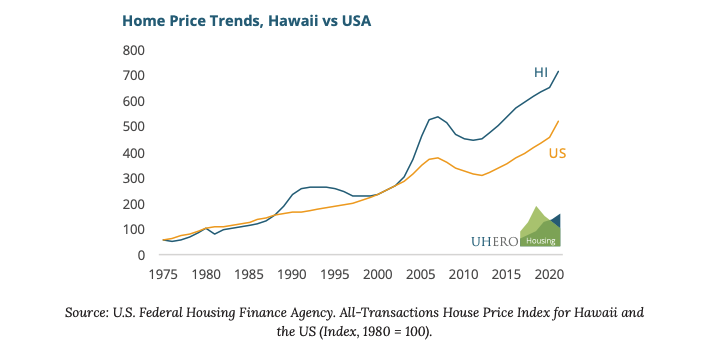
While these developments target Hawai‘i’s economic bottlenecks, resistance often stems from generational community or cultural meanings, revealing a broader misalignment between each group’s scope of the word “home.” Indeed, environment-behavior scholar Amos Rapoport shows in his book “The Home” that a close analysis of the concept across different contexts surfaces various distinct meanings.
When NIMBY residents in Kailua or Kawainui argue that affordable housing developments might “change the character of the neighborhood,” they reveal that their understanding of “home” expands beyond their individual house to the entire locality. Because their definition of “home” encompasses a social space, Rapoport makes clear that opposition to affordable housing in their neighborhood reflects a greater concern with its potential to destabilize the social identity they built and maintained there.
Similarly, while the emergency proclamation discusses “home” solely with respect to costs, Native Hawaiian scholar-activist Manulani Aluli Meyer’s work on Hawaiian epistemology highlights that many Native Hawaiians may perceive the ‘āina itself as home — something vital to culture, incompatible with pricing altogether. Replacing the previously universal review process, the proclamation divided areas of land into a hierarchy of cultural importance, each level assigned a different exhaustiveness of review for development approval. Certainly, this would have expedited project timelines.
However, if the ‘āina is an archive to learn cultural practices like fishing, weaving, and mālama, as Meyer writes, then the emergency proclamation’s logic of “home” as merely a physical dwelling misses the Indigenous perspective of it as a medium to transmit Hawaiian identity and lifestyle philosophies. By reading the emergency proclamation through these communities’ lenses, it becomes clear why they oppose affordable housing projects, even though they potentially benefit from them.
This also shows that although we were directly addressing each other, the homeless woman and my family were in completely different conversations. Our conceptualization of “land” was rigidly associated with property, titles, and price, whereas it may have been “home” to her — the source that developed her very cultural identity.
While my family and I believed we were reasonably citing the law, she must have realized a deep sense of injustice when our American legislative arguments uprooted her from her own cultural grounds.
This same problem is evident in Hawai‘i’s desperate attempts to tame the housing crisis. When the emergency proclamation views “home” through one definition among the countless that communities and individuals have shaped, the government and locals are unable to hear each other; solutions are prone to becoming sources of conflict, and needs risk being misunderstood.
Hawai‘i’s housing crisis continues to prevail despite countless policy efforts over the decades. So before we discuss any future solutions, let us first confront a question that lies further upstream: what does “home” mean to those who live here?
 Sign up for our FREE morning newsletter and face each day more informed.
Community Voices aims to encourage broad discussion on many topics of community interest. It’s kind of a cross between Letters to the Editor and op-eds. This is your space to talk about important issues or interesting people who are making a difference in our world. Column lengths should be no more than 800 words and we need a photo of the author and a bio. We welcome video commentary and other multimedia formats. Send to news@civilbeat.org. The opinions and information expressed in Community Voices are solely those of the authors and not Civil Beat.
Read this next:

Local reporting when you need it most
Support timely, accurate, independent journalism.
Honolulu Civil Beat is a nonprofit organization, and your donation helps us produce local reporting that serves all of Hawaii.
ContributeAbout the Author