Balcony Solar Would Expand Hawaiʻi’s Clean, Renewable Energy
These systems can produce enough electricity to power everyday household devices.
February 10, 2026 · 3 min read


About the Author

For decades, Hawaiʻi has encouraged rooftop solar as a way to reduce electricity bills and reduce dependence on imported fossil fuels. But for hundreds of thousands of residents who live in apartments and condominiums, rooftop solar has never been an option.
That may finally be changing.
Bills now before the state Legislature would allow residents of multi-family buildings, and anyone else, to generate their own clean energy using “balcony solar” — compact solar panels that can be mounted on lanai railings. With this new technology, anyone with access to sunlight can capture the sun’s energy.

Ideas showcases stories, opinion and analysis about Hawaiʻi, from the state’s sharpest thinkers, to stretch our collective thinking about a problem or an issue. Email news@civilbeat.org to submit an idea or an essay.
Balcony solar is not a futuristic concept. More than one million units have already been installed in Germany, where apartment living is common and rooftop access is limited. Utah recently passed enabling legislation, opening the door for other U.S. states to follow suit. Hawaiʻi, with its abundant sunshine and high electricity prices, is especially well suited for this emerging technology.
A balcony solar system is a small-scale photovoltaic setup, usually consisting of one or two lightweight panels that residents can install themselves. Despite their modest size, these systems can produce enough electricity to power everyday household devices, such as a refrigerator, a television, a computer, and lights. Many households would see significantly reduced monthly electric bills.
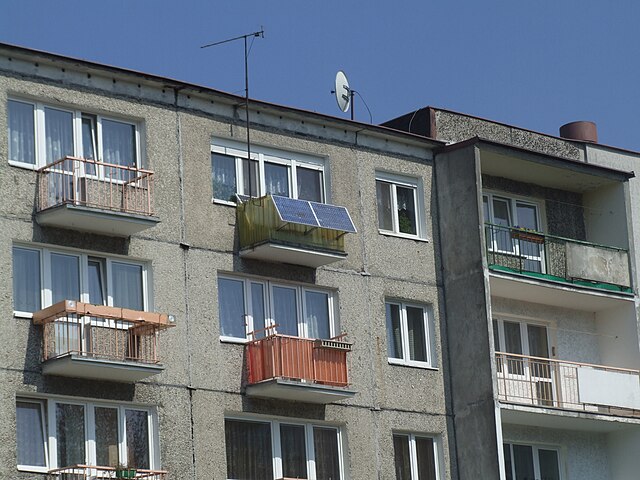
Balcony solar technology makes it easy to use. The system plugs directly into a standard wall outlet. Electricity flows into the home’s electrical system after passing through a small inverter that converts direct current from the panels into alternating current used by household appliances. It really is “plug and play.”
Low cost is another advantage. A typical balcony solar system costs about $2,000 and can pay for itself within a few years through energy savings of as much as $800 per year.
For those who want more flexibility, battery storage can be added, at an additional cost, allowing solar power to be used at night. Battery prices continue to decline, making this option increasingly attractive.
Unfortunately, current laws, which do not anticipate this new technology, do not allow installation of these devices without a utility interconnection agreement.
A number of lawmakers have recognized the opportunity to open the door to balcony solar, and no fewer than six bills have been introduced this year: Senate Bill 2303 (Sen. Carol Fukunaga), Senate Bill 2902 (Sen. Glenn Wakai), Senate Bill 2940 (Sen. Angus McKelvey), Senate Bill 3003 (Sen. Chris Lee), House Bill 2435 (Rep. Mahina Poepoe), and House Bill 2486 (Rep. Mike Lee).
These bills are carefully designed to make balcony solar safe and accessible. They exempt these small systems from grid-connection requirements meant for large rooftop installations, eliminating a major barrier to widespread adoption of balcony solar.
The bills also require certification by Underwriters Laboratories or an equivalent nationally recognized testing lab. They require that the devices automatically shut down during power outages to protect utility workers.
When constituents speak up, lawmakers listen.
Balcony solar would augment utility-scale renewable energy and reduce the need for new utility-scale generation. More importantly, it allows people who have long been excluded from Hawaiʻi’s solar success story to participate.
If you think you might want to install balcony solar — now or in the future — let your state representative and senator know. When constituents speak up, lawmakers listen.
Clean, renewable energy should be accessible to everyone in Hawaiʻi.
 Sign up for our FREE morning newsletter and face each day more informed.
Community Voices aims to encourage broad discussion on many topics of community interest. It’s kind of a cross between Letters to the Editor and op-eds. This is your space to talk about important issues or interesting people who are making a difference in our world. Column lengths should be no more than 800 words and we need a photo of the author and a bio. We welcome video commentary and other multimedia formats. Send to news@civilbeat.org. The opinions and information expressed in Community Voices are solely those of the authors and not Civil Beat.

Local reporting when you need it most
Support timely, accurate, independent journalism.
Honolulu Civil Beat is a nonprofit organization, and your donation helps us produce local reporting that serves all of Hawaii.
ContributeAbout the Author