Denby Fawcett: My $54 Lesson In Social Media Scams
A bipartisan bill pending in Congress would require social media platforms to first verify a company’s business credentials before allowing it to advertise.
February 24, 2026 · 5 min read


About the Author

I was scammed by a company advertising on Facebook as Hugo & Rose Charleston. It appeared to be a well-established, family owned boutique with a brick-and-mortar store in South Carolina.
I later learned I was far from alone.
After paying $54 with my credit card for what I expected to be a beautiful red blouse made of high quality material, a month later I received a thin polyester shirt in a weird color with crooked stitching, cheap buttons without a store label or care instructions — nothing like the photograph in the ad.
Only after a deeper online search did I learn Hugo & Rose Charleston was a company with no verifiable street address in South Carolina. My purchase had been processed through a merchant account in the Netherlands, and the blouse had been shipped from China. The company’s website domain had been registered just seven weeks earlier.
When I asked for a full refund, the company initially offered 10% of the purchase price if I kept the blouse, with a full refund promised only if I mailed it back to China at my own expense.

Ideas showcases stories, opinion and analysis about Hawaiʻi, from the state’s sharpest thinkers, to stretch our collective thinking about a problem or an issue. Email news@civilbeat.org to submit an idea or an essay.
An online search turned up dozens of customers who said they had similar experiences with Hugo & Rose and other boutiques with similar names and non-existent physical storefronts. Interestingly, only a few of the disgruntled buyers questioned Facebook, the company that made it possible for the advertisers to target them while profiting from the ad placement on its platform.
When I reached the company to comment, it wrote in an email that it continues to advertise on social media platforms including Facebook under multiple registered company names and aims to be transparent about its business model.
What happened to me was not just a bad purchase but a reminder that social media companies are very effective at directing ads to likely customers, sometimes before meaningful verification of the advertiser.
As skilled as Meta and other social media platforms are at ad placement, you have to wonder if they are doing enough to protect their users from possibly fraudulent transactions.
Currently, social media companies appear more reactive than proactive, removing bad ads after complaints rather than requiring universal verification before ads run. Only after I reported my experience did Facebook inform me it had removed the Hugo & Rose page for violating its policies.
A bipartisan bill now pending in Congress would require social media platforms to first verify a company’s business credentials before allowing it to advertise, not merely respond after a consumer has been harmed. Senate Bill 3774 — the Safeguarding Consumers from Advertising Misconduct (SCAM Act) — was introduced Feb. 4 with a companion measure in the House.
The legislation would empower the Federal Trade Commission or state attorneys general to enforce against violators under the deceptive practices law.

Last year Reuters reported — based on internal company documents — that Meta, the owner of Facebook and Instagram, had at times tolerated a measurable level of fraudulent advertising on its platforms as part of its business model.
Meta disputes that contention. Its news media office steered me to policy statements touting the company’s fraud-fighting efforts.
When I asked Meta what percentage of its advertisers must complete verification before running ads, the company declined to provide numbers. It said more than 70% of its ad revenue comes from verified advertisers, but did not clarify the percentage of retail consumer-goods sellers that are verified before their ads are allowed to appear.
One of Meta’s policy statements reads: “If there is harm suspected from your ad account, Meta may prompt verification based on suspected compromise of your business assets or a violation of our advertising standards.”
The salient thing here is Meta is saying that after apparent harm, it may require a thorough verification of the business but not always before. A key word is “may.”
“We also require many businesses to undergo verification to confirm the identities of the business and its representatives before they can use certain tools or features,” Meta also says.
But it declined to give me specifics of what it considers a complete verification of a company before it can advertise.
The Federal Trade Commission reports that fraudulent advertising by fake stores on social media is a huge problem and says the issue is growing.
Artificial intelligence is making the problem worse, says Mana Moriarty, executive director of Hawaiʻi’s Office of Consumer Protection.
Scammers now can create polished ads in minutes and, after they are shut down, quickly relaunch under new names. Social media platforms say they are using AI to root out fraud, but the scammers can pivot even faster to the newest AI tools to evade detection.
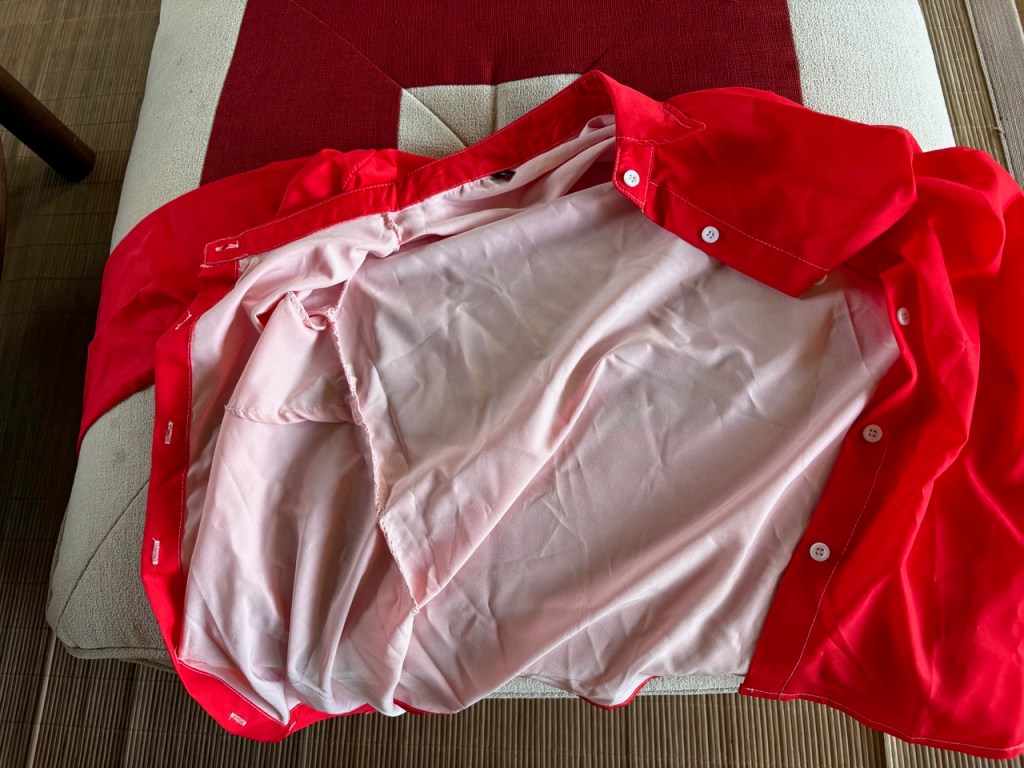
So to circle back to the beautiful red blouse I eagerly awaited but instead received an ill-fitting polyester shirt I will never wear, I now understand that as consumers we are on our own to ensure companies deliver what we expect.
The Federal Trade Commission advises to first search a store’s name online along with the words “scam” and “complaints” before purchasing.
As for me, I am restricting my buying to retailers with transparent ownership, verifiable street addresses and established track records. It was a $54 lesson.
 Sign up for our FREE morning newsletter and face each day more informed.

Local reporting when you need it most
Support timely, accurate, independent journalism.
Honolulu Civil Beat is a nonprofit organization, and your donation helps us produce local reporting that serves all of Hawaii.
ContributeAbout the Author