Do We Deserve Democracy?
We need people willing to testify publicly, to challenge injustice face-to-face, to stand behind their words in public forums.
February 22, 2026 · 5 min read

About the Author

Across the country — and increasingly close to home — we are watching a troubling convergence more firmly entrench our political systems in values that harm people and our planet.
Authoritarian leadership styles are no longer fringe; they are being normalized. Elected officials are increasingly and publicly leaning into cronyism. The revolving door of corporate interests continue to hollow out public agencies and regulatory offices meant to serve the common good. Candidates who promise to protect those interests are elevated, funded and shielded, while institutions designed to act independently are weakened through capture, delay or quiet disinvestment.
None of this is accidental. It is the result of sustained pressure by powerful actors who understand that democracy does not fail all at once. It erodes gradually — through complacency, distraction, and the quiet transfer of power away from the public and into fewer hands.
But democracy does not disappear only because bad actors take advantage of it. It disappears when the rest of us stop showing up.

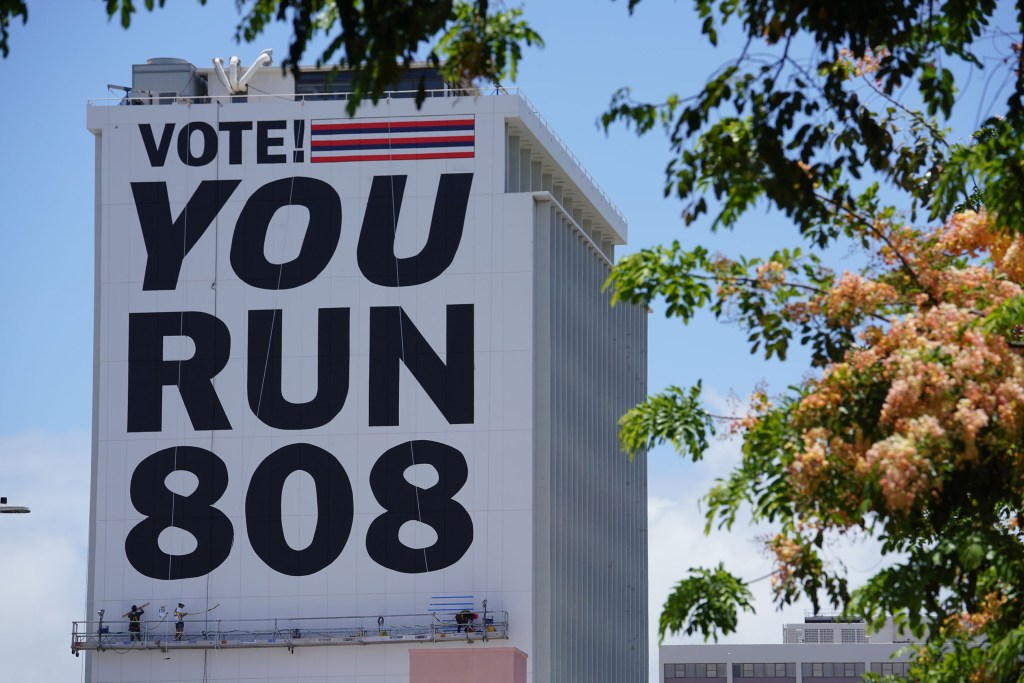
For less than half of our state, participation in democracy has been reduced to voting every few years, often with a sense of resignation rather than agency, with the most attunement to the presidential ticket. In Hawaiʻi, what is most often ignored is our primary elections (happening in August) that largely determines who will be elected in our mostly Democratic Legislature.
Winning elections in Hawaiʻi doesn’t require super PACs bankrolled by billionaires. In fact, most of our local elections are won by hundreds of votes and are driven more by community participation than donor dollars. Voting, helping others register, working the polls, and supporting candidates who are accountable to people rather than donors are essential acts of a democracy.
Stepping up as a candidate and honoring the sacrifice that running for office involves is a part of a healthy civic community. Not all people running for office are driven by vanity, power and ego. Many are doing so because of the essential question that powers community activism: if not me then who?
Legislative advocacy and tracking what is happening with boards and commissions are some of the most underutilized tools we have to ensure our government reflects the will of everyday people. Testifying on bills, submitting written comments, meeting with legislators and tracking committee hearings may not feel glamorous, but they are among the most direct ways to influence outcomes. These processes are often dominated by industry lobbyists not because the public is unwelcome, but because too few people engage. When residents show up — especially in coordinated, values-driven ways — policy shifts.
When these bodies reflect only narrow interests, public trust erodes. When they reflect the communities they serve, democracy deepens.
Volunteering is another essential pillar of a healthy democratic political life-world. Civic organizations, mutual aid groups, issue-based coalitions and nonprofits form the connective tissue between people and public decision-making. They translate lived experience into policy demands and hold institutions accountable between election cycles. Democracy relies on these intermediaries to function — and they rely on people willing to give time and effort.
Democracy also depends on courage, not the kind that lives safely online, but the kind that shows up in real rooms, with real consequences. Social media has enabled a form of low-risk expression that can feel like bravery — posting, reposting, signaling agreement — but often substitutes for the harder work of speaking out where power is actually exercised.
We need people willing to testify publicly, to challenge injustice face-to-face, to stand behind their words in community meetings, hearings, workplaces and public forums. We need people willing to put their names — and sometimes their reputations — on movements that push back against concentrated power. Democracies do not change because everyone agrees; they change because enough people are willing to be seen disagreeing.
Finally, democracy cannot function without shared facts. A diversified, independent media landscape is not a luxury; it is a public good. Local journalism and investigative reporting provide context and accountability that social media cannot. Algorithms are designed to capture attention, not to inform. Supporting credible journalism — and making a personal decision not to rely on social media as a primary news source — is itself a civic act.
To the critics of our political system, particularly those who importantly point to the illegal overthrow of the Hawaiian government, I would also argue that participation in this system is not a tacit endorsement of it. Rather democratic civic engagement can be a set of tactics deployed within a broader strategy to ensure that public dollars and institutions help move us toward preferred futures.
Democracy is not guaranteed. It is not inherited intact, nor sustained by institutions alone. It is practiced. It is defended. And it endures only when people decide it is worth the time, courage and care it demands. In short, democracy is something we have to work for and if we aren’t willing to do the work, I’m not sure we deserve to complain about the consequences of our government.
As Arundhati Roy wrote: “It is important to remember that our freedoms, such as they are, were never given to us by any government, they have been wrested by us. If we do not use them, if we do not test them from time to time, they atrophy. If we do not guard them constantly, they will be taken away from us. If we do not demand more and more, we will be left with less and less.”
Editor’s note: Ashley Lukens is a consultant for Civil Beat.
 Sign up for our FREE morning newsletter and face each day more informed.
Read this next:

Local reporting when you need it most
Support timely, accurate, independent journalism.
Honolulu Civil Beat is a nonprofit organization, and your donation helps us produce local reporting that serves all of Hawaii.
ContributeAbout the Author