Kirstin Downey: Robocalls Drop Faster In Hawaiʻi Than U.S. — But Not Enough
The bipartisan fight against telephone scammers is gaining traction, but predatory calls are still far too common.
February 13, 2026 · 7 min read


About the Author

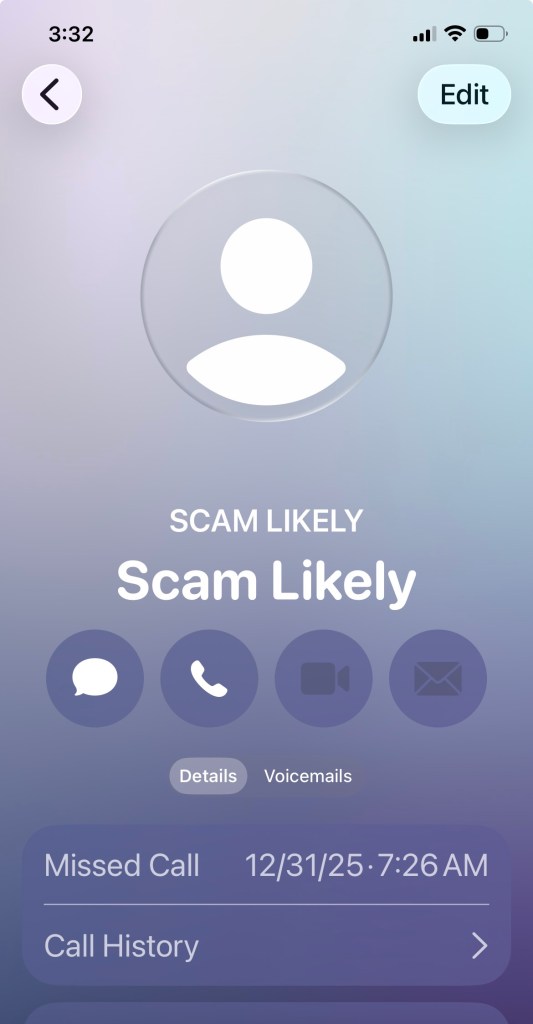
The maddening robocalls flood my cellphone every day. One day last week caller ID said the source was Bradfordsville, Ky., another day it was from Trussville, Ala., and a third day it purportedly came from Hudson, N.Y.
I’m being targeted by scammers impersonating a financial institution who say they are offering me a $239,000 business loan, money they tell me I can get if I take the call and answer their questions.
Robocalls continue to be a curse of the modern era, making us fear and dread phone calls coming from outside the 808 area code.
But our phones may soon be ringing less often. The number of robocalls is actually starting to fall, partly as a result of concerted, bipartisan efforts by state attorneys general, including in Hawai’i, and by the federal government, according to consumer advocates and industry regulators who spoke at a conference in Washington this week.
The Youmail Robocall Index, which tracks robocalls, reported an 18% decline nationwide in the past year. Statistics indicate they are falling a bit faster in Hawai’i. The number of robocalls in the state declined from 140.6 million in 2023 to 110 million last year, down 21.8%, according to the Robocall Index.
The decline seems to be picking up steam: Robocalls in Hawaiʻi were 30% lower in January than they were during the same month last year, dropping from 10.7 million to 7.5 million.
Those are still huge numbers, however, and they remain high because the phone predators continue to find new victims. Nobody knows the extent of the losses, although they have been estimated in the billions of dollars each year.
Detecting Scams
Robocalls are transmitted through a complex, byzantine thicket of telecommunications companies that use Voice over Internet services to blast out high volumes of calls. Some transmissions involve up to eight firms. They have ways to hide where the calls are actually originating from. These companies are paid for every call that connects, even if only briefly. This gives many of them an incentive to close their eyes and pass the calls along, rather than making serious efforts to filter out the bad ones.
Many of the offending calls are initiated from outside the United States.
The Industry Traceback Group has been monitoring this activity for the past 10 years, creating a system for determining where calls originate and the path they take to the recipient who answers the phone.
The Telephone Robocall Abuse Criminal Enforcement and Deterrence Act was signed into law in 2019 during the first Trump administration. In 2021, under that law, the Biden administration established the Robocall Mitigation Database, which requires voice service providers to certify they are doing as much as possible to block illegal transmissions.
Technological and legal changes are underway. New digital fixes, including caller ID authentication, can detect robocalls more effectively and spam-detection software helps consumers head off unwanted communications.
The conference, convened by the nonprofit National Consumers League and held at the headquarters of CTIA, the wireless communication trade association, drew about 50 participants, including consumer advocacy groups, congressional staffers and employees of the Federal Communications Commission and U.S. Secret Service, which safeguards government officials but also investigates financial crimes. (In full disclosure: I serve on the NCL board.)
Consumers League Vice President John Breyault, a long-time member of the FCC’s consumer advisory committee, said that robocalls, while diminishing, remain a serious threat to consumers.
“They are one of the top complaints we hear about from consumers, seniors, working families, small business owners who are exhausted by phones they no longer trust,” he said. “For many people, the question isn’t whether a call is convenient, it’s whether answering the phone is a risk.”
But conference participants reported some grounds for optimism.
Hawaiʻi Is Part Of A Bipartisan Effort
In 2022, Florida Attorney General Ashley Moody, a Republican, filed a lawsuit against a Florida-based company called Smartbiz, which the state alleged was one of the largest U.S. transmitters of unlawful robocalls. A second lawsuit brought by Florida in 2023, filed against another telecommunications company, was joined by 48 other attorneys general.
Almost all 50 state attorneys general, meanwhile, have been participating in a multi-state effort that focuses on abuses by telecommunications companies. As in so many other things in America now, the universe of state attorneys general is narrowly divided politically — half are Democrats and half are Republican — but on the robocall issue, they are presenting a united front.
Jeff Jackson, a Democratic attorney general in North Carolina, announced in December that he would be leading a second phase of the multi-state task force operation, expanding the investigation to four major service providers. In August, he sent warning letters to 37 smaller voice providers that he said were allowing suspected illegal robocalls to use their networks.
“The scale of this abuse is outrageous and we’re not going to tolerate it,” Jackson said in a press release.
Hawai’i is also part of this effort. The state is participating in the anti-robocall litigation task force, and last year Hawai’i and other states warned nine phone service providers that they may have been routing unlawful phone traffic, urging them to stop.

“We acknowledge local trends showing a reduction in the total number of illegal robocalls, which is an encouraging sign that enforcement and industry efforts may be having an effect,” Toni Schwartz, a spokeswoman for the Hawai’i attorney general, said in an emailed statement. “We also know that many consumers still receive unwanted calls, and there is more work to be done.”
In August, the FCC lowered the boom on companies violating the terms established by the Robocall Mitigation Database, first removing 185 firms the agency had identified as non-compliant, and then kicking out an additional 1,203. This prohibits other telephone operators from accepting their traffic. By October, robocall volume dropped 10%, according to Ed Bartholme III, the FCC’s bureau chief of consumer and governmental affairs.
“This is our No. 1 consumer protection issue,” Bartholme told me at the conference.
More of this effective anti-robocall work was initiated during the Biden administration, when the Federal Trade Commission spearheaded a crackdown they called Operation Stop Spam Calls. The agency led 100 federal and state enforcement agencies in taking 180 actions against illegal telemarketing operations and Voice over Internet Protocol service providers.
Complaints to the FTC about robocalls dropped from 3.4 million in fiscal year 2021 to 1.1 million in fiscal year 2024, the agency reported.
“Illegal calls remain a scourge, but the FTC’s strategy to pursue upstream players and equip the agency to confront emerging threats is showing clear signs of success,” Sam Levine, then-director of the FTC’s Bureau of Consumer Protection, said in a press release in 2024.
With the change of presidential administrations, Levine has left the FTC but hasn’t left the fight. He was recently named commissioner of New York City’s Department of Consumer and Worker Protections by Mayor Zohran Mamdani.
Consumer advocate Patrick Crotty, senior counsel for the National Consumer Law Center, who was the lead lawyer in the Florida lawsuit against Smartbiz, agrees there are signs that the robocall fight is easing but points to new problems, including some linked to artificial intelligence. He supports requiring telecommunications firms with bad track records on facilitating robocalls or other fraudulent communications to be compelled to get bonded, or insured, to enforce compliance with the law.
“There are whole segments of industry that make money completing any calls, even scam calls,” he told me. “There’s an economic incentive to complete these calls.”
He said one worrisome area of growth among robocalls is what he called financial imposter scams from callers pretending to be banks. He said that is where he is seeing consumers most likely to be tricked into providing personal information that can allow them to be robbed.
That’s what the robocallers have been trying to do to me.
“It’s getting better on some fronts but there are new sets of challenges,” he said.
I know just what he means.
 Sign up for our FREE morning newsletter and face each day more informed.

Local reporting when you need it most
Support timely, accurate, independent journalism.
Honolulu Civil Beat is a nonprofit organization, and your donation helps us produce local reporting that serves all of Hawaii.
ContributeAbout the Author