What Does It Take To Prove You’re Sick Enough To Get Treatment?
Hawaiʻi must seriously consider a universal health care system that does not hinge on employment or the outcome of an adversarial hearing.
February 6, 2026 · 4 min read


About the Author

When the judge called us in for my disability hearing, I was wrecked. I hadn’t slept. My body ached from the long drive from the west side of the island into town. My condition, which I had spent years trying to manage, was flaring.
For a moment, standing in that small, cold room, I thought: Maybe it’s not that bad. Maybe I can say I made a mistake. But I had already waited a year for that hearing. I was going to see it through.
My health problems began in 2010. At first, the pain was treated as routine. I was prescribed antibiotics. Then another round. And another. When it didn’t resolve, doctors began searching for other causes.
The first specialist dismissed it. Just rest, he said.
It didn’t go away.

Ideas showcases stories, opinion and analysis about Hawaiʻi, from the state’s sharpest thinkers, to stretch our collective thinking about a problem or an issue. Email news@civilbeat.org to submit an idea or an essay.
The second specialist told me I had a condition that would require lifelong medication. Weeks later, she admitted the tests were negative and the diagnosis was wrong.
When I was finally diagnosed correctly, I received treatment that helped, but only temporarily. Over time, some symptoms improved. Others worsened, and I spiraled into depression.
Through Kaiser’s behavioral health department, I was assigned a counselor. When I asked for options so I could choose someone who felt like a good fit, I was told that wasn’t an option and not to worry —
they were all qualified. Sessions became me talking while she typed. My mental health continued to decline.
Eventually, I had to quit my job. Nearly any activity triggered intense pain. I applied for disability benefits, confident that years of medical records would make the need clear.
I was denied. Then denied again. After two appeals, I was granted a hearing.
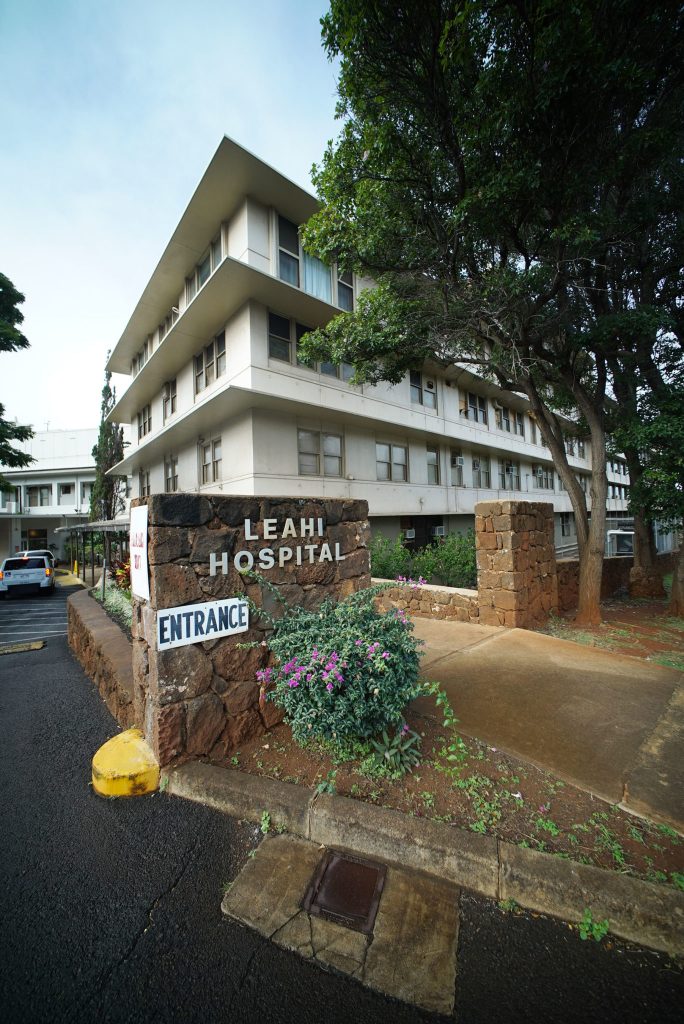
When I got to the courthouse, I quickly realized it was confusing and poorly marked, with no clear signs or accessibility guidance.
The hearing room was small, and conversations carried into the waiting area. I could hear another applicant being questioned and realized how easily ordinary details of a life could be used to undermine a claim.
When it was my turn, I described in intimate detail how my body and mind were failing me, knowing that everyone in the waiting area could hear every word.
The vocational expert testified that, given my condition, there were no jobs that could reasonably accommodate me. Months later, I received a 16-page denial.
The decision combed through my records line by line. Therapy notes were used against me. Doctor’s notes were used against me. The ruling acknowledged my conditions but concluded they were not severe enough. Because I had flown to attend a funeral, my physical condition was deemed not that limiting.
Because I could still communicate with family, my mental health was not considered that impaired. Even my attempts to pursue remote work and education, in an effort to adapt to my condition, were cited as proof that I wasn’t disabled enough.
Doctors hired by the system who had never met me outweighed the specialists who had treated me for years. Because I stopped one of the medication options that made me ill and did not want invasive surgery, I was deemed insufficiently aggressive in seeking treatment.
Nothing about my condition changed. I am still disabled. I am still struggling. I simply do not have the designation or the support that comes with it.
Four years later, after reapplying, I am still waiting. Many Hawaiʻi residents are navigating similar barriers while trying to work through pain and uncertainty.
With federal cuts threatening healthcare coverage, the anxiety is constant. Illness should not require courtroom-level proof. Survival should not depend on whether a therapy note or a single activity can be reframed as evidence that you are “not that bad.”
This is why Hawaiʻi must seriously consider a universal healthcare system. Those who prefer private insurance could keep it. But there should be a guaranteed, basic option available to all — one that does not hinge on employment or the outcome of an adversarial disability hearing.
Mahalo to Rep. Amy Perruso for introducing House Bill 1490. I hope House Health Committee Chair Gregg Takayama will give it a hearing this session. No one should have to prove they are suffering “enough” to deserve care.
 Sign up for our FREE morning newsletter and face each day more informed.
Community Voices aims to encourage broad discussion on many topics of community interest. It’s kind of a cross between Letters to the Editor and op-eds. This is your space to talk about important issues or interesting people who are making a difference in our world. Column lengths should be no more than 800 words and we need a photo of the author and a bio. We welcome video commentary and other multimedia formats. Send to news@civilbeat.org. The opinions and information expressed in Community Voices are solely those of the authors and not Civil Beat.
Local reporting when you need it most
Support timely, accurate, independent journalism.
Honolulu Civil Beat is a nonprofit organization, and your donation helps us produce local reporting that serves all of Hawaii.
ContributeAbout the Author