Less than 3 days left to help us reach 250 donors by May 15. Make a gift of any amount today!
How Hawaiʻi Residents Can Benefit From FEMA Programs
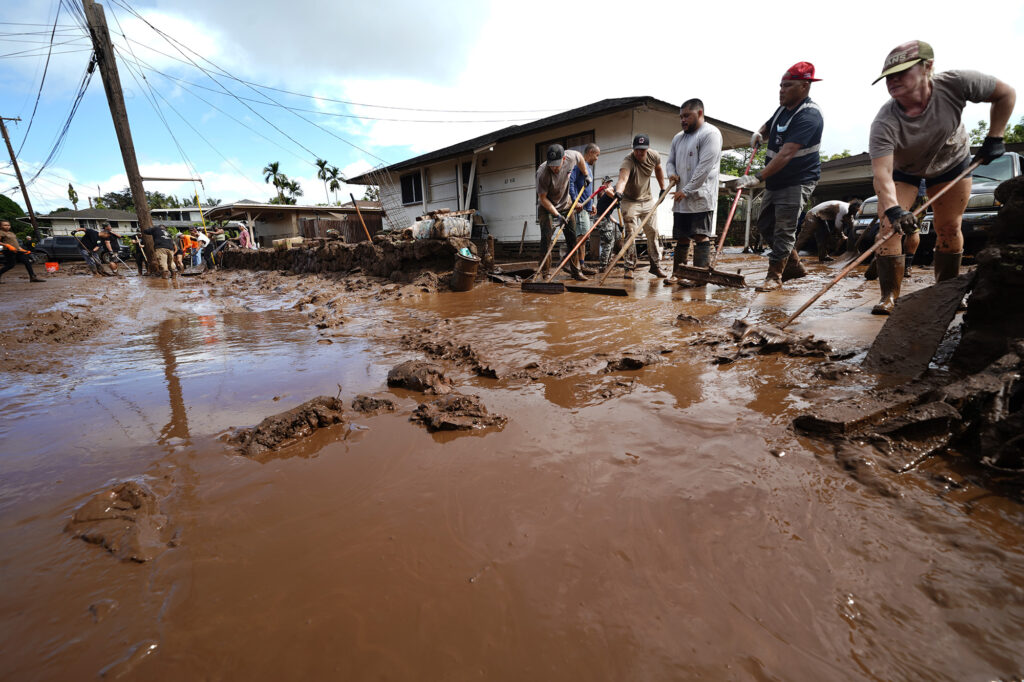
If President Trump issues a disaster declaration for the March Oʻahu floods, then federal money will flow to Hawaiʻi. Here are some specifics on how to take advantage of various programs.
March 29, 2026 · 11 min read

About the Author

Hawaiʻi’s emergency preparedness remains critically low in key areas. Political leadership long-neglected to ready the public for recent deadly and expensive disaster losses, and for those in years to come.
The powerful continue to hold open-handed experts and advocates, including myself, at bay. Public education (prevention) is a brighter spot, but improvement comes too slowly.
Allow me to contribute. If President Trump issues a disaster declaration for the March Oʻahu floods, then federal money will flow to Hawaiʻi.
As an emergency manager, I wrote the state’s administrative plans for disasters such as the Kīlauea volcanic eruption (then worth $66 million in program funds) and the somewhat-forgotten 2018 Kauaʻi and East Honolulu floods.

Most federal disaster grant monies go to the Public Assistance Program, followed by the Individual Assistance Program, then Mitigation. FEMA is America’s premier grant agency — being far less of a first responder (it is not a replacement for EMS or firefighters) than a financial administrator.
Political soundbites notwithstanding, most FEMA dollars go to survivors, business, and nonprofits including faith communities. Outside audits and reviews like the Government Accountability Office’s concluded that FEMA struggles with too much complexity, while investigative journalists demonstrated uneven results benefitting the rich, not FEMA outright failing to do its job.
Frankly, the public’s biggest obstacle in receiving help that I’ve seen is misinformation — rumors, lies, and conspiracy theories. Misinformation discourages survivors from seeking assistance more than you might suspect, and ends with harmful funding cuts.
If these historic March floods impacted you, you likely already incurred potentially reimbursable expenses.
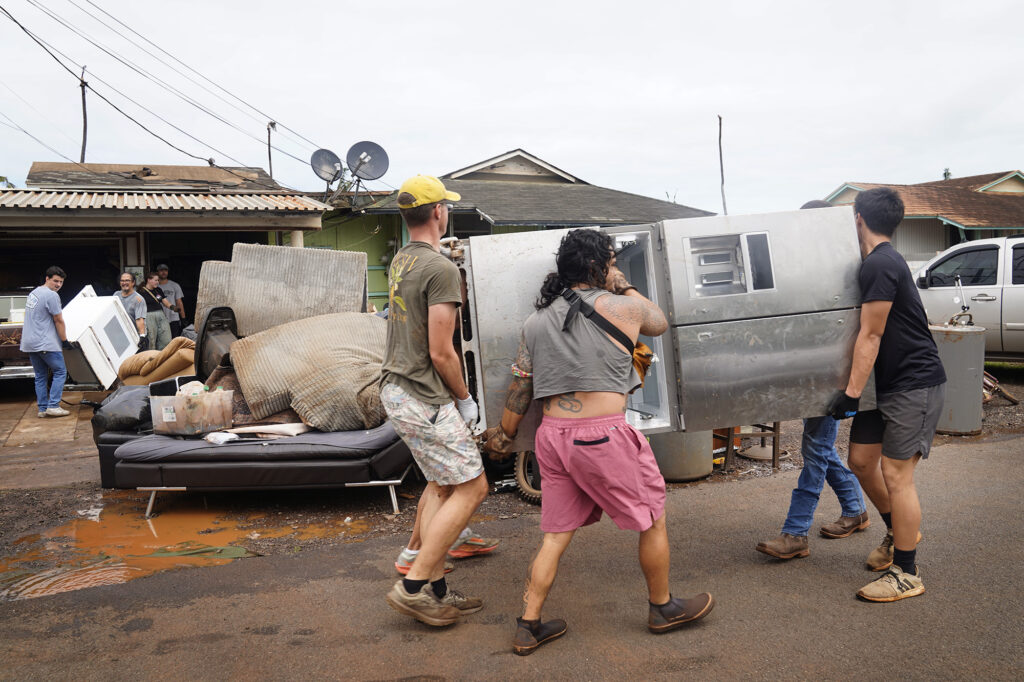
I offer a broad illustration — not tailored advice — providing no warranties or guarantees for your outcomes. I advocate by myself, not on behalf of any organization. Policy changes with each disaster. And every disaster survivor presents unique circumstances and challenges.
What I’ve seen firsthand, is that the rich will max out program benefits like it’s their job. Whereas the indigent stop short of full reimbursement so frequently it hurts my heart.
I’ve spoken with extremely poor and rural elders (kūpuna), enduring black mold and infirmity, broken roofs and cold winter rain, people cast off by society to die in the backwoods. And it is gratifying to help them take steps (like federal assistance) they never thought they would, so that life continues.
And with others I have pleaded in vain, knowing what’s at stake when I was the final official at any level with whom they’ll likely ever converse. There is another side to America we never see in movies anymore, except in the occasional horror film.
I cannot strongly enough recommend that disaster assistance applicants follow FEMA’s process as FEMA advises. The public cannot be expected to memorize every program and policy. So flexibility and diligence and persistence will maximize your disaster award.
First, Get Help
Disaster response starts at the municipal (county level), escalating to the state, and then to the federal government. This is diametrically opposite to what the public generally believes. By law, FEMA generally cannot be the first boots on the ground.
Ergo, don’t wait on government for your health and safety during disaster.
If the American Red Cross or Catholic Charities or the Salvation Army can immediately shelter or feed you, why wait? Or call 211 to connect with local options. Don’t wait out a reimbursement either unsheltered or in danger.
Insurance, both real property and personal property insurance, as well as health and dental and vision, are the first line of defense for all disaster recovery. FEMA will verify that you completed your insurance reimbursement efforts before you may receive certain types of assistance. But when insurance won’t cover losses, here comes the Feds.
Federal Disaster Recovery
After a federal declaration, FEMA responds on the public side by establishing mobile or temporary Disaster Recovery Centers, in conjunction with the Hawaiʻi Emergency Management Agency and the U.S. Small Business Administration and other agencies.
DRCs function as a one-stop shop. These remain open for weeks to months. You can visit any Disaster Recovery Centers servicing your state’s disaster. In addition, your registration and application can occur wholly or partly online if you desire. You may also seek toll-free telephone assistance through FEMA’s Helpline.
The SBA is actually one of America’s great loan providers, though the public scarcely knows. SBA issues survivors home loans (not grants) up to $500,000, and personal property loans up to $100,000. The Disaster Recovery Centers can also connect you with other federal entities like the Departments of Housing and Urban Development, Agriculture, and Veterans Affairs for separate resources.
Do you really care which alphabet soup agency helps? You just need help. Disaster Recovery Center staff will exhaust one option after another to get you on your feet.
And that’s why I offer general tips. You’re going to need to document and ideally photograph each and every expense you encounter.
Why assume what you’ll be eligible beforehand? You can keep all receipts in a folder or ziplock bag, organize later, and let FEMA sort out which count.
Registration
Be prepared to prove your identity, and your residence as either the occupant or owner.
Last I checked, occupancy is demonstrable through a utility bill, employment records, a lease or household agreement, rent receipts, school records, DMV registration, and federal or state benefits documents, or a letter from a public official. If you are an owner, you can prove your relationship to the property with a deed or title record, your official mortgage records, a bill of sale or bond for title, property tax receipts, a will or death certificate, court documents, or again, another public official’s letter.
I recommend getting your initial application done in person and early at a Disaster Recovery Center where possible, if merely to reduce delays. The average 45 minutes that registration fills is profitable if you receive even $300 in assistance. Online registration works, too.
But remember, incomplete applications prevent processing. You must complete an application in order to schedule a FEMA home inspection. Avoid delays to inspection and your subsequent home repairs.
Millions of Americans filed applications for Hurricanes Milton and Helene in 2024. Yet FEMA, once home to 18,000 varied employees, is downsizing amid severe disarray. That’s why it’s important, even during adversity, to remain flexibly patient.
The Individuals And Households Program
FEMA reformed the Individuals and Households Program (IHP) in 2024. Its two component programs worth mentioning are Housing Assistance and Other Needs Assistance.
Housing Assistance
Housing Assistance is an IHP sub-program that customizes your reimbursement via financial or direct assistance.
Financial Housing Assistance is fairly wide-ranging:
- Lodging expense reimbursement for those with uninhabitable or inaccessible homes, or those without utilities.
- Rental assistance of up to 18 months for homes under repair or replacement.
- Initial or continued temporary housing assistance for those accepted for repair assistance.
- Repair assistance for uninhabitable homes. Proven disability needs addressed by the ADA can be constructed without lowering your maximum award, including ramps, paving, or grab bars. Those need not have been present beforehand.
- Replacement assistance for total home destruction, to count towards home purchase price.
These require proof of occupancy or home repairs as relevant. Your inspection verifies that repairs are disaster-necessitated. Because approval is strictly determined based on documentation, you must keep proper records. Keeping copies of records online and remote (such as in email or iCloud) and physically organized in a safe, secure location could later save you a lot of time and money.
Housing Assistance is not is a home makeover wishlist. Don’t attempt to defraud the U.S.; it won’t end well.
Once FEMA receives your insurance settlement, award determination derives from the FEMA-Verified Loss Real Property and/or Personal Property amount.
Award letters come by mail. Fortunately, if you’re off-site or not checking regularly, banking registration triggers direct deposit before your notification arrives.
Direct Housing Assistance also exists:
- For multi-family lease and repair, applicants lease their home to FEMA exclusively for temporary housing, up to 18 months. Applicants will not pay rent, only utilities.
- Transportable temporary housing units.
- As a last resort, FEMA may create direct leasing, requiring proof of all other remedies being exhausted. Applicants pay only utilities, not rent.
- In some jurisdictions, FEMA builds permanent/semi-permanent housing construction, as seen in Lahaina.
Other Needs Assistance
You don’t have to own property to receive FEMA grants. Besides previously mentioned renter’s assistance, Other Needs Assistance encompasses all survivors.
- Serious needs assistance, includes sheltering, evacuating or basic household needs. Applicants must apply within 30 days. One-time payments are limited to $770 as of 2025.
- Displacement assistance eligibility, verified by home inspection, and open to the uninsured. Funds lodging at hotels, or even with friends or family.
- For homes not made uninhabitable, clean and sanitize assistance provides $300.
- Funeral assistance can help with such expenses. Applicant does not live within the declared disaster area, eligibility withstanding.
- Medical and dental assistance for claims not covered by insurance, directly caused by the disaster, verified through an insurance rejection letter.
- Child care assistance up to eight weeks for children 13 years and under, or disabled children up to 21 years of age, by way of state or county-licensed or regulated care providers.
- Other miscellaneous assistance for smoke and carbon monoxide detectors, chainsaws, dehumidifiers, generators, humidifiers, and weather radios. But these have to be purchased or rented after the incident for recovery (cleaning and access) purposes.
- Moving and storage assistance for expenses on or after the start of the incident, for either a storage unit while undergoing home repairs, or relocating to a new primary residence.
- Personal property assistance for destroyed standard appliances, clothing lost of chemically-contaminated (including sewer), standard room furnishing, essential tools required by occupation for employment, and accessibility items for the disabled.
- Computer devices can be replaced at a rate of one standard device per household.
- Transportation for the applicant’s existing vehicle repair or replacement, with the vehicle being current and up-to-date on license and registration and insurance requirements.
- Group Flood Insurance Policy, a maximum $2400 premium for those unable to purchase existing insurance to be used towards variable annual coverage, in non-sanctioned communities (such as under the Coastal Barrier Resources System).
To receive benefits, all you can do is try. This process works best for those who bring all documentation early to get their applications thoroughly vetted as complete, and then schedule and promptly finish home inspection. Afterwards, initial award determination can be further appealed if you believe you qualify for more funds.
At that point, you can merely update your application through the online portal. The FEMA Helpline number will also be able to advise you during daytime hours.
Whether you’re at a Disaster Recovery Center, on the phone with the FEMA Helpline, or updating your application at home, I recommend politeness, along with good listening or reading skills.
Every public-facing employee knows that far too many customers yell, threaten, and attempt to punish. Whether recording the worker with their phone, or tattling to your supervisor, email harassment, or just being a jerk — don’t.
Having known hundreds of emergency managers in many states — the worst employees I’ve ever met would still help you if given the right information. They want to complete applications and be done with them. I believe the vast majority genuinely want to feel proud about helping survivors. A human being is on the opposite side of the table or the call.
This article is just an opener to get kamaʻāina thinking more creatively about accessing federal and not-for-profit resources. It’s already too long, and by the time you’ve read it, out-of-date. But it is also hopefully a useful reference point for future disaster assistance applicants, for as long as these programs exist.
Pūpūkahi i holomua (together we can move forward)!
 Sign up for our FREE morning newsletter and face each day more informed.
Read this next:
Local reporting when you need it most
Support timely, accurate, independent journalism.
Honolulu Civil Beat is a nonprofit organization, and your donation helps us produce local reporting that serves all of Hawaii.
ContributeAbout the Author