Kirstin Downey: How To Save A Royal Palace From A Punishing Storm
Caretakers for Hulihe‘e Palace, the oldest royal palace in the country, have been on high alert for days to protect the Big Island property.
March 13, 2026 · 8 min read

About the Author

Early this week, when government officials began issuing dire weather warnings about impending torrential rainstorms and pounding high tides, Manu Powers, regent of Daughters of Hawaiʻi, sprang into action.
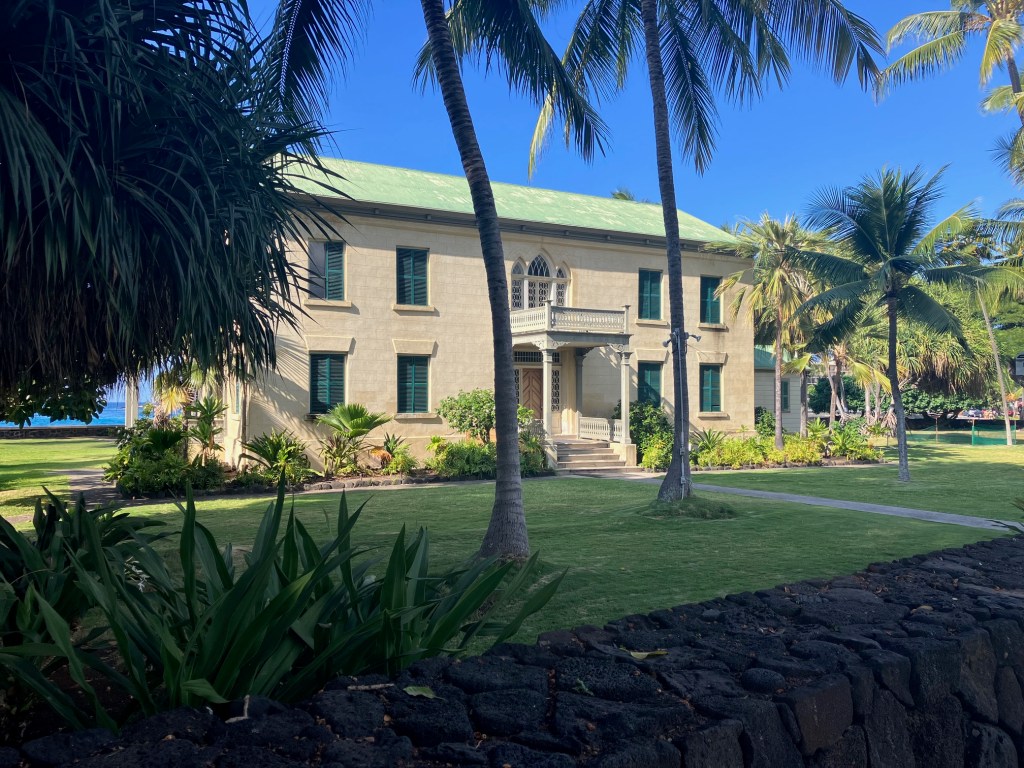
Daughters of Hawaiʻi, a nonprofit that promotes and preserves Hawaiʻi’s royal legacy, is the manager and steward of Kailua-Kona’s Hulihe‘e Palace, America’s oldest surviving royal residence, a gracious shorefront manor house built in 1838.
Powers knows that the property is at perennial risk from the forces of nature due to coastal erosion and sea level rise. Bad weather, like the storms that are threatening the state this week, increases the potential for damage.
On Monday, she started to make calls and line up the work necessary to protect Hulihe‘e Palace. The mansion, built from lava rock, sits in a stunning location, surrounded by broad green lawns, overlooking Kailua Bay and Ali’i Drive.

Ideas showcases stories, opinion and analysis about Hawaiʻi, from the state’s sharpest thinkers, to stretch our collective thinking about a problem or an issue. Email news@civilbeat.org to submit an idea or an essay.
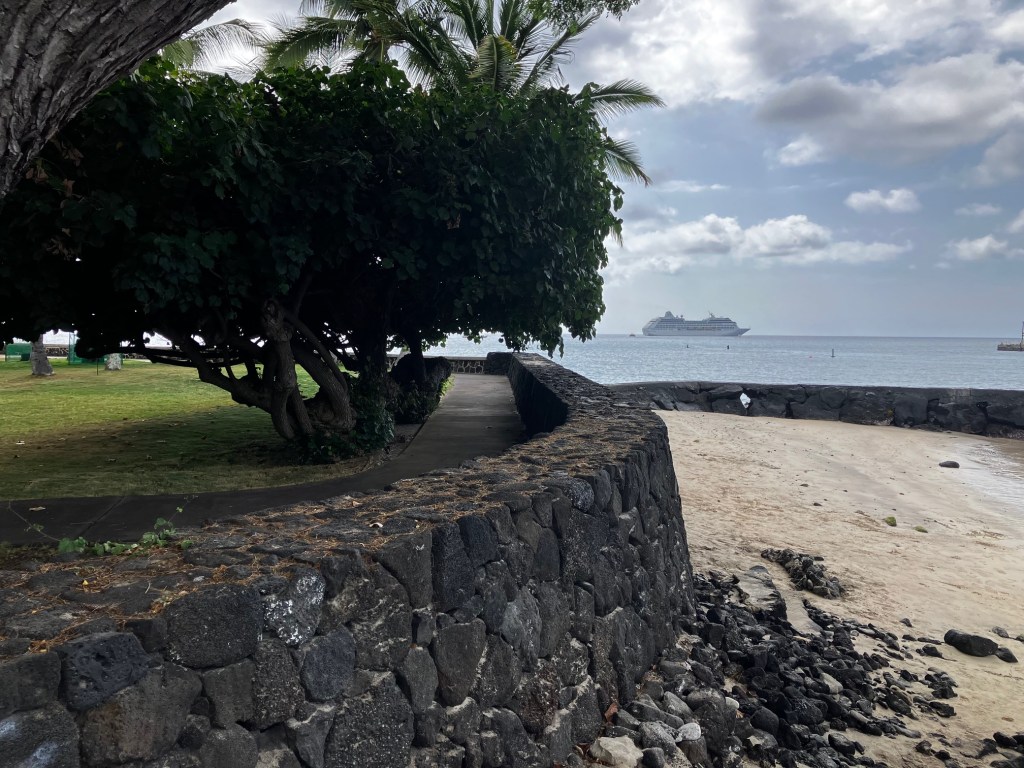
The palace is located near the path of the Ala Kahakai Trail, the storied 175-mile historic corridor that stretches around the western and southern parts of the island, the path taken in antiquity to link Hawai’i island’s villages and temple complexes. The palace property is directly on the waterfront, bounded by a seawall and a coastal walkway.
When they got word of the weather alert, Powers and her staff of seven employees and 20 volunteers made sure that preparations had been made to move precious objects, including koa wood furniture and historic artifacts, away from the windows to places of safety inside the structure. And she steeled herself for the anguished calls from workers that come after the water rises in Kailua-Kona, with flooding in the palace basement sometimes rising a foot high during bad storm events. Luckily, that didn’t happen this time.
“Our joke is that we’re literally fighting the rising tide,” Powers said in an interview this week. “Sea level rise is something we are very worried about. It can feel daunting at times. We are battling the elements every single minute of every single day, especially at Huliheʻe.”

Kailua-Kona, an early capital of the kingdom, is a very important place for Hawaiʻi, and even more significant since the destruction by fire of another capital in Lahaina. Kailua-Kona was the home of King Kamehameha, where he died, and where his children were born and lived nearby. Huliheʻe is its centerpiece.
“This was the residence of royalty from the beginning,” said Ross Wilson Jr., executive director of the Kailua Village Business Improvement District, which is working to highlight the area’s historic significance.
The mansion was originally built as the home of Hawaiʻi Island Chief Kuakini, known as John Adams Kuakini, who took the name out of respect for the U.S. president John Quincy Adams. He was the brother of Queen Kaʻahumanu. A physically imposing man, he was a trusted ally to the Kamehameha dynasty, controlling the island on their behalf and famously interacting with the foreign ships that came into the harbor to make sure they complied with the kingdom’s laws.
The house was inherited by Princess Ruth Keʻelikōlani, who chose to live on the site in a thatched hale in the traditional Hawaiian style. The property later became the vacation home of King David Kalākaua and Queen Kapiʻolani.
The last of the line of royal owners was Prince Jonah Kūhiō Kalanianaʻole, who might have been the king of Hawaiʻi if the overthrow had not occurred, and who instead became a 10-term U.S. congressman representing Hawaiʻi’s interests in Washington.
By the 1920s, the house had fallen into considerable disrepair and it was purchased by the territorial government. The site is owned by the state.
The Daughters of Hawaiʻi raised money for repairs and took over the palace’s management in 1927, fending off efforts to convert the property into a hotel.
Daughters of Hawaiʻi manages two historic houses, Huliheʻe Palace and the Queen Emma Summer Palace on Oʻahu. Membership in the group is restricted to female lineal descendants of people who lived in Hawaiʻi prior to 1880. A parallel organization, Calabash Cousins, is open to those who arrived since then.
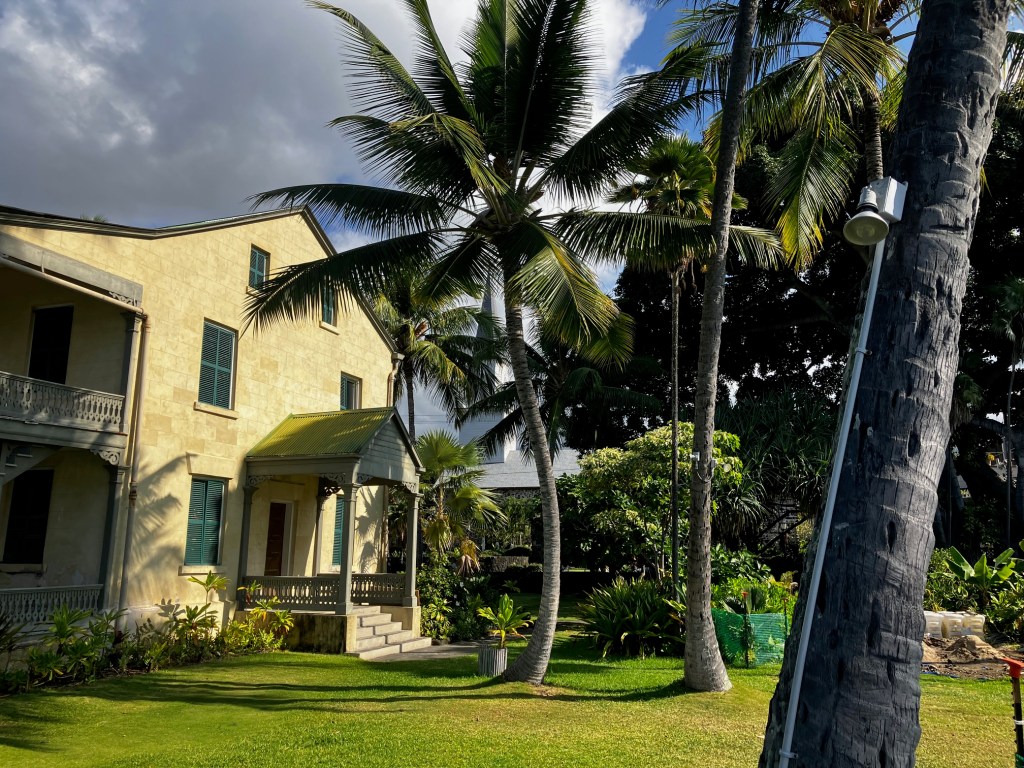
There are only four surviving Hawaiian palaces, including ‘Iolani Palace and the Queen Emma estate on Oʻahu, Washington Place in Honolulu, and Huliheʻe. A fifth site, Kamakahonu in Kailua-Kona, houses a heiau compound where King Kamehameha died.
These properties serve as “precious reminders” of the monarchy, according to now-deceased Hawaiian historian Ralph Thomas Kam, author of “Lost Palaces of Hawaiʻi,” and also underscore what no longer exists. Kam wrote that more than 80 royal homes have been lost in the islands due to “natural decay and man-made destruction.”
Washington Place only survived because of the direct personal intervention of Prince Kūhiō when the territorial government sought to use eminent domain to tear it down, according to Kam.
By late this week, it appeared that Huliheʻe was not at risk this time — although the storm was expected to move over Hawaiʻi island later this weekend — but the environmental threat posed another stark reminder of the house’s vulnerability, even as important renovation work is underway to repair damage from previous storms.
Construction to repair the seawall, damaged by a tsunami that struck Kailau-Kona in 2011, was just completed in the past year. It was funded by the state at a cost of $300,000.
Structural work by the state is also underway, including repairs to the foundation, roof and downspouts, at a cost of $3 million.
In 2006, the mansion was badly damaged by an earthquake.
The palace also took a serious financial blow during the Covid pandemic, when the state government shut down tourist traffic to the islands and promoted a general closure of most institutions. In addition to the loss of income when visitor numbers collapsed, many of the senior citizens who had been the group’s most active volunteers began staying home, which meant the organization had to find a new and younger set of volunteers to help with the palace’s daily operations.
“We have 20 volunteers but we need 50,” Powers said.
Now they are recovering lost ground. A new management team was recently put in place, including Eva Hubbard as executive and Kahōkū Lindsey-Asing as operations manager, both experienced nonprofit managers with deep roots in Hawaiʻi.
Maintaining and improving Hawaiʻi’s important architectural and historical patrimony isn’t easy and doesn’t come cheap. Last year the roof at ‘Iolani Palace was replaced, at a cost of some $1.2 million, and substantial other work is underway, including essential upgrades to the HVAC system and replacing the elevator. A better fire suppression system is needed, too, according to Paula Akana, executive director of Friends of ʻIolani Palace.
“There’s a new issue every day,” Akana said.
In addition to these architectural integrity concerns, the stewards of ‘Iolani and Huliheʻe palaces also face complex challenges in how to manage sites with complex backstories that defy easy characterization.
Huliheʻe Palace, for example, was long a place of recreation and enjoyment, but it also hosts an object that represents the stern justice once meted out by Hawaiian rulers.
On the grounds of the palace is a Hawaiian gameboard that illustrates the fun part of the story.
There is also a strangle stone located in a bush on the grounds, once believed to have been used for executions. Powers said that members of the Daughters of Hawaiʻi have deliberated over where the stone should be located on the property and how it should be interpreted. Some find the topic disturbing.
But, as Powers noted this week, each new topic presents her with another vivid reminder of the difficulties of conserving a vulnerable house that is such a potent and significant symbol of Hawaiʻi’s past. She has to view their conservatorship as a long-time kuleana, not a short-time set of fixes, because they have a duty not just to visitors today but to their descendants and their descendants.
“We’re not writing a five-year plan, we’re writing a 100-year plan,” she said.
 Sign up for our FREE morning newsletter and face each day more informed.

Local reporting when you need it most
Support timely, accurate, independent journalism.
Honolulu Civil Beat is a nonprofit organization, and your donation helps us produce local reporting that serves all of Hawaii.
ContributeAbout the Author