Parking Mandates May Need Reform. A Statewide Ban Goes Too Far
Housing policy should reduce costs while respecting local infrastructure realities.
March 11, 2026 · 5 min read


About the Author
Hawaiʻi urgently needs more housing, and lawmakers should carefully examine any policy that unnecessarily increases the cost of building homes. Parking mandates are often part of that conversation, and in some cases they deserve a second look.
But House Bill 1919, currently before the Legislature, goes much further than simply updating outdated rules. Instead, it would impose a statewide mandate that overrides county zoning authority by prohibiting minimum parking requirements for many types of development and sharply limiting them for others.
In other words, it replaces local planning decisions with a one-size-fits-all state rule.

Ideas showcases stories, opinion and analysis about Hawaiʻi, from the state’s sharpest thinkers, to stretch our collective thinking about a problem or an issue. Email news@civilbeat.org to submit an idea or an essay.
The bill’s supporters often point to the high cost of building parking, citing estimates that a single stall in Honolulu can cost roughly $68,000. That figure may be accurate for structured parking in high-rise condominium towers, where developers must build multi-story parking structures.
Supporters of parking reform are correct that structured parking can significantly increase the cost of high-rise housing, and those costs are often passed on to renters and buyers.
But that number is far less representative of many other types of residential development, where parking can be provided through surface lots or other lower-cost configurations. Parking costs vary widely depending on the type of project being built. Using the highest-end example to justify a sweeping statewide policy risks oversimplifying a far more complex issue.
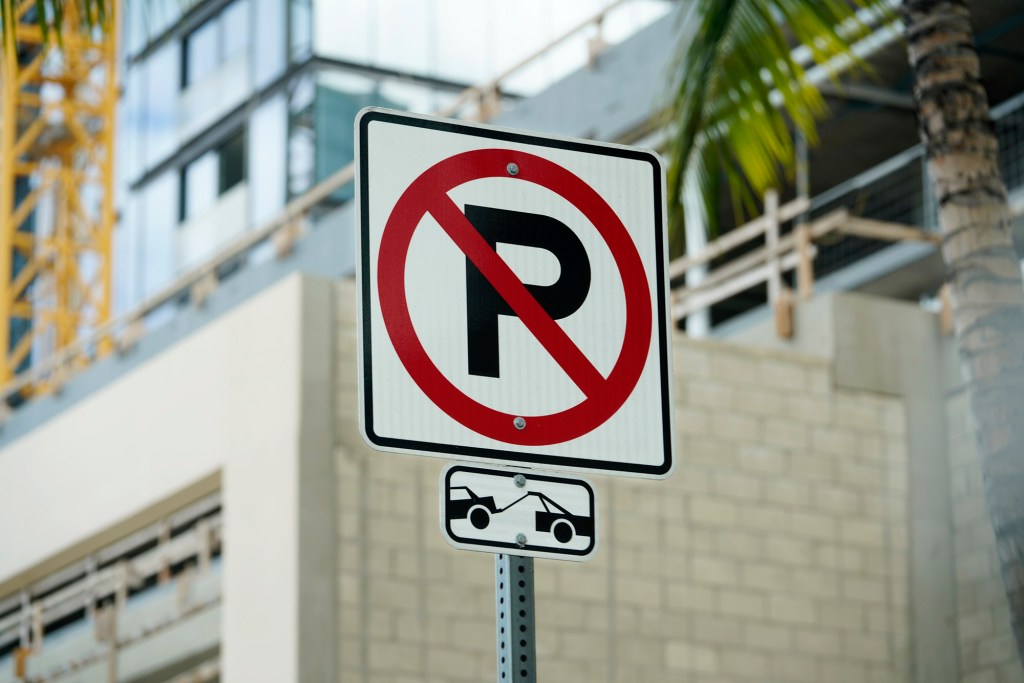
More importantly, eliminating parking requirements does not eliminate the demand for parking.
The cars do not disappear. When developments provide less off-street parking, that demand simply shifts to surrounding streets and neighborhoods.
In effect, the cost of parking is not removed. It is simply transferred from the developer to the surrounding community.
This is not a theoretical concern. Many neighborhoods across Hawaiʻi already struggle with limited street parking.
In my own district, multigenerational living is common. Households often include grandparents, parents, and adult children under one roof. That arrangement reflects the values of many Hawaiʻi families and is one of the ways people cope with our high cost of living.
But it also means that many homes have more vehicles than parking spaces.
When new development provides significantly less parking, some of that demand shifts onto surrounding neighborhood streets. Residents experience it as crowded roadways, blocked driveways, and the daily frustration of not being able to park near their own homes.
Parking may sound like a small issue in a policy debate. For many residents, however, it directly affects quality of life and the basic functioning of their neighborhood.
None of this is to say that Hawaiʻi should stop looking for ways to build more housing. Communities across our islands will need to accommodate growth if we want the next generation to remain here.
Supporters of parking reform also point out that not every household needs a dedicated parking stall. In some locations, particularly near transit or in dense urban neighborhoods, reduced parking requirements may make sense.
But housing policy must also account for infrastructure capacity, whether that means roads, drainage, schools, or transportation systems. Responsible growth means planning infrastructure alongside housing so that neighborhoods can support additional residents.
This is also why the question of who sets parking policy matters.
As someone who believes strongly in home rule, I believe counties should retain the authority to make planning and zoning decisions that reflect the realities of their own communities. Parking conditions vary dramatically from place to place.
Some neighborhoods may have access to rail, bus lines, or walkable infrastructure that make reduced parking feasible. Others rely heavily on cars for daily life.
Local governments are far better positioned to evaluate these differences and balance housing goals with infrastructure capacity.
Parking conditions vary dramatically from place to place.
Parking reform has been implemented in many mainland cities, often in places with robust transit networks and urban development patterns that reduce reliance on cars. Hawaiʻi’s transportation realities are different. In many communities across our islands, most households still rely on vehicles for daily work, school, and family obligations.
We are already seeing examples of how transportation assumptions can affect housing demand. In Kakaʻako, an affordable housing project designed with little or no parking anticipated that residents would rely on a nearby rail station.
But rail service to that area has been delayed for several years. As a result, some units have reportedly struggled to attract buyers because many households still rely on cars for daily life.
Policies that assume those alternatives already exist risk creating unintended consequences.
None of this means the conversation about parking reform should end. Counties may very well decide to reduce parking requirements in certain areas, particularly near rail stations, transit corridors, or walkable urban neighborhoods.
But those decisions should be made with local flexibility and community input, not imposed through a blanket statewide rule that applies everywhere regardless of infrastructure realities.
Hawaiʻi needs more housing, and communities across our islands will need to grow. The question is not whether we build more homes, but how we ensure that growth works for both new residents and existing neighborhoods.
Parking reform may play a role in that future. But the most effective housing policies will be those that balance increased housing supply with the infrastructure and planning that allow communities to function well.
Thoughtful reform should reflect the realities of Hawaiʻi’s communities while ensuring that growth is both sustainable and livable.
Editor’s note: HB 1919, the parking reform measure discussed in this op-ed, failed to pass the House of Representatives on Tuesday after a 25-25 floor vote.
 Sign up for our FREE morning newsletter and face each day more informed.
Community Voices aims to encourage broad discussion on many topics of community interest. It’s kind of a cross between Letters to the Editor and op-eds. This is your space to talk about important issues or interesting people who are making a difference in our world. Column lengths should be no more than 800 words and we need a photo of the author and a bio. We welcome video commentary and other multimedia formats. Send to news@civilbeat.org. The opinions and information expressed in Community Voices are solely those of the authors and not Civil Beat.
Local reporting when you need it most
Support timely, accurate, independent journalism.
Honolulu Civil Beat is a nonprofit organization, and your donation helps us produce local reporting that serves all of Hawaii.
ContributeAbout the Author