Time To Close The Campaign-To-Campaign Giving Loophole
The people of Hawaiʻi deserve to know where campaign money actually comes from, and where it goes.
March 3, 2026 · 3 min read


About the Author

Hawaiʻi has made real progress in recent years tightening its campaign finance laws. However, there is still a loophole on the books that quietly undermines that progress, and most voters have no idea it exists.
Here’s how it works.
Hawaiʻi law allows campaigns to purchase two fundraiser tickets to another candidate’s event. Those tickets can cost as much as $2,000 each. This has become one of the main ways money quietly moves between campaigns. A handful of allied lawmakers can buy tickets to a fundraiser, instantly transferring thousands of donor-funded dollars between races. It shows up in the filings, but it is easy to miss if you don’t know what to look for.

Ideas showcases stories, opinion and analysis about Hawaiʻi, from the state’s sharpest thinkers, to stretch our collective thinking about a problem or an issue. Email news@civilbeat.org to submit an idea or an essay.
These purchases are made using campaign war chests built from industry contributions, political action committees, lobbyists, and the advantages of incumbency. When elected officials give to each other this way, they are giving away other people’s money, not their own.
I started looking more closely at this practice after my household received a mailer paid for by the Tobacco-Free Kids Action Fund supporting our House District 2 representative. It stated that she does not take money from Big Tobacco. I was glad to read that, but it made me curious. So I checked the public filings.
What I found illustrates a broader problem. A candidate can decline certain contributions directly while still benefiting from money that passed through another campaign’s account first. Once I knew what to look for, the pattern was visible across multiple races.
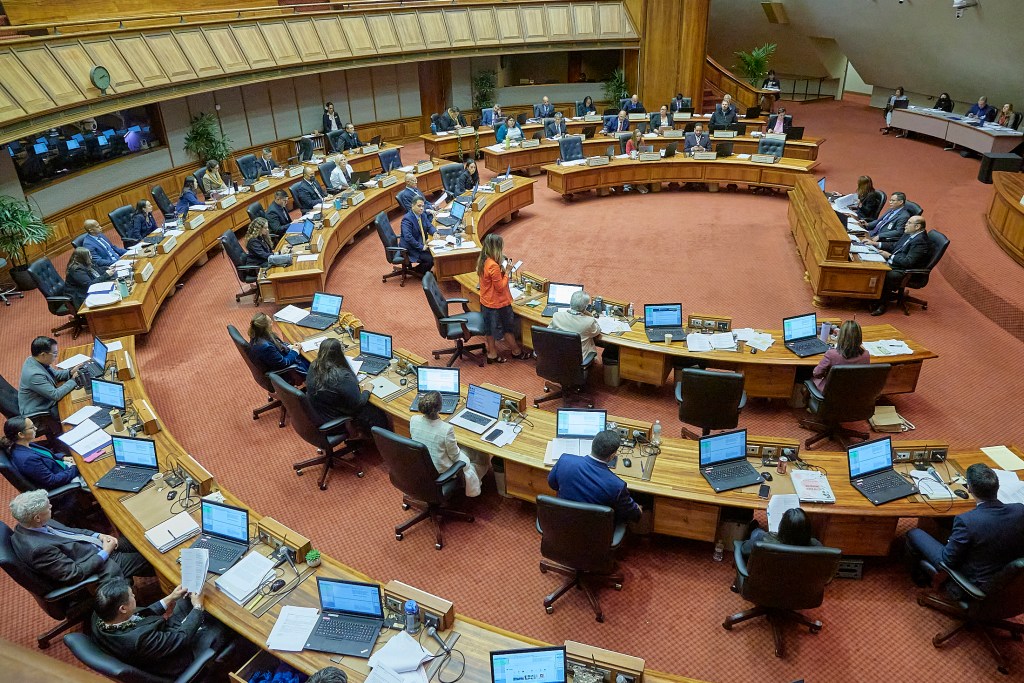
Civil Beat has reported that $386,038 was transferred between campaigns during the 2024 election cycle alone. And former state Sen. Gary Hooser has also documented how campaign war chests are routinely used to move donor money between candidates.
This is not an isolated practice. It is a systemic one.
The same loophole creates a pathway for major donors to amplify their influence beyond individual contribution limits. A maxed out donor can give the legal maximum to one candidate, then spend additional funds on fundraiser tickets from a second candidate, who later purchases tickets to the first candidate’s event.
Whether or not there is any coordination, the result is that more money reaches its intended destination than the contribution limits were designed to allow.
A fix already exists. House Bill 772, which has been moving through the Legislature this session, would close this loophole entirely. Campaign funds would have to be used for the campaign they were raised for, and nothing else. The bill has no fiscal impact, it simply makes the rule clear.
The bill is not in the House Finance Committee, with a hearing scheduled for Wednesday, March. With new committee leadership in place, this is a real opportunity to act.
The people of Hawaiʻi deserve to know where campaign money actually comes from and where it goes.
Closing this loophole will not fix everything, but it is a straightforward step toward a campaign finance system that is transparent, accountable, and harder to cheat. That is always worth fighting for.
 Sign up for our FREE morning newsletter and face each day more informed.
Community Voices aims to encourage broad discussion on many topics of community interest. It’s kind of a cross between Letters to the Editor and op-eds. This is your space to talk about important issues or interesting people who are making a difference in our world. Column lengths should be no more than 800 words and we need a photo of the author and a bio. We welcome video commentary and other multimedia formats. Send to news@civilbeat.org. The opinions and information expressed in Community Voices are solely those of the authors and not Civil Beat.
Local reporting when you need it most
Support timely, accurate, independent journalism.
Honolulu Civil Beat is a nonprofit organization, and your donation helps us produce local reporting that serves all of Hawaii.
ContributeAbout the Author