When School Governance Stops Serving Our Keiki
Public schools on the West Side of Oʻahu face challenges already visible in the DOE’s own performance report.
March 9, 2026 · 4 min read


About the Author

As a community member on the Waiʻanae Coast, I spend a great deal of time listening to families, attending community meetings and reviewing publicly available education data. The conversations I hear across our coast are remarkably consistent.
Parents want the same thing every parent wants: schools that help their children become capable, confident and self-sustaining adults.
But when we look honestly at the outcomes of Hawaiʻi’s public school system, the question many community members are beginning to ask is difficult but necessary: Is the Department of Education structured primarily to serve students — or to protect the system itself?

Ideas showcases stories, opinion and analysis about Hawaiʻi, from the state’s sharpest thinkers, to stretch our collective thinking about a problem or an issue. Email news@civilbeat.org to submit an idea or an essay.
Recent reporting by Civil Beat highlighted the significant political influence of public sector unions, including the Hawaii Government Employees Association. As the article noted, the union represents a potential voting bloc of approximately 37,000 members.
Public employees absolutely deserve fair representation. But when the governance structure of a public institution begins to prioritize workforce protection over student outcomes, the mission of that institution can become blurred.
On the Waiʻanae Coast, our public schools face challenges that are visible in the state Department of Education’s own StriveHI school performance reports.
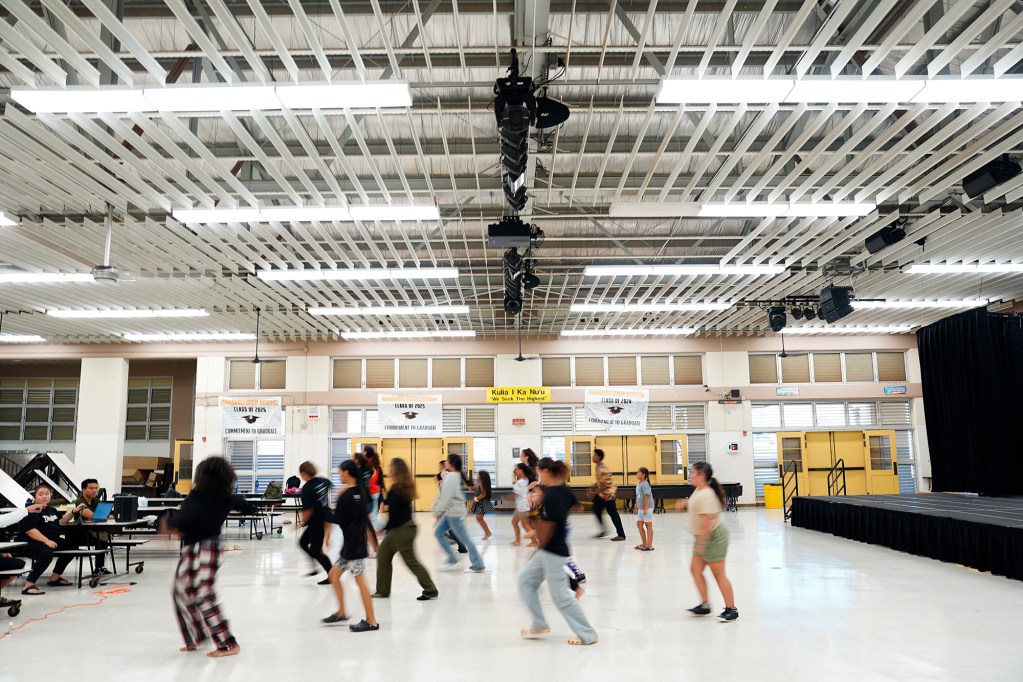
Recent StriveHI reports for schools in our region — including schools serving Nānākuli, Māʻili and Waiʻanae — show that large percentages of students remain below proficiency in core subjects such as reading and mathematics, and that chronic absenteeism remains a serious challenge across multiple campuses.
These are not abstract statistics. They represent real children whose futures depend on the quality of the education they receive today.
Yet when community members attempt to engage constructively in school governance, we often encounter a system that appears resistant to meaningful accountability.
School Community Councils were created under Act 51 to provide community participation in school governance. In theory, School Community Councils allow parents, teachers and community members to help shape academic priorities and financial decisions at the school level.
The intent of Act 51 was clear: local voices should have a role in improving local schools.
In practice, however, many councils struggle with basic governance challenges. Community members frequently encounter lack of training, unclear procedures, and confusion about the authority of principals versus elected council members.
When governance structures are unclear, accountability becomes difficult.
And when accountability becomes difficult, improvement becomes slow.
The issue is not individual principals or teachers. Many educators work tirelessly for our children and deserve our gratitude and support.
The issue is structural.
Hawaiʻi operates one of the most centralized public school systems in the United States. Decisions affecting hundreds of schools are made within a single statewide bureaucracy.
While this structure was originally intended to ensure fairness and equity, it can also make local accountability more difficult.
Communities can see problems, but often lack the authority to address them.
Teachers can identify challenges, but may be constrained by bureaucratic systems.
Principals carry enormous responsibility but often operate within rigid administrative frameworks. In such an environment, the easiest outcome is institutional self-preservation.
But education cannot function primarily as a workforce system. It must function as a student-centered institution whose ultimate measure of success is whether our children are prepared for adulthood.
That preparation includes academic skills, but also the ability to think critically, solve problems and contribute meaningfully to their communities.
Are we protecting a system — or educating our children?
If the current system is not consistently producing those outcomes, then honest discussion about reform is not an attack on educators.
It is a responsibility.
A public education system should never become an institution primarily focused on protecting itself. Its purpose is to prepare the next generation.
Communities across Hawaiʻi care deeply about public education. Parents, teachers and local leaders want to work together to strengthen our schools.
But meaningful collaboration requires transparency, clear governance, and a willingness to evaluate whether our systems are truly serving the children they were created to educate.
The question Hawaiʻi must ask itself is simple: Are we protecting a system — or educating our children?
Our keiki deserve nothing less.
 Sign up for our FREE morning newsletter and face each day more informed.
Community Voices aims to encourage broad discussion on many topics of community interest. It’s kind of a cross between Letters to the Editor and op-eds. This is your space to talk about important issues or interesting people who are making a difference in our world. Column lengths should be no more than 800 words and we need a photo of the author and a bio. We welcome video commentary and other multimedia formats. Send to news@civilbeat.org. The opinions and information expressed in Community Voices are solely those of the authors and not Civil Beat.

Local reporting when you need it most
Support timely, accurate, independent journalism.
Honolulu Civil Beat is a nonprofit organization, and your donation helps us produce local reporting that serves all of Hawaii.
ContributeAbout the Author