A Patient With Multiple Sclerosis Reflects On The Value Of A Life
Americans should get back to the philosophy of understanding that the country won’t do well until everybody does well.
April 2, 2026 · 4 min read


About the Author
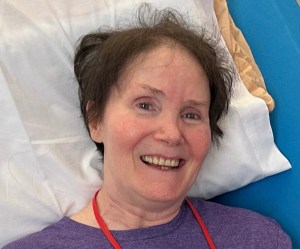
What’s my worth?
I’ve been thinking a lot lately about how our society is deciding to value people. As someone who has lived in a long-term care facility on Medicaid, I have had a firsthand view at how we deal with people who have no ability to do anything for themselves. All of the residents here, myself included, have either a physical or mental disability that prevents them from surviving on their own.
About 100 years ago, after the roaring 20s and the economic disaster of 1930, we created a social safety net of programs to prevent people from plunging into doom. Somehow, that compact has deteriorated and I am worried about mine and other peoples place in the world.

Ideas showcases stories, opinion and analysis about Hawaiʻi, from the state’s sharpest thinkers, to stretch our collective thinking about a problem or an issue. Email news@civilbeat.org to submit an idea or an essay.
Years ago, when Mitt Romney was running for president, I was very affected by him talking about “the takers” in society. I had recently started receiving SSDI (Social Security Disability Insurance) after I was diagnosed with multiple sclerosis and had been laid off because of it. I was acutely aware that I was depending on the government and not contributing to it. That was in the early 2000s, so I have been “sponging” off Uncle Sam for quite a while now.
That is, if you consider using the benefits I had accrued after working for over 20 years “sponging.” I had the misfortune of becoming disabled early in my life and anyone who knows me would defend my right to the benefits I get now.

Nobody is worried about the one or two personal examples they have of public assistance, it’s the unnamed masses that are the problem. People seem to forget the “public” in public assistance. If you’re happy your friend gets it, you’re happy it exists.
It’s the people cheating the system that make me mad, you say. What you are not realizing is fraud is a small percent of the overall spending. People have been conditioned to think that it’s the immigrant, or some other person struggling to survive that makes their life difficult. What no one seems to understand is the real problem is above them.
Wage inequality is at levels not seen since the Gilded Age. You are either very wealthy or, more likely, part of the 90% of Americans just trying to get by. We put up with the hyper rich because maybe, someday, if we are very clever or very lucky, we can be part of that exclusive club.
The problem is not so much being wealthy, as it is the messed up tax structure that allows anyone, person or corporation, rich enough to hire an accountant to pay a fraction of what everyone else does.
The best part about America is our love of the underdog. Who doesn’t relish a good “come-from-behind” story? We identify with the scrappy upstart because that’s who we were 250 years ago. We glass over the part where we took in the rest of the world’s rejects and became the greatest country in the world.
The best part about America is our love of the underdog.
Doing that is part of what made us No. 1 and it is exactly that diversity that some people are trying to get rid of now. We know in our gut, that’s not right.
So as I sit here in my room in one of the most diverse states in our union, I think about my own worth. I don’t have a lot monetarily, but I am eternally grateful that I can think straight. I am looking forward to the day when we get back to the philosophy of understanding that we won’t do well until everybody does well.
That we are our brothers keeper. You know, Minnesota nice.
 Sign up for our FREE morning newsletter and face each day more informed.
Community Voices aims to encourage broad discussion on many topics of community interest. It’s kind of a cross between Letters to the Editor and op-eds. This is your space to talk about important issues or interesting people who are making a difference in our world. Column lengths should be no more than 800 words and we need a photo of the author and a bio. We welcome video commentary and other multimedia formats. Send to news@civilbeat.org. The opinions and information expressed in Community Voices are solely those of the authors and not Civil Beat.
Read this next:

Local reporting when you need it most
Support timely, accurate, independent journalism.
Honolulu Civil Beat is a nonprofit organization, and your donation helps us produce local reporting that serves all of Hawaii.
ContributeAbout the Author