Beth Fukumoto: Legislature Is Doing The Right Thing On Dyslexia
Every public school in Hawaiʻi should take the same approach to defining dyslexia and screening students for reading difficulties.
April 14, 2026 · 5 min read


About the Author

Forty-nine states have formally defined dyslexia in statute. We haven’t. Now, the Legislature is moving a step closer to changing that.
So far, 2026 has brought a daily onslaught of bad news, and this week was one of the worst. So when House Bill 1891, which defines dyslexia and requires school screenings, unanimously passed third reading in the Senate on Friday, it stood out as a rare moment of positivity worth celebrating.
In an interview, Erica Nakanishi-Stanis, advocacy director of HawaiiKidsCAN, described the bill’s impact and value succinctly, “define dyslexia, define the right to evidence-based interventions, mandate dyslexia-sensitive screenings … and make the training, at least, available.”
This issue was something we addressed in 2013, my first legislative session, when the Legislature unanimously passed SCR 120, asking the Department of Education to evaluate its approach to dyslexia and literacy and report back to the Legislature. The DOE’s 2014 report committed to improvements, detailed funding needs, and highlighted staffing requirements.

Hawaiʻi has made progress throughout the last decade, identifying best practices, establishing a literacy goals frameworks, and providing training in structural literacy. In 2024, the state received a five-year, $60 million federal comprehensive literacy state development grant to help schools adopt structured literacy best practices.
However, only 60 of Hawaiʻi’s 258 schools opted into that grant. The other 198 schools won’t be required to use the grant’s structured literacy training or improved screening practices. That’s the problem with voluntary.
Nakanishi-Stanis frames the argument for this current bill’s mandated dyslexia-sensitive screenings around equity.
“If you are a dyslexic student or if you are having difficulty with sound-symbol recognition or phonemic awareness, then if you aren’t taught using structured literacy, your chances of actually learning to be competent and fluent in literacy are much lower,” she said. “If you go to a school where a teacher has undertaken that extra independent work, great, you’re lucky. If you go to a school where that training hasn’t been mandated, and the screener that’s used to catch early literacy struggles is not designed for that level of specificity … then you lose the lottery.”
This is where Hawaiʻi’s unique structure matters. We have one statewide school district — no county school boards, no property tax disparities that make some schools wealthy and others just scraping by. The whole premise of the system is that every child, on every island, gets the same basic standard of education.
That doesn’t mean every decision should be made from the top down. When I represented Mililani, what struck me most wasn’t the consistency across our schools — it was the creativity within them. Mililani has excellent schools, but students have vastly different needs and families have very different resources across that district. The principals I worked with didn’t apply a single template. They built programs that fit their specific communities. That responsiveness is part of what makes our public schools work, and it shouldn’t go away.
The problem isn’t school-level judgment. The problem is what happens when there aren’t sufficient state-level requirements at all. The state auditor’s recent reports illustrate that difference.
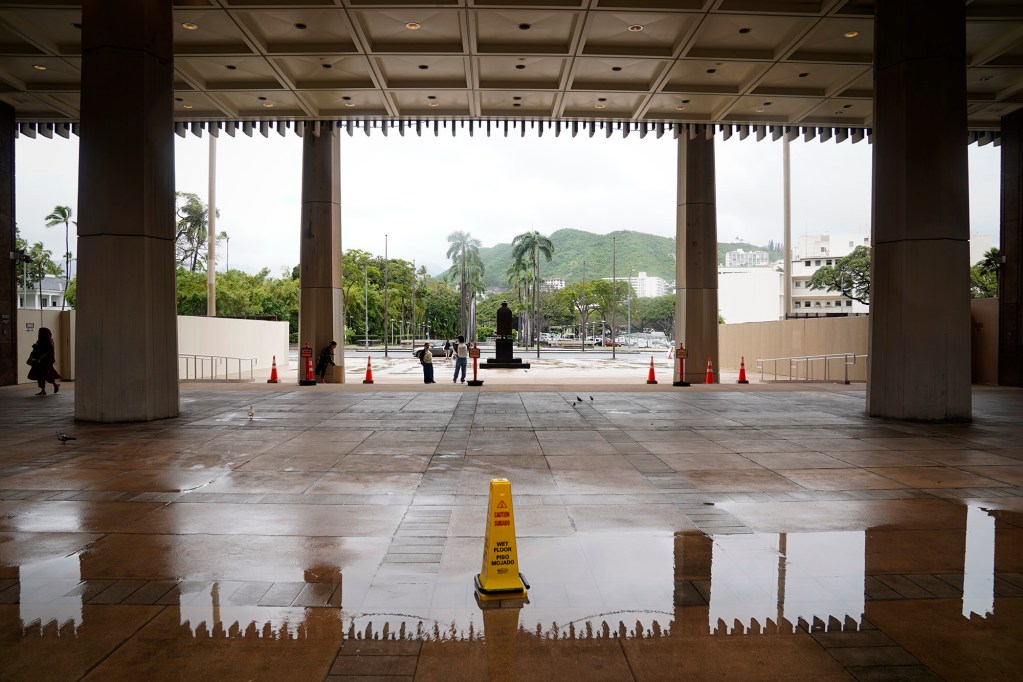
In separate audits of the driver education program, heat abatement efforts, and the Farm to School mandate, the finding was consistent: without clear requirements, outcomes vary wildly and statewide goals go unmet. The driver education audit found there is effectively no single statewide program — just 35 different school-level versions. In the heat abatement audit, a former deputy superintendent of operations described the problem clearly, stating: “I am not the king of anything. There are 258 kings and queens.”
Good principals exercising judgment are not the same as no one being accountable for a basic outcome. That’s the balance this bill tries to strike. Most education decisions don’t need a mandate. But whether a child gets screened with a tool appropriate for catching a neurological disability isn’t a school-level judgment call. It’s a baseline.
David Sun-Miyashiro, executive director of HawaiiKidsCAN, put it plainly. “There’s a whole concept around students with disabilities and ‘waiting for failure,'” he said in an interview. “But if you can do a little bit of that preventative work on the front end, it’s a better experience for the kid.”
Sun-Miyashiro also noted that estimates suggest roughly half of the incarcerated population nationally has dyslexia. So early identification isn’t just good for kids. It’s significantly cheaper than what comes later.
There is one issue the Legislature still needs to resolve: how the bill applies to Hawaiian-medium Kaiapuni schools. Literacy advocates have argued that dyslexia is a neurological condition that crosses language boundaries and that exempting Kaiapuni students from screening is its own equity problem. That’s a fair point. At the same time, the available tools are English-language and can’t be adapted to Hawaiian literacy development. Building accurate screeners for students learning to read in Hawaiian requires dedicated research, support, and time.
The tension between those two concerns is real, and the Legislature could resolve it by lengthening the timeline for Kaiapuni schools to allow for an appropriate tool to be developed.
Those are details lawmakers can work out through conference committee in the weeks ahead. But the core of the bill stands. Every public school in Hawaiʻi should take the same approach to defining dyslexia and screening students for reading difficulties. A statewide system must offer every child that guarantee.
Civil Beat’s education reporting is supported by a grant from Chamberlin Family Philanthropy.
 Sign up for our FREE morning newsletter and face each day more informed.
Read this next:
Local reporting when you need it most
Support timely, accurate, independent journalism.
Honolulu Civil Beat is a nonprofit organization, and your donation helps us produce local reporting that serves all of Hawaii.
ContributeAbout the Author