Denby Fawcett: Hard Questions About Public Land Use In Kaimukī
Japanese kyudo archery only attracts a small number of users on Oʻahu but a new facility would take up considerable public space.
April 21, 2026 · 8 min read


About the Author

The city was wise to pull back to allow more time to study the proposed Japanese archery dojo it wants to partner with a private organization to construct in Mauʻumae Nature Park.
There are too many unanswered questions about the kyudojo, or Zen archery practice facility, to move ahead without closer scrutiny.
An agreement was signed last May for the partnership between the Honolulu Department of Parks and Recreation and the Hawaiʻi Kyudo Foundation under which the foundation would build an $850,000 kyudo practice facility and give it to the city.
Kyudo is an ancient and respected Japanese martial art practiced by a relatively limited number of adherents both here and in Japan.

A salient point to be emphasized here is public ownership does not necessarily support meaningful public access.
The foundation and its supporters in the Kaimukī neighborhood say the facility would activate an underused section of the park, help more island residents learn kyudo archery and provide the city with a facility it also could use for other public recreational purposes. The foundation also proposes to install irrigation infrastructure to help community volunteers plant and maintain native plants in the park.
Critics say the deal was sprung on them as if it were already decided, with too little notice, even though the city and foundation spokesman Bob Dewitz made his first presentation to the Kaimukī Neighborhood Board in January 2025. Four months later in May 2025, the city and the kyudo foundation signed their agreement.
Critics also say they want the park preserved as it was originally intended: a passive nature park. They say they have their own ideas for improving it, including nature paths and native plantings.
Even though Dewitz has made convincing arguments about safety, Grace OʻNeil, one of the opponents, says there will always be a perception of an errant arrow straying into the grassy area of the park where they walk their dogs and enjoy the greenery.
The project is still not a done deal. It needs a number of approvals, including approval of a final environmental assessment and the Honolulu City Council’s acceptance of the proposed gift.
Council Chair Tommy Waters says he will not support the proposed archery project because, he says, the community does not want it.
“Public-private partnerships can be valuable, but not when community concerns are underrepresented or dismissed. I have been clear from the start that any support for the Mauʻumae Kyudojo depends on meaningful neighborhood support. After receiving a significant volume of complaints, my office surveyed 2,179 addresses in the surrounding neighborhoods. Nearly 500 residents responded. Those are neighborhood families telling us this project is not right for their neighborhood,” Waters wrote in an email to Civil Beat.

He also showed up at both the Kaimukī and Kāhala neighborhood board meetings last week to express his rejection of the archery proposal, saying it should be located elsewhere.
Here are five points about the signed agreement between city and the Hawaiʻi Kyudo Foundation that need more public scrutiny:
Footprint Of The Facility
The footprint of the facility is actually larger than the Hawaiʻi Kyudo Foundation and the city suggest. It would cover a higher percentage of useable space in Mauʻumae Nature Park than described in community meetings.
The city and the kyudo foundation say the kyudojo would use only about 2% of the park’s approximately 30 acres. But documents show the foundation wants to build the structures and a 19-stall parking lot on the park’s 4-acre makai section — the only relatively flat part of the park and the section used by most of the neighborhood.
Because the dojo and its gravel parking lot would have an approximately one-half-acre footprint within that 4-acre makai section, they would actually occupy 12.5%, or one-eighth, of the park’s most usable and buildable area.
Unprecedented?
Any time the city allows a private organization to construct and use permanent buildings on public land such an arrangement deserves careful scrutiny. City parks and recreation director Laura Thielen is unable to cite to Civil Beat any example of when the city has offered a private organization a long-term agreement.
In this case, it would be 25 years to construct, staff and maintain at its own expense a permanent facility in an Oʻahu public park while also taking responsibility for the security of the facility and helping coordinate its scheduled use.

Public Access Remains Unclear
One of the key unanswered questions is exactly when and how the general public would be able to use the facility. Dewitz, the foundation’s spokesman, says the facility would be open to the public when kyudo archers are not practicing in the buildings.
He says he hopes one day it will become an active community center like the ones he visited in Japan.
His proposal is for initial use of the facility is for kyudo archery on three separate days including weekend days for a total of 12 hours a week. A maximum of 12 to 15 archers could be in the facility during each session.
Dewitz says the parking lot and buildings will be locked when the facility is not in use, unless the city decides otherwise, and the kyudojo’s one exterior restroom will always be locked with a lock code except for volunteers maintaining the park or, he said in a phone conversation, if the kyudo foundation is asked for the code by a teacher of dog training classes currently offered in Mauʻumae park.
In the memorandum of understanding between the city and the foundation signed May 14, 2025, the city says “The foundation cannot exclude the public from the kyudojo.” And that the kyudojo will be a public facility governed by DPR ordinances, rules and regulations and public use permitting requirements like any other park facilities.
Yet the city has not set aside a minimum number of hours per week guaranteed for public use beyond kyudo use and for what kinds of activities. In an email to Civil Beat, parks director Thielen said public use of the dojo is still being explored and would be determined by parks staffing and public requests to use the facility.
Amount Of Kyudo Archery Use
Also deserving of more discussion is the merit of giving a private organization a sizable portion of the useable part of a neighborhood public park for a specialized activity practiced by relatively few people in Hawaiʻi and, according to the All Nippon Kyudo Foundation, only less than 1% of the population in Japan where it is culturally embedded.
In Honolulu, Dewitz says kyudo is practiced on Oahʻu by 60 to 80 people. He says he hopes a dedicated facility in Mauʻumae Park will increase the numbers of kyudo archers in Hawaiʻi.
Suitability For General Public Use
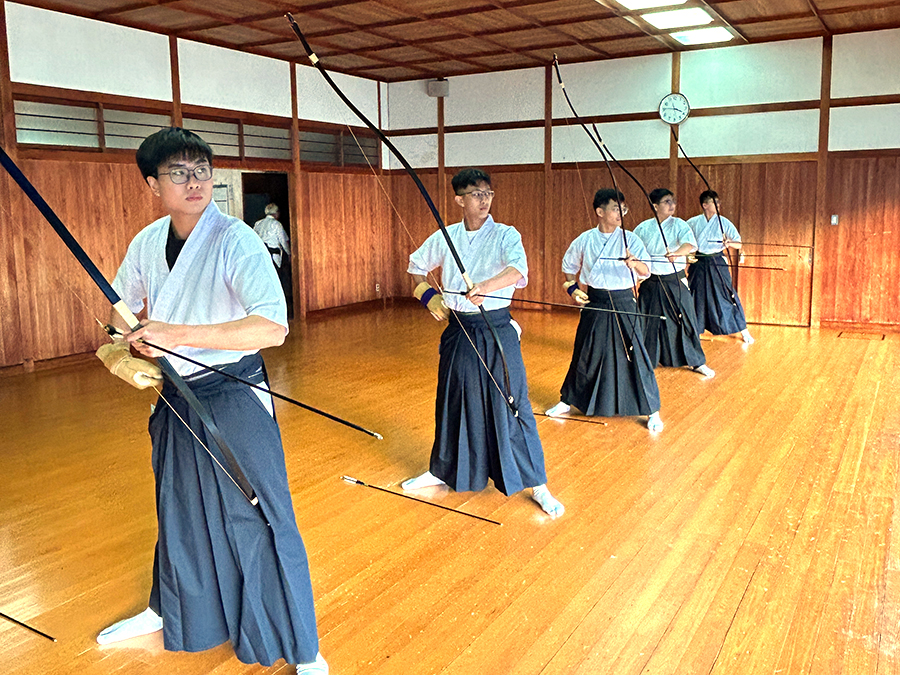
The shooting gallery of the kyudojo would be built of unfinished birch wood imported from Denmark and polished with oil or beeswax. People who use it would have to wear Japanese tabi, socks or have clean bare feet. Dewitz says the gallery would be perfect for certain types of movement activity such as kendo, yoga and hula. It is a small space accommodating up to 18 people.
The only part of the facility clearly suitable for general purpose use for classes and meetings — with no need to be in socks or be barefooted — would be the dojo’s 900-square-foot meeting room. It could accommodate up to 40 people.
A parks department worker or representative vetted by the parks department would have to be available to let them in. With its specially crafted traditional features, the kyudojo would be require controlled use and unlike most buildings in other Honolulu parks with durable concrete or vinyl flooring, more careful maintenance.
Even if the Japanese archery facility is never built at Mauʻumae Nature Park, Dewitz says the proposal will at least have benefited the community by bringing together larger numbers of neighbors in a way they never were before, with residents now proposing their own projects to better care for neglected and little-used sections of the park.
 Sign up for our FREE morning newsletter and face each day more informed.
Read this next:

Local reporting when you need it most
Support timely, accurate, independent journalism.
Honolulu Civil Beat is a nonprofit organization, and your donation helps us produce local reporting that serves all of Hawaii.
ContributeAbout the Author