Investing In Ahupuaʻa Restoration Is Investing In Hawaiʻi’s Future
A $10 million green fee investment would support watersheds, native reforestation and invasive species management that bring residents and visitors into shared stewardship.
April 9, 2026 · 4 min read


About the Authors
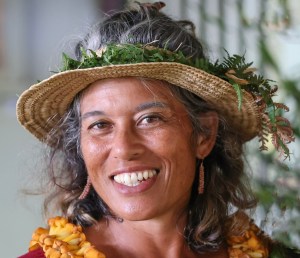

For generations, our kūpuna organized life through the ahupuaʻa system, understanding that what happens in the forests above shapes the streams below and the reefs beyond. That wisdom was not theoretical. It guided how communities fed themselves, protected freshwater, and sustained abundant resources from mauka to makai for generations.
Today, as leaders of Waipā Foundation and Mālama Learning Center, we see every day how relevant that understanding remains. We also see how complex these systems are and the need to remain adaptive in our continued care as our environment shifts over time.
Climate change and invasive species are intensifying impact and increasing the rate at which our communities and ʻāina must respond to extreme events. Community organizations employ traditional and modern approaches to resource management that build resiliency in the face of these challenges.

Ideas showcases stories, opinion and analysis about Hawaiʻi, from the state’s sharpest thinkers, to stretch our collective thinking about a problem or an issue. Email news@civilbeat.org to submit an idea or an essay.
The question is whether we will invest at the scale needed to remain adaptive in the ways that has sustained ahupuaʻa for generations.
Waipā Foundation has been fortunate to steward the 1,600-acre ahupuaʻa of Waipā, on Kauaʻi’s North Shore, for over three decades. Our work started as a grassroots effort to stop resort development and instead save a space for community, culture and kūpuna values; a place to restore health to `āina and people, remember our interdependent relationships, and how to feed ourselves and each other.
Today, ecosystems throughout the valley are healthier, resilient, and abundant and thousands of learners, volunteers and ʻohana who are fed by, and engage with Waipā every year.
Perhaps most inspiring though, is the growing statewide network of ‘āina based organizations and the next generations of young community leaders who have and continue to return, drawn by the beloved community created around ‘āina.

Can you imagine what it takes to care for a stream, or fishpond, forest, wetland, or all of those together in an ahupua‘a? Along with some gardens and farms, and the necessary roads, trails, auwai and drain ditches, fences, etc. and equipment and infrastructure that it takes?
Short-term grants do not adequately fund the everyday work and routine maintenance required to keep Hawaiʻi’s ecosystems healthy, productive and accessible for climate resilience, food production, and as places of learning, inspiration and recreation.
The proposed $10 million ahupuaʻa restoration line item within the green fee project recommendations is a practical and necessary step to more adequately support this work across the pae āina.
Through Mālama Learning Center, we approach restoration by strengthening environmental literacy and civic engagement in our rural communities. We work with schools, educators, and community partners to connect science, culture, and action.
Students learn where their freshwater comes from. They study how soil health affects runoff. They cultivate a wide variety of native plants and provide hands-on education to help others do the same, including supporting schools in establishing their own nurseries for community out-planting.
They also lead efforts in wildfire prevention education. Educators gain the tools to integrate place-based stewardship into their classrooms.
We’ve found that when people understand their watershed, they begin to care about it in a deeper, more meaningful way. When they see how upland forests affect coastal reefs, they begin to act with intention.
Education is not separate from restoration. It is what sustains it across generations.
The green fee framework acknowledges that visitors benefit from Hawaiʻi’s natural resources. Directing a portion of those revenues toward ahupuaʻa restoration ensures that community-based organizations leading this work have the capacity to deepen and expand it. The $10 million investment would support watershed restoration, native reforestation, invasive species management, and community work days that bring residents and visitors into shared stewardship.
We stand ready to continue this work.
This is not about creating something new. It is about investing in what already works. Across our islands, there are organizations rooted in place, guided by ʻike kūpuna, and committed to measurable ecological outcomes. With sustained funding, we can restore streams more effectively, protect reefs more intentionally, and prepare our communities for the realities of a changing climate.
Hawaiian knowledge has long recognized that caring for land and water is not optional. It is foundational. Investing in ahupuaʻa restoration today reflects that understanding and helps prepare Hawaiʻi for the future.
We stand ready to continue this work. With thoughtful, sustained support, we can ensure that the systems that once sustained thriving communities will extend to all of Hawaiʻi.
 Sign up for our FREE morning newsletter and face each day more informed.
Community Voices aims to encourage broad discussion on many topics of community interest. It’s kind of a cross between Letters to the Editor and op-eds. This is your space to talk about important issues or interesting people who are making a difference in our world. Column lengths should be no more than 800 words and we need a photo of the author and a bio. We welcome video commentary and other multimedia formats. Send to news@civilbeat.org. The opinions and information expressed in Community Voices are solely those of the authors and not Civil Beat.
Read this next:

Local reporting when you need it most
Support timely, accurate, independent journalism.
Honolulu Civil Beat is a nonprofit organization, and your donation helps us produce local reporting that serves all of Hawaii.
ContributeAbout the Authors