Only a few hours left in our summer campaign. Help us raise the last $29,835 by midnight on Friday and your gift will be matched up to $10,000!
Lee Cataluna: Why People Were Waiting In Lines Across The State This Week
In an era where so many basic things are unaffordable for the most frustrating, unfair reasons, this bit of Hawaiʻi exclusivity is still obtainable by the middle class.
April 19, 2026 · 5 min read

About the Author

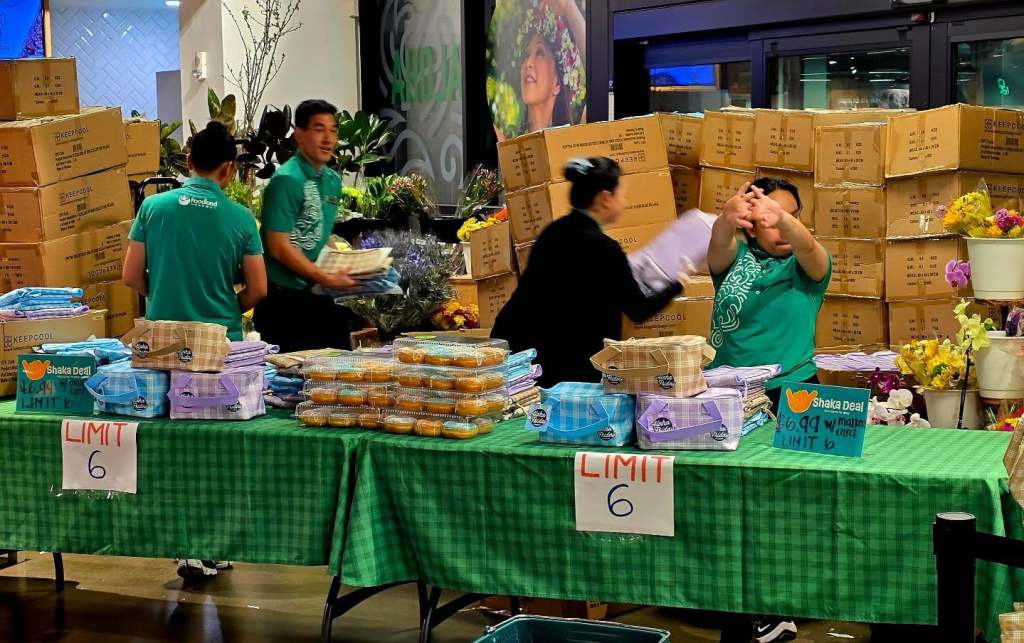
At ʻĀina Haina shopping center, the queue began at 4:30 a.m. At 5:30 a.m. on Wednesday, the line at Ala Moana Foodland Farms snaked from the door down the sidewalk and around the corner. One person admitted driving from town all the way out to ʻEwa thinking that the store there would have a bigger stash.
The fancy folks in New York City may be flashing their $20,000 Birkin bags.
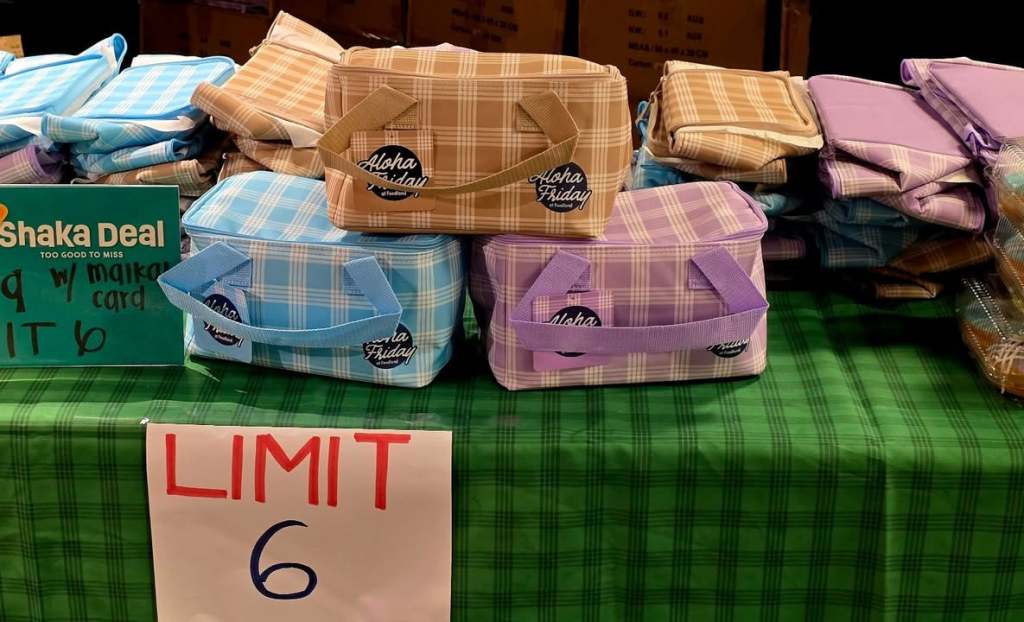
Here in Hawaiʻi, the hottest selling accessory is a $6.99 palaka print cooler bag from Foodland.

The word got out on social media that “the drop” of the new insulated bags, which are about the right size for carrying two regular bento lunches and a couple of cans of juice, would happen at all 29 Foodland locations around the state on April 15. “Save the date!” the Instagram video advised. People did.
A similar frenzy happened with an earlier release of the palaka print cooler bags in January. Those bags were available in six colors: yellow, red, pink, gold, green and blue.
This week, new colors, including purple and tan bags, came out. Customers were limited to six bags per purchase. Some bought their six bags, got back in line again, and bought six more.
None of this was advertised. It was all driven by social media, the cashiers chatting with customers in the stores, and excitement that has built since the set of colored palaka print shopping (not insulated) bags Foodland released a few years ago.
But why?
It seems to be a combination of things.

Most people point to the phenomenon of the Trader Joe’s canvas tote bags that have suddenly become trendy status symbols around the world. But Foodland VP of Marketing and Corporate Communications Sheryl Toda said customers’ love of Foodland shopping bags traces back to the now classic “musubi” print blue shopping bag that came out 10 years ago.
“The idea for the limited-edition palaka cooler bags was proposed by our locally born and raised Foodland creative director, Liane Fuji,” Toda said
“While we anticipated the bags would be popular, we didn’t expect such an intense response.”
Maybe it’s nostalgia for a time when palaka wasn’t retro, when hard work meant breaking a sweat and not sitting in an office all day in front of a screen. Maybe it’s a longing for a way of life when you knew all your neighbors, folks cooked at home and shared the bounty of their kitchens and backyards with others, and friends would drop off gifts of food in homemade fabric bags.
Palaka for a lot of Oʻahu people is always associated with the old Arakawa’s store in Waipahu (sorry, Kirk Caldwell), but neighbor island people think of palaka as the fabric of the shirts Papa used to wear to family parties or the cute elastic-waist shorts Tutu sewed for all the grandchildren.
Maybe the folks happily standing in line for Foodland mini cooler bags grew up collecting Care Bears and Beanie Babies and Happy Meal Toys. Maybe obtaining a complete set of something feels like a victory or a satisfying hobby. (I know someone who swears she didn’t really care about the full set of Foodland palaka shopping bags someone gave her as a present, but when one was used to transport mangoes to a neighbor or whatever, that bag was never returned. Something inside her broke, like the belief in the goodness of mankind. Well, no, that’s a bit dramatic, but she was certainly upset about it. It was a limited edition. The purple palaka one. So sad. That was a couple years ago. I still feel her loss.)
Maybe it’s the supreme practicality of the bags that make them so beloved. They’re the right size for taking lunch to work or school, they’re perfect for taking omiyage to friends on the continent, they make great gifts for the aunty who has everything.
In an era where so many basic things are unaffordable for the most frustrating, unfair reasons, here is an item that will help you take your expensive food with you, keep it cool, and send a message to the world that you, yes you, are the proud owner of a status symbol. It’s not a luxury item, but it is aspirational, a bit of Hawaiʻi exclusivity that is still obtainable by the middle class.

By Thursday afternoon, all but five of the 29 Foodland stores in the state had completely sold out. What remained was mostly the tan-colored bags.
There’s also the part of this phenomenon that isn’t cute and nostalgic. It’s about the resale value of collectable items with limited release. The palaka cooler bags were almost immediately offered for resale on sites like Ebay, Facebook Marketplace, Mercari. A full set is listed for several hundred dollars.
 Sign up for our FREE morning newsletter and face each day more informed.
Local reporting when you need it most
Support timely, accurate, independent journalism.
Honolulu Civil Beat is a nonprofit organization, and your donation helps us produce local reporting that serves all of Hawaii.
ContributeAbout the Author