

Locked Up Too Long? Legal Tactic Challenges Hawaiʻi ICE Detentions
Big jump in “habeas corpus” petitions in Honolulu mirrors nationwide trend, a reflection of climbing ICE activity under the Trump administration.
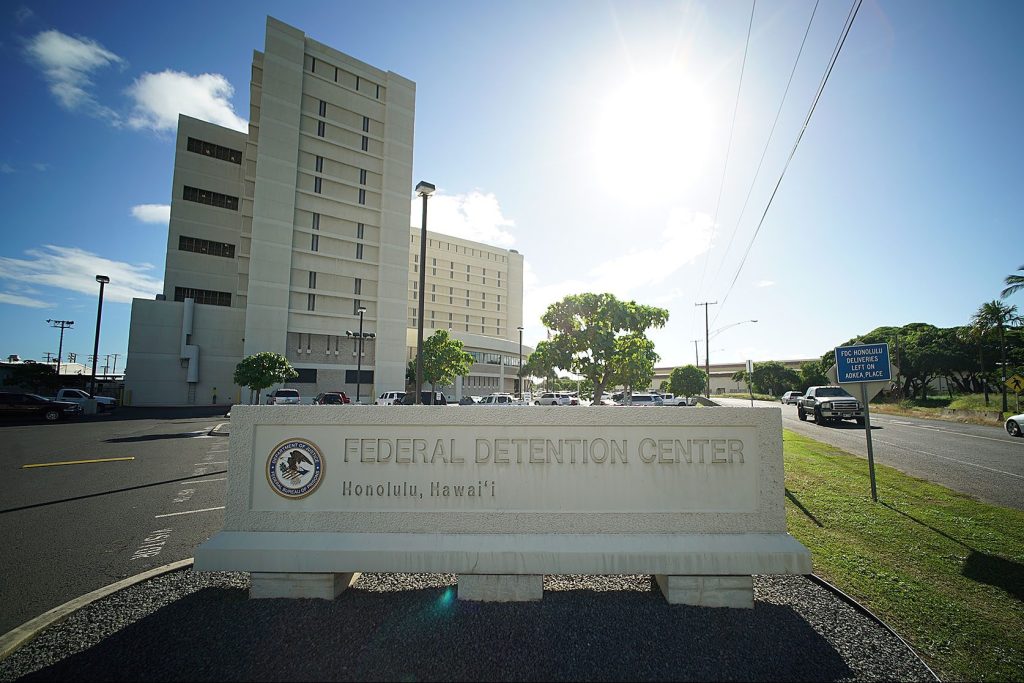
Joaquin David Rico-Tapia had been held at Honolulu’s Federal Detention Center for six weeks when his attorney filed a special petition last September arguing he had been illegally detained as his deportation case went forward.
Juan Jose Estrada Lopez, arrested in Honolulu while applying for a green card, had been behind bars for about five months when ACLU of Hawaiʻi attorneys filed the same kind of petition in January.
That same month, Quang Duy Vu also filed one. He had been locked up for more than eight months while the government tried to deport him.
The three actions are known as habeas corpus petitions, which require the government to justify why it is detaining or imprisoning someone. They are among 15 filed in Hawaiʻi since President Donald Trump took office in January 2025, part of a surge in legal challenges to often-prolonged detentions under the administration’s crackdown on immigrants.

While the total number of petitions filed in Hawaiʻi is small, it’s a significant uptick from the eight filed here over the prior 15 years.
And on an issue that many attorneys believe will ultimately go to the U.S. Supreme Court — about who gets a bond hearing when ICE detains them — at least one Hawaiʻi case is shaping arguments beyond the state’s borders.
In Rico-Tapia’s case, a district judge ruled in his favor, saying that because he was living in the United States when he was arrested he wasn’t subject to mandatory detention and he was entitled to a bond hearing.
That ruling has since been cited more than 200 times in other immigrant habeas cases across the nation as attorneys and judges question whether immigrants’ due process rights are being overrun in the aggressive enforcement campaign.
Locked Up Eight Months
The Hawaiʻi cases involve immigrants from Ecuador to Israel to China, at least 10 of them Hawaiʻi residents. They were roofers and construction company owners, housekeepers and waiters. None challenged deportation orders. Their petitions protested being denied bond hearings when they were detained or the length of their detention.
That was the case with Vu, a restaurateur who came to the United States as a Vietnamese refugee in 1990. His lost his asylum bid and was ordered deported in 2000 after he was convicted in California of receiving stolen property. He had been allowed to live free under government supervision since then — and had built a new life in Hawaiʻi, opening four restaurants on Oʻahu.
Then, in 2025, ICE agents arrested Vu, who is now 51.
Judge Micah Smith, in his ruling, pointed out that ICE, while holding Vu for eight months, had failed to get him travel documents and schedule his flight to Vietnam. His prolonged detention was unlawful because it was unlikely he would be removed to Vietnam in the “reasonably foreseeable future.” On March 3, Smith ordered Vu be released immediately.
Messages left for Vu at his restaurants were not returned
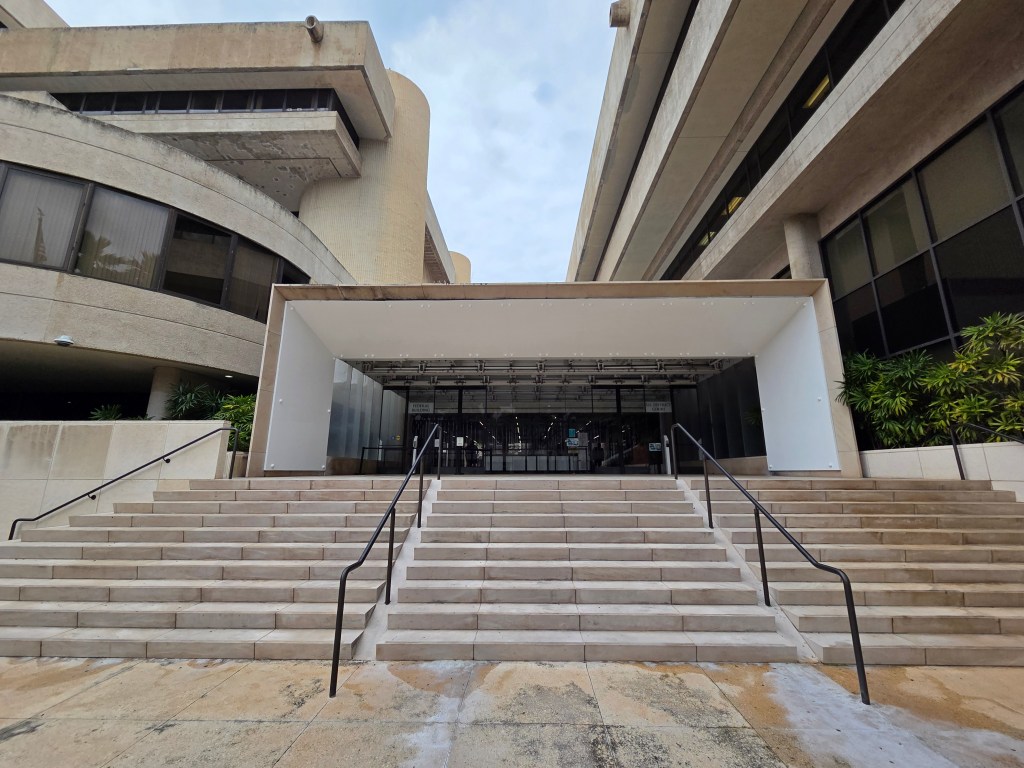
Including Vu’s and Rico-Tapia’s, six petitions have been granted so far in Hawaiʻi. Just one of the 15 petitions has been denied, on a technicality, because the immigrant, Rahul Rahul, had not yet been detained for longer than six months. That denial was without prejudice, meaning it can be filed again. In that case, the judge invited Rahul to again file a habeas petition after six months had passed.
Three habeas cases are pending. The others were dismissed without prejudice, either because the immigrant in question was released or for technical reasons.
‘In Shock’
Immigrants have filed 34,543 habeas petitions nationwide since Trump took office for the second time, more than in the previous 16 years, according to a recent analysis of federal district court data by the nonprofit newsroom ProPublica.
“It’s a big wave here and a big wave all across the country,” said Josh Abeyta, an attorney who works on habeas petitions for The Legal Clinic, a nonprofit that provides legal services to immigrants.
The rise in cases reflects the massive increase in immigrants detained since January 2025 and especially since last July. That’s when the U.S. Immigration and Customs Enforcement agency, or ICE, reinterpreted a longstanding legal position about which undocumented immigrants are subject to mandatory detention.

The new ICE policy says almost anyone who entered the country without permission must be detained.
“No lawbreakers in the history of human civilization have been treated better than illegal aliens in the United States,” Jason Sweeney, an ICE spokesperson, said in an email.
He added: “It should come as no surprise that more habeas petitions are being filed by illegal aliens, especially after many activist judges have attempted to thwart President Trump from fulfilling the American people’s mandate.”
Leading the nation in habeas cases are the large, immigrant-heavy states of California and Texas, which between them have seen more than 13,000 petitions filed in that period, Propublica found.
But 12 of the 15 Hawaiʻi habeas cases have come since January and the numbers are certain to grow, attorneys say, as the local crackdown continues and the population of immigrant detainees in Honolulu climbs.
Estrada Lopez, a welder on a Big Island coffee farm, was arrested Aug. 13, 2025, during his green card interview. He would end up being held at the Federal Detention Center for the next six months.
“I was in shock,” said Estrada Lopez, a Nicaraguan native, speaking about how it felt to be arrested, separated from his wife, a U.S. citizen, and detained without a hearing for half a year.
“I still don’t feel secure. I see that the system can change for or against me.”
Juan Jose Estrada Lopez
After Estrada Lopez, who entered the United States illegally in 2022, filed his petition, Judge Leslie Kobayashi ordered ICE not to deport him without permission. Then, after he won his green card and was released from detention in January, Estrada Lopez’s case was dismissed. ICE did not appeal the decision.
“We were working pretty closely with the immigration lawyer and it sounds like there was definitely some pressure from the filing of our habeas to not appeal that case,” said Leilani Stacy, staff attorney at the ACLU of Hawaiʻi.
Having returned to his life and family on the Big Island, Estrada Lopez, 42, said having the legal option of the habeas petition, and the support of ACLU attorneys, was like “an ace up my sleeve.”
Still, he lives these days with a newfound anxiety.
“I still don’t feel secure,” he said. “I see that the system can change for or against me.”
‘Virtually No Other Option’
Habeas petitions have become a critical tool for detained immigrants, as the nation’s immigration courts — which belong to the executive branch — and the Bureau of Immigration Appeals are shaped by the Trump administration’s dictates, granting many fewer bond hearings, asylum requests and appeals.
Also, attorneys say, ICE administrative officers are no longer willing to work with attorneys to grant immigrants’ requests to be released from detention while their removal cases are decided in immigration court.
“Everything has changed, basically the decisions are no longer made at the local level,” said Fernando Cosio, a Honolulu attorney who practices personal injury and immigration law and has worked on habeas petitions.
That’s partly why the petitions have mushroomed as a strategy, attorneys say.
“There is virtually no other option to challenge someone’s detention,” said Sophia Wang, a University of California Berkeley School of Law lecturer and supervising attorney at the law school’s Immigration Liberation Project, which files habeas petitions for detainees.
“What was available before through an administrative review process … that’s no longer a meaningful opportunity now,” Wang said.
“We are applying the law as written. If an immigration judge finds an illegal alien has no right to be in this country, we are going to remove them,” said Sweeney, the ICE spokesperson.
Attorneys in Hawaiʻi say it may have taken a while for habeas petitions to gain steam in the Aloha State because few immigration attorneys were accustomed to using them — because it was rare for people here to get detained while they were in the process of applying for residency status.
Also, habeas petitions are heard in federal courts, not immigration courts, and not all immigration attorneys are licensed to practice in federal court; meanwhile, attorneys who can practice in federal court are often not versed in immigration law, which has been called as complex as the tax code.
But as detentions mount, the petitions have been pressed into greater use.
“It’s taken a little bit of time to reach the point in the legal community to sort of get started on this as a strategy for getting clients released,” said Stacy, who has run workshops teaching attorneys how to file habeas petitions.
Cited Nationwide
Rico-Tapia was a San Francisco Bay Area construction worker and Uber driver who had an active asylum application when he was arrested in July 2025 after a hearing in his case. He, too, challenged his detention on the grounds that it was illegal because he had been denied a bond hearing.
Government attorneys argued he was subject to mandatory detention and ineligible for a bond hearing since he entered the U.S. without permission. That position has steered ICE policy since July, when the agency reversed longstanding rules and said virtually anyone who entered the U.S. without authorization is to be detained, no matter how long they have lived here.
In his case, Rico-Tapia, a Venezuelan native and a Colombian citizen, crossed the Mexico-United States border in Texas in 2022 and was arrested by U.S. border patrol officers.
“Suddenly, in a complete turn of events, their position changed.”
Shanlyn Park, U.S. District Court Judge
That same day, Rico-Tapia was allowed to enter the country on a form of parole. He spent the next several years checking in with ICE, as required, working and taking community college classes, according to the judge’s order that he get a bail hearing.
He applied for asylum in 2023 and had no criminal record, the judge’s order said. The order also noted that in 2025, after a second asylum application, U.S. Citizenship and Immigration Services officials interviewed Rico-Tapia and found he had a credible fear of returning to Venezuela.
In mid-October, Judge Shanlyn Park ordered immigration authorities to grant Rico-Tapia a bond hearing. He was released, said his San Francisco attorney Julio Ramos, and got the hearing he had sought. After paying a $5,000 bond, he returned to the San Francisco Bay Area.
His asylum claim is still pending. He wears an ankle monitor so ICE can track his location.
In her order, Park highlighted inconsistencies in how the government had treated him: “Suddenly, in a complete turn of events, their position changed despite Rico-Tapia’s consistent compliance with (Department of Homeland Security) requirements and the law,” Park said.
Park’s ruling that authorities had the discretion to detain him or not and that he was entitled to a bond hearing has been a linchpin of other habeas arguments from California to Florida.
Rico-Tapia declined to comment when reached by phone, but his attorney, Ramos, said, “The ruling said aliens do have a right to constitutional protections. And from that right flows the analysis of whether due process has been complied with.”
Civil Beat reporter Nick Grube contributed to this story.

