Makana Eyre: Hawaiʻi Has Felt The Sting Of Mosquitoes For 200 Years
They transformed Hawaii’s ecology, helping to spread disease that sickened native birds. Now they carry viruses deadly to humans.
April 29, 2026 · 8 min read

About the Author

In 1826, at the bustling port city of Lahaina, a two-masted vessel called the Wellington dropped anchor after sailing across the Pacific from San Blas, Mexico. Without delay, the crew came ashore to resupply, emptying the dregs of their freshwater casks and refilling them for the next voyage.
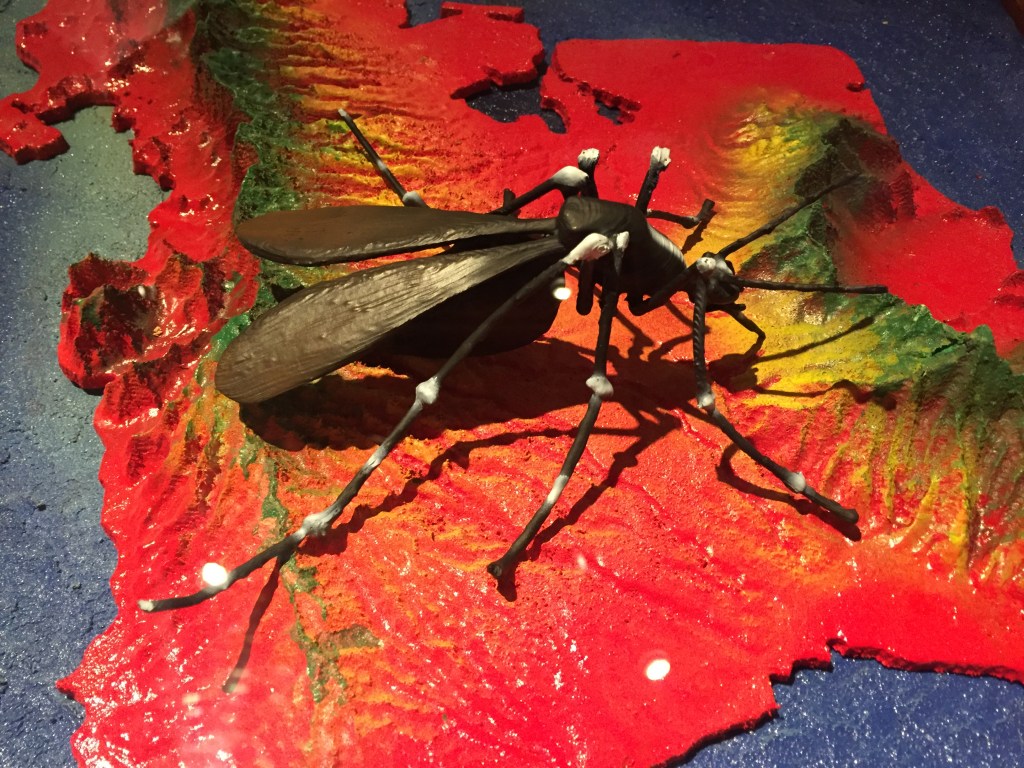
Not long after the brig appeared off Maui’s northwest coast, people began to complain about a new insect. It flew at night and sang in their ears. The Rev. William Richards, then the head of Lahaina’s Mission Station, was, so the story goes, first to realize that mosquitos had arrived in the islands.
As you probably guessed, the Wellington’s water casks had been filled with larvae. What were slivers of black, like little wriggling commas, had grown into biting adults. Soon, Hawaiians had given the new insect a name: the makika.

As a journalist, there are a few things I find hard to resist. The first is a good story. The history of the Wellington is a fascinating window into the early kingdom era of Hawaiʻi, the sort of thing you might stumble upon in a yellowing nupepa.
The other thing I love is a solid news peg, a reason that a story should be told now. An anniversary is a great peg, especially a nice round one. When I read that the Wellington arrived at Lahaina 200 years ago, I knew this was my chance to write about the mosquito, something I’d wanted to do for a while.
When I got to work on this column, it seemed I had it all: a great story, a perfect news peg, and a point of entry to several bigger issues. And then it all began to fall apart.
Early on in my reporting, I reached out to Neal Evenhuis, a veteran entomologist who works at the Bishop Museum. Evenhuis was the first to send a hairline crack through the story, pointing me to the research of Daniel Lewis and Seth Archer.
Both Lewis and Archer have done extensive work on the introduction of the mosquito in Hawaii, and both suggest that the story of the Wellington is more likely legend than fact.
Archer, now a professor at Utah State, examined the issue through the lens of disease. He points to documented cases of lymphatic filariasis, an illness caused by a microscopic worm spread by mosquitos, that predate 1826.
Lewis, a senior curator at the Huntington, a collections-based research institution in California, looked to the archives to pursue the matter. After considerable digging, he failed to find any record of a ship called the Wellington arriving on Maui or anywhere else in the kingdom in the year 1826.
What Lewis did manage to surface was documentation about a ship called the Wellington that docked in Honolulu from San Blas four years earlier in 1822, only to be scrapped for wood soon after.
He also located a journal entry by the missionary Levi Chamberlain from August 1826 in Honolulu grumbling that he was “not a little annoied by the musquetoes.” This suggests mosquitos were already circulating in the capital when the Wellington supposedly introduced them, 80 miles east on the island of Maui.
In his 2018 book “Belonging on an Island,” Lewis presented all his findings, proposing a revised date for the makika’s introduction: 1822, or even earlier.
What started as a hairline crack was now, alas, a full fracture. I went back to Evenhuis to make sense of it all.
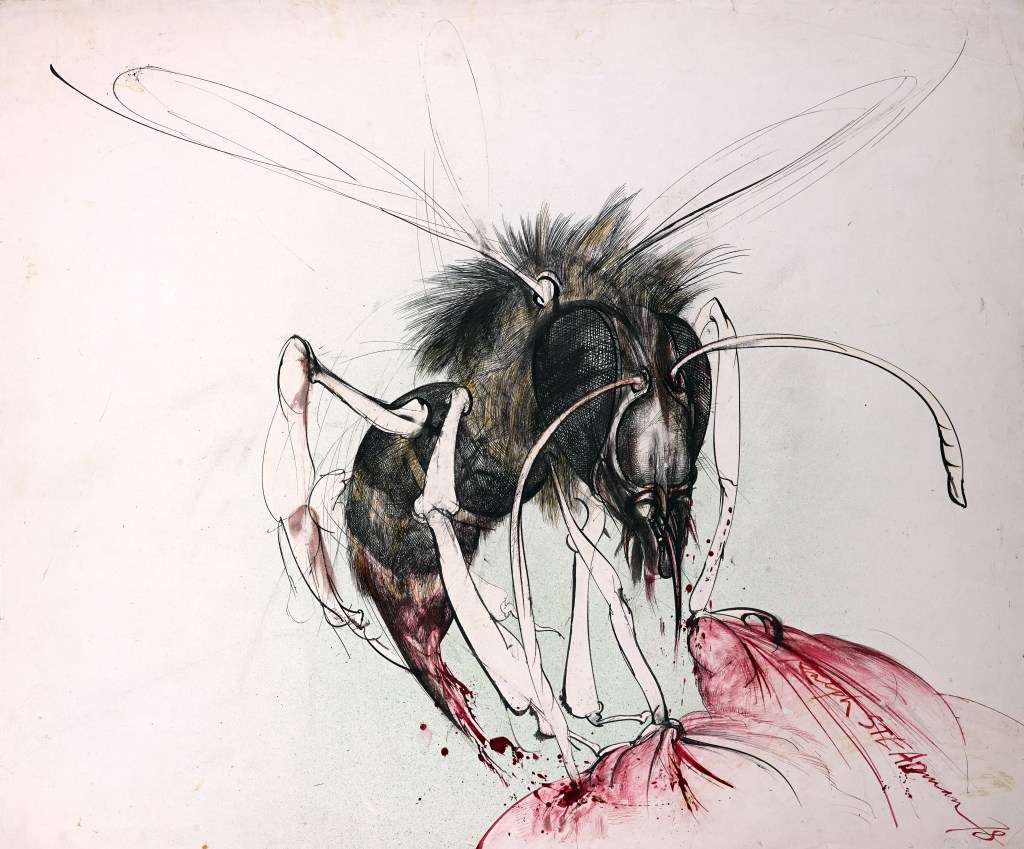
Evenhuis told me this revision of history was plausible, and he added something that made it more credible still: when insects are introduced to a new place, there is often a lag before their numbers build to the point that people notice them. Back in the 1820s, this process could have taken months, even years.
Evenhuis also pointed to Lahaina’s climate as a reason to doubt the 1826 date. The city, which sits on the dry side of the island, would not have been an ideal place for the mosquito variant in question — a container breeder — to reproduce. What it needed above all was stagnant water, and Lahaina, where rain is uncertain, would not have been particularly hospitable.
So, is it time we banish the story of the Wellington to the realm of folklore? Probably.
It will join the good company of other local legends, such as the one about the Kauaʻi dock worker who, while inspecting the island’s first shipment of mongooses, got bitten and was so angry, kicked the cage into the water. To this day, the island is free of these ornery creatures.
At this point, two pillars of my column were in ruins. Was it time to write to my editor and admit defeat? Then I remembered the third pillar: the impulse to write about mosquitoes at all.
The thing is, no matter how they got here or when, mosquitos matter — and we ought to talk about them more.
The first reason is historic: they transformed Hawaii’s ecology, helping to spread disease that sickened innumerable native birds.
To understand this legacy, I called Bret Nainoa Mossman, a biologist and avian recovery coordinator for Hawaiʻi’s Department of Land and Natural Resources.
According to Mossman, over the course of the 19th century and into the 20th, mosquitoes carried diseases like avian pox from seabirds and shorebirds into isolated native forests.
To my surprise, however, he explained that while avian pox did affect native birds, many of them recovered. The deeper turning point came in the late 1920s when a dimly remembered social club called Hui Manu emerged.
Made up mostly of society wives from Honolulu’s elite families, Hui Manu took it upon itself to introduce songbirds to Hawaiʻi with little regard for how they might affect the ecosystem.
Throughout the 1930s and ’40s, the group released northern mockingbirds, shama thrushes, Japanese white-eyes, and perhaps most consequential, northern cardinals, likely a carrier of avian malaria. While there were cases of the disease before Hui Manu, the group’s activities widened its reach. Mosquitoes, now teeming in the islands, were ready to transmit it into the forests. This time, the effect was devastating.
Mossman is quick to stress that this is not just a distant historical drama, but one that continues to unfold now.
Thanks to climate change, mosquitos are now pushing into Hawaiʻi’s last high-elevation forests, those final places of refuge for rare and endangered native birds.
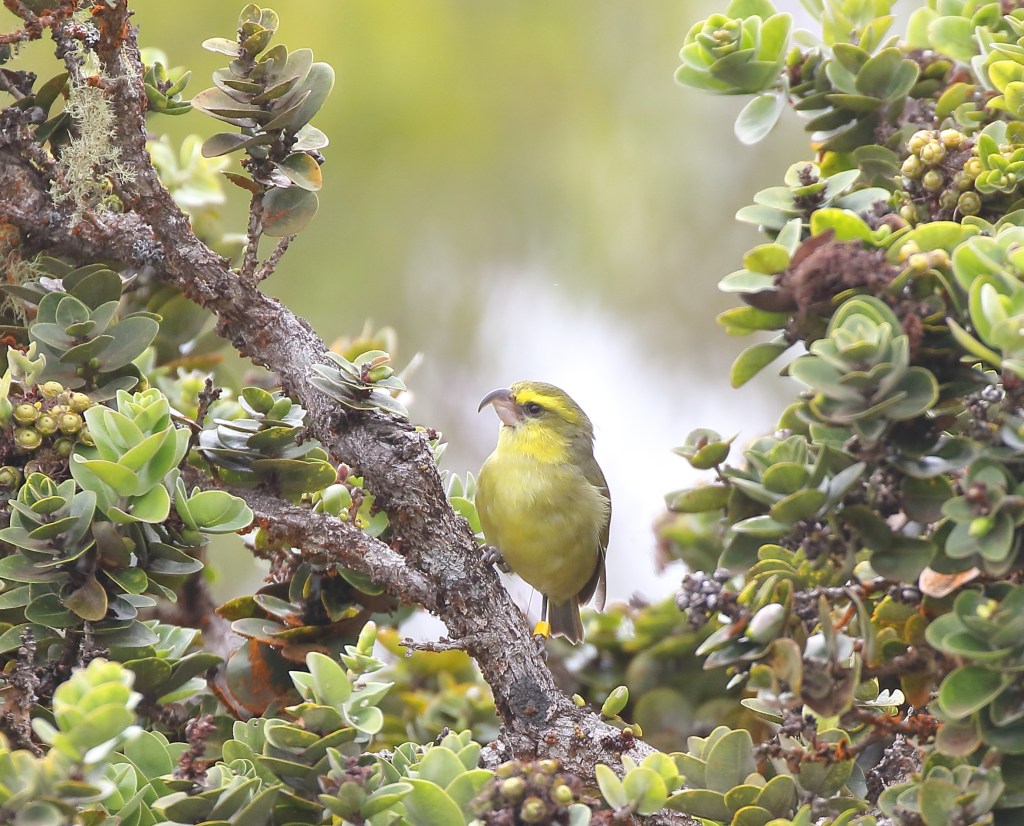
With a clear note of sadness in his voice, he points to Kauaʻi’s Alakaʻi Plateau, where species like akekeʻe, ʻanianiau, ʻakikiki, and Kauaʻi ʻamakihi have fallen by 90% thanks to marauding mosquitos.
Still, Mossman is not entirely pessimistic. He sees promise in the so-called mosquito birth control, though he’s quick to say that while it’s been effective in places like Singapore, Hawaiʻi is still in the data-gathering stage.
He also doesn’t believe that all is lost. In fact, he told me if one of the proposed solutions succeeds in breaking the disease cycle, he thinks people could have ʻiʻiwi singing in their back yards in a decade.
All the same, he has a clear message: without effective mosquito control, we will continue to lose bird species to extinction, and time is running out.
If saving native birds isn’t reason enough to care about mosquitos, let me leave you with one final thought.
Mosquitos, as most of us know well, are not just vectors for avian disease. In much of the world, they spread terrible human sicknesses like dengue fever, zika, and chikungunya.
Epidemiologists worry that a warming climate likewise puts us at increased risk. After all, Hawaiʻi already has mosquitos capable of carrying dengue, Zika and chikungunya. Our climate is only getting more hospitable. We already had a dengue outbreak in 2016.
Is it only a matter of time before mosquitos evolve from a simple pest to us humans to a serious threat to our health?
I hope that this is enough reason to care a little more about the insects we smash beneath our palms. They’ve now lived among us for more than two centuries. Perhaps now is the time we pay a little more attention?
 Sign up for our FREE morning newsletter and face each day more informed.
Read this next:

Local reporting when you need it most
Support timely, accurate, independent journalism.
Honolulu Civil Beat is a nonprofit organization, and your donation helps us produce local reporting that serves all of Hawaii.
ContributeAbout the Author