‘Not A Priority’: Frustrations Mount Over Missing Fire Evacuation Route
Hawai‘i County Council is weighing the mayor’s budget request to build more housing before finishing an evacuation route in Waikōloa.
Wildfire safety advocates are urging the Hawai‘i County Council to prioritize an evacuation route for Waikōloa Village after not seeing any money in the mayor’s proposed budget for next fiscal year to address the longstanding issue.
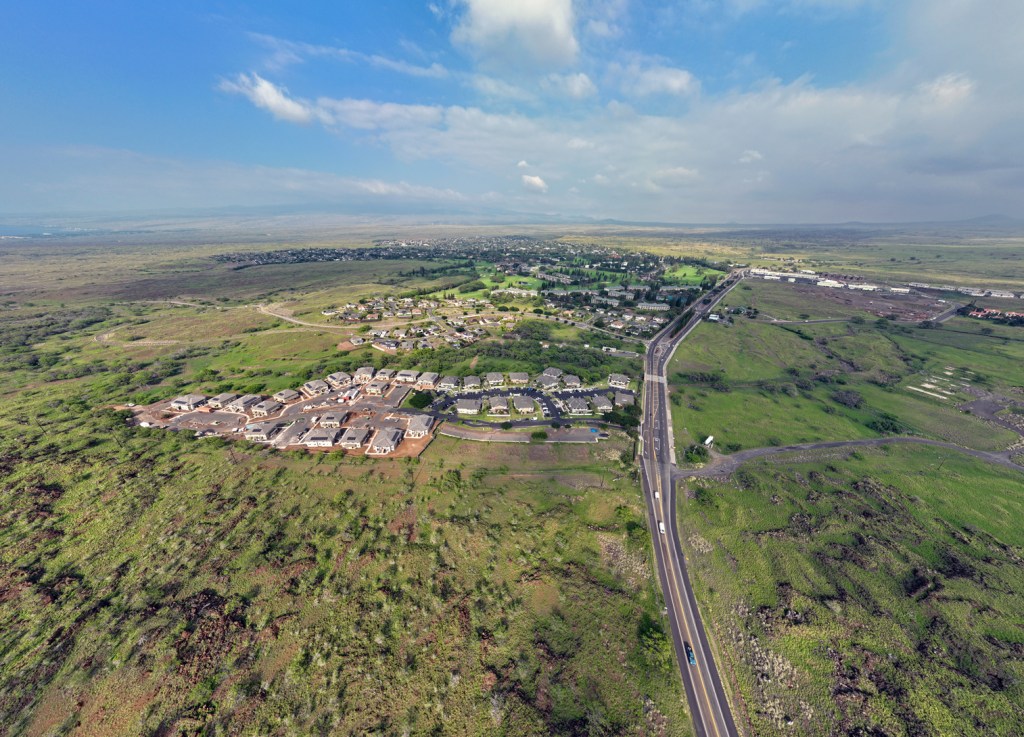
Mayor Kimo Alameda included $11 million in infrastructure improvements for 850 new affordable housing units in Waikōloa, but nothing to resolve the limited options for the growing community of over 7,000 people to escape a wildfire.
“If they’re going to put more people in, there has to be capacity for those people to come out,” said Matt Chalker, a Waikōloa resident and founder of Wildfire Safety Advocates.
When the 2021 Mānā Road fire prompted evacuations in Waikōloa, residents were stuck for nearly two hours in traffic to get out of the West Hawai‘i town as smoke billowed over them and the fire crept closer to homes.
If the Mānā fire evacuation proved anything, Chalker said, it’s that if a fire reaches the village, thousands could die waiting to evacuate. The village has a high risk of wildfires — 92% higher than most communities in the country, according to the USDA Forest Service. But the community only has two ways out: Waikōloa Road and a gated one-lane evacuation road.
Now, as fire risk grows under climate change, the village’s population is as well. Residents have begun moving into more than 100 affordable housing units deeper north into the village. A new housing development is already on the market. And Alameda has included more money to help see nearly 1,000 more units get built. The projects will provide desperately needed affordable housing while adding thousands of residents to the village.
The mayor’s overall $358.7 million capital improvement projects budget would fund 45 projects, largely for parks and wastewater systems. It includes $20 million for a new pedestrian bridge to Coconut Island.
Alameda said in an emailed statement that the state is currently working to construct a second evacuation route on Kamakoa Road.
“Public safety is our top priority, and we are taking important steps to strengthen emergency preparedness in Waikōloa Village, including supporting an initiative to create another emergency evacuation route,” he said.
Chalker has identified an apparent stalemate between the county and state that seems to be preventing progress. Ed Sniffen, state transportation director, has said the state will pay for the intersection with the Queen Ka‘ahumanu Highway but the road down to it needs to be built out first. The county says that’s a private road, so the mayor’s administration will not be allocating funding for it.
In the meantime, Chalker is turning to the council for support as it reviews the mayor’s proposed budget this month for the fiscal year that starts July 1. He and Wildfire Safety Advocates Director of Government Relations Bob Yunkhe called on the council to add an amendment to the $11 million appropriation for Waikōloa housing infrastructure that would require the county to plan and have contracts for the construction of a second arterial highway before that money is spent.
‘Making A Lot More Noise’
Waikōloa Village residents have been asking — and waiting — for years for a second road to connect the town to Queen Ka‘ahumanu Highway. And for decades the county has acknowledged the need for it.
The 2005 general plan lists building an alternative access at the northern end of the village as a “course of action.” A second road is also listed as a “very high priority” in the 2008 South Kohala Community Development Plan.
The community plan notes that wildfires pose the greatest risk to Waikōloa and in 2003 and 2005 flames came to the very edge of the village. A second access road, it says, “may well prove to be the difference between successful evacuation of the Village and injuries and even loss of life.”
For Chalker, the 2021 Mānā Road fire alerted him to the fire risks Waikōloa faced. But it was learning how many died in the Lahaina fire that woke him up to just how much danger his family was in.
“We experienced the traffic jam, and then we watched people die in their cars,” he said. “That’s why we started making a lot more noise.”
For the past two years, Chalker’s organization has lobbied county and state officials to build a second road. There’s been some success, but little progress.
Last year, the council appropriated $2.5 million for the design and engineering for the alternate route. It was included in the adopted capital improvement budget for 2026, but the funds have not been dispersed and the appropriation is not included in next year’s proposed budget.
In a letter to Chalker and Yunkhe in February, Alameda told them the capital improvement list was “a planning document, a wish list, not a guaranteed funding schedule.”
The state Department of Transportation did not respond to messages seeking comment.

With the inclusion of money for more housing in this year’s budget and two new developments already on the market, residents are concerned that elected officials aren’t living up to their commitments.
“What you are doing is addressing the housing needs, but you’re putting all of these other families in danger doing it,” Chalker said.
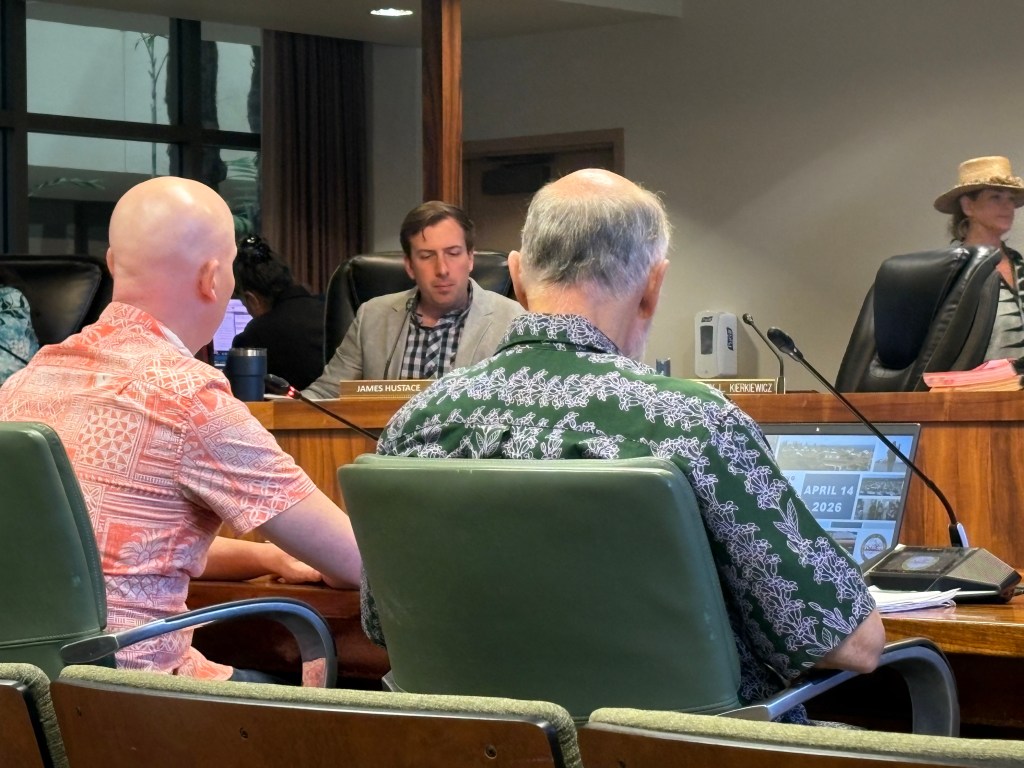
County Council member James Hustace, who represents Waikōloa, said at Tuesday’s hearing that the onus to build a new road isn’t all on the county Office of Housing and Community Development.
But he suggested the office could at least connect the new development to a road for the county’s wastewater treatment plant. It could act as a “jumping pad,” Hustace said, for the future road.

He said that adding housing capacity deeper in the village creates additional liability and risks to county assets and public lives.
“Infrastructure to match community growth is one thing and the desire to house people is part of that whole question as well,” Hustace said.
As young families move into these new developments, Yunkhe said the county isn’t doing enough to keep them safe.
“That’s not a blessing for those families, it’s a curse,” he said.
Some residents told Civil Beat they weren’t even aware of the fire risk in Waikōloa. Some had just moved into Nā Hale Makoa, an affordable housing development deep into the village, and far from Waikōloa Road.
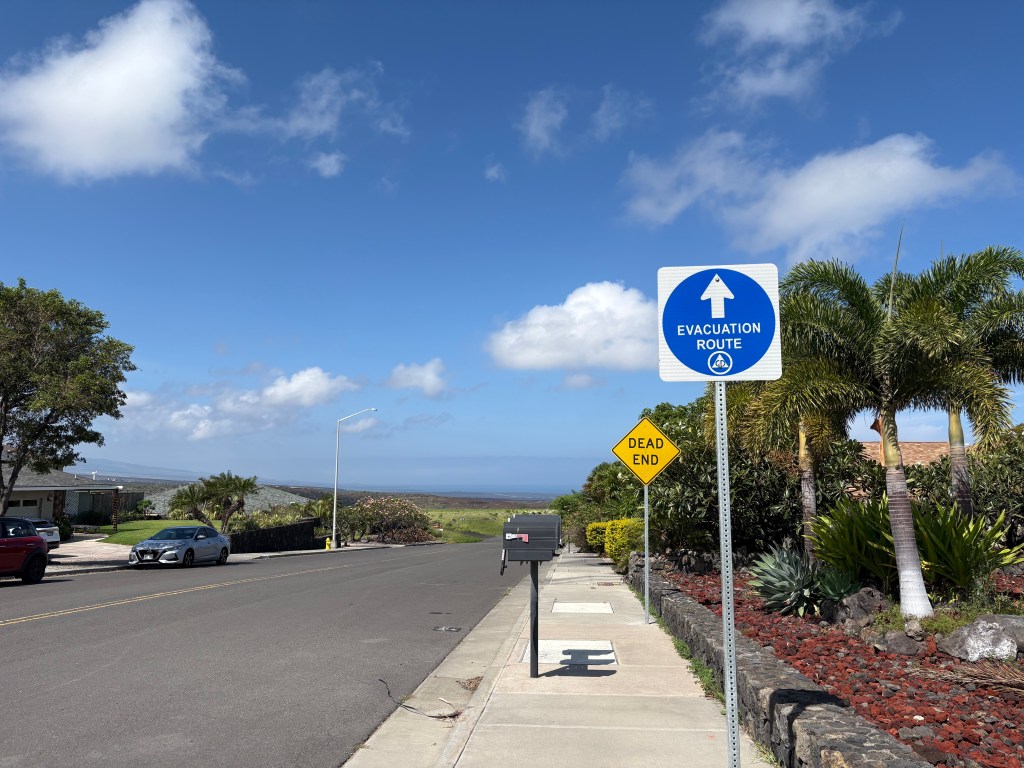
The closest evacuation route to them is on Hulu Road. Normally locked and only open for emergencies or practice runs, the road is narrow and windy with only two pull-off points which Chalker lobbied the county for. But that wasn’t enough to prevent the traffic backup during the Mānā Fire evacuations in 2021.
“I don’t buy the concept that it’s going to take 10 years,” Chalker said. “It’s just not a priority.”