Now Is The Time To Scuttle The Jones Act
The reality for everyone in Hawaiʻi is this shipping law stifles competition and inflates prices.
April 19, 2026 · 3 min read


About the Author

Last month the federal government temporarily suspended the Jones Act. Hawaiʻi’s congressional delegation should now follow up on the lead taken by Congressman Ed Case to push Congress to make this temporary suspension permanent.
For over a century, Hawaiʻi has been shackled by an antiquated law that pads the profits of a protected industry on the mainland while picking the pockets of every local family. The Merchant Marine Act of 1920, better known as the Jones Act, was born from post-World War I protectionism and has morphed into a federally sanctioned monopoly that is a key driver of Hawaii’s crushing cost of living.
Today this results in a needless government sanctioned cost increases that’s exacerbated for Hawaii residents by President Trump’s misguided economic decisions on tariffs and then compounded by the war in Iran.

The Jones Act dictates that all goods shipped between U.S. ports must be transported on vessels that are U.S.-built, U.S.-owned, and U.S.-crewed. Proponents excuse this regulatory protectionism as necessary on the grounds of early 20th century defense security needs.
The reality for everyone in Hawaiʻi is this law creates stifled competition and inflated prices. In Hawaiʻi over 90% of our goods is controlled by a virtual duopoly of just two shipping companies.
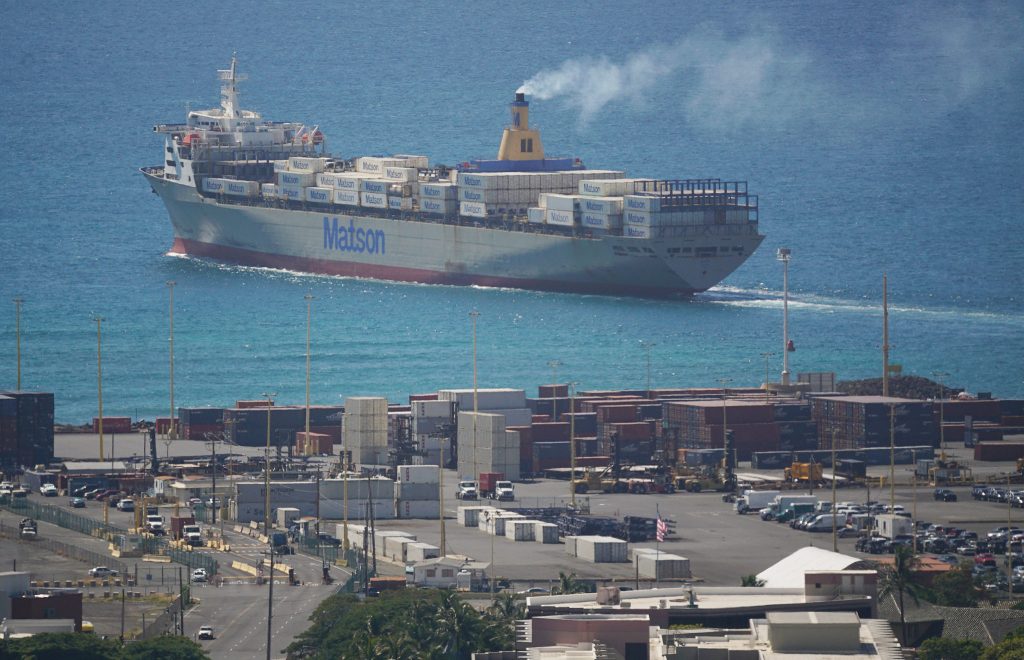
This lack of competition eliminates any downward market pressure on prices. This legalized extortion now particularly hits Hawaiʻi residents hard with the current tariffs trade war and the conflict in Iran.
A 2020 study by the Grassroot Institute of Hawaiʻi quantified this burden, estimating the Jones Act costs our state’s economy a staggering $1.2 billion a year, eliminates over 9,000 potential jobs, and costs every Hawaiʻi resident more than $645 annually.
The original justification for the Jones Act — to ensure a robust U.S. shipbuilding industry for national defense — has failed. The U.S. now produces a minuscule fraction of the world’s commercial ships, and those it does build cost four to five times more than those from foreign shipyards. Yet this anachronistic law lives on.
Rep. Ed Case has introduced a suite of bills aimed at providing relief. His proposals range from a full exemption for non-contiguous areas to capping shipping rates and allowing the use of ships from allied nations.
These are common-sense reforms that would inject desperately needed competition into the market and provide immediate relief to Hawaiʻi’s families and businesses.
A window of political opportunity has opened.
The Trump administration has slowly started recognizing the growing burdens of the Jones Act — burdens ironically exacerbated by the administration’s own policies — and temporarily suspended enforcement of the Jones Act. But this temporary suspension deserves to be made permanent.
A window of political opportunity has opened to make a difference. Hawaiʻi’s congressional delegation should act on now to capitalize on this political shift and push Congress to join Rep. Case and eliminate the Jones Act.
 Sign up for our FREE morning newsletter and face each day more informed.

Local reporting when you need it most
Support timely, accurate, independent journalism.
Honolulu Civil Beat is a nonprofit organization, and your donation helps us produce local reporting that serves all of Hawaii.
ContributeAbout the Author