Replanting Limu: A Civic Ritual To Save The Species — And Ourselves
The nonprofit hui is entirely funded by a mix of state conservation grants and support from foundations.
April 26, 2026 · 5 min read

About the Author

For anyone lucky enough to have had a Hawaiʻi childhood, limu was a part of life.
On beach days we hurled it at our friends. We draped it over our heads, pretending we had frizzy mops of briny hair. Its mineral scent clung to our hands and our skin.
At some point, though, most of us came to the same realization: limu, once abundant, had grown rare. That observation, sadly, was borne out in the research. One study published in 2019 found that over-harvesting, urban development, invasive species and climate change are driving decline.
Not everyone accepts this trend. One summer morning when I was last in Hawaiʻi, I spent some time with the Waimānalo Limu Hui, a group trying to change it.

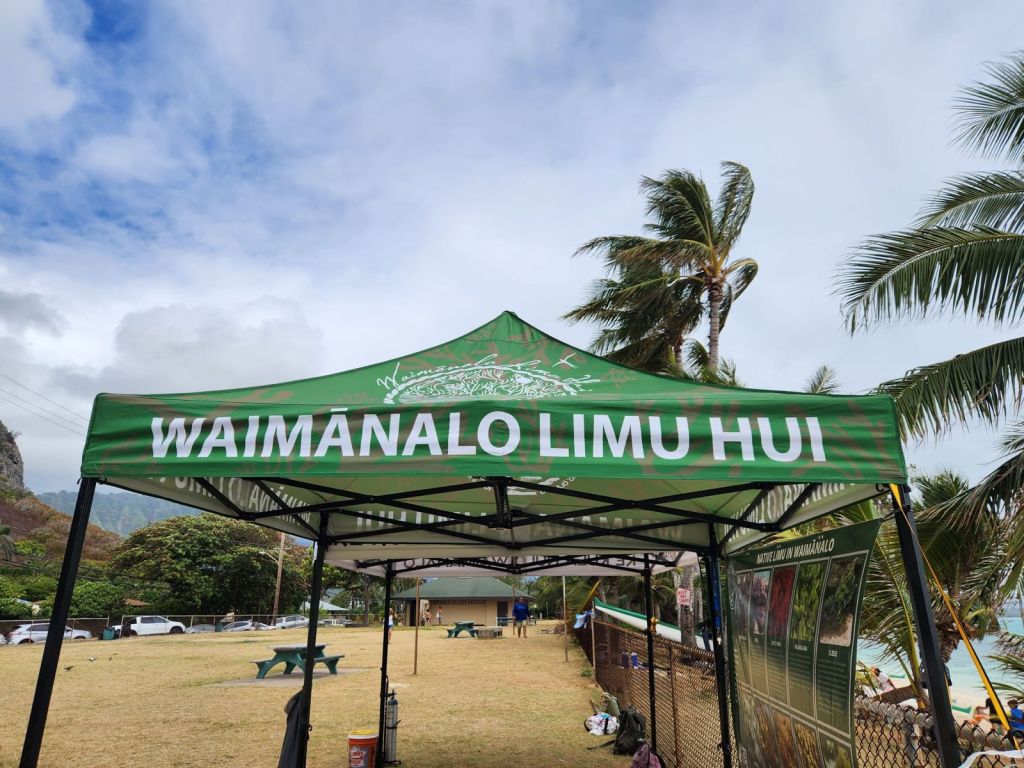
Each month, dozens of people meet at Kaiona Beach Park where the hui gathers. The crowd varies, but when I went there were roughly 60 people.
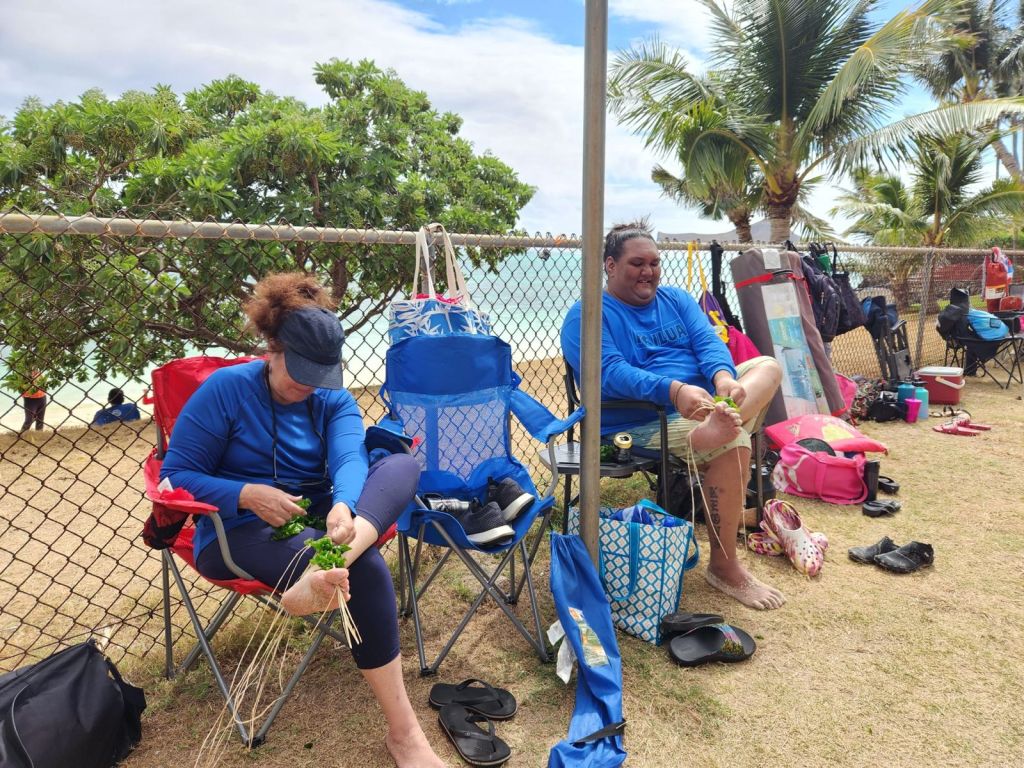
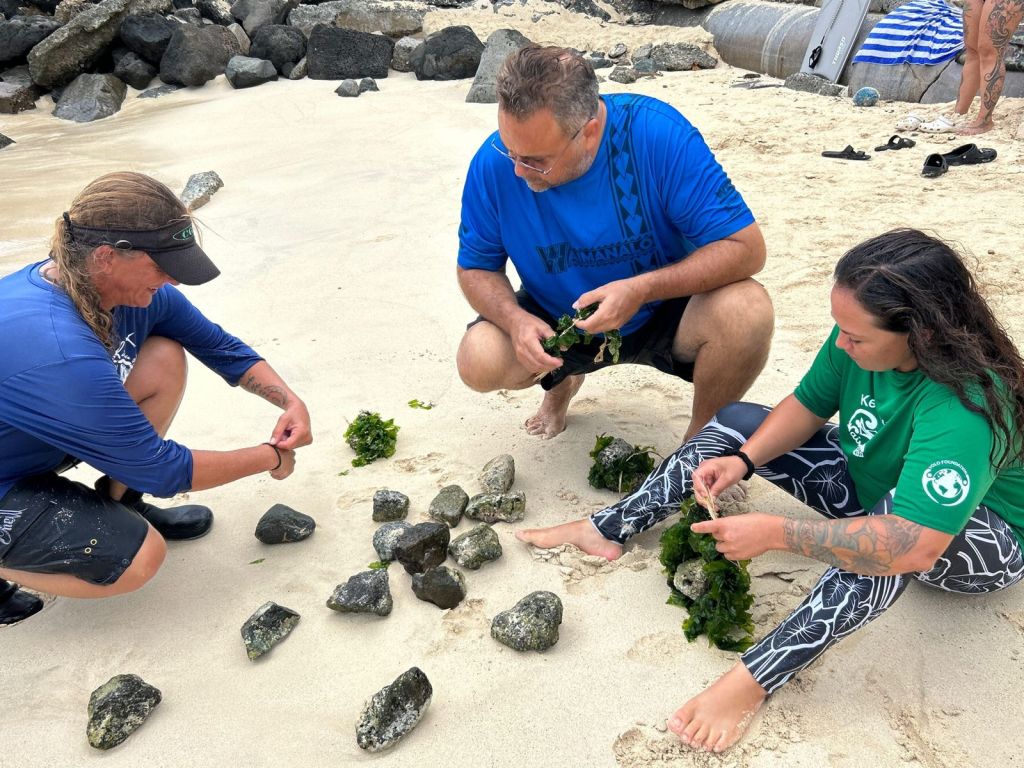
After a pule and quick introductions, we got to work braiding pālahalaha and manauea loloa onto strands of raffia tied to one toe. Soon, we each had something that began to resemble a limu lei.
Ikaika Rogerson is the president of Waimānalo Limu Hui. The idea for the group, he told me, arose in 2017 during community meetings where kūpuna expressed their wish to help restore limu growth. They have been steadily planting ever since.
Keeping Waimānalo Limu Hui going can be hard work. It’s expensive, too. The hui, a nonprofit, is entirely funded by a mix of state conservation grants and support from foundations, though Rogerson hopes a philanthropist might adopt them.
One contributor to the work and cost lies in cultivating the limu the hui plants. Rogerson and other volunteers do this down the road at Sealife Park where they make use of a space backstage and a good flow of ocean water from Makapuʻu.
Using seed stock, they grow the limu in tumble culture, with ocean water and an air bubbler, ensuring that the whole plant gets enough sunshine and never falls into a nutrient dead zone. Many of their methods are inspired by the work of those who came before them, particularly Wally Ito and Pam Fujii, pioneering limu planters at ʻEwa Beach.
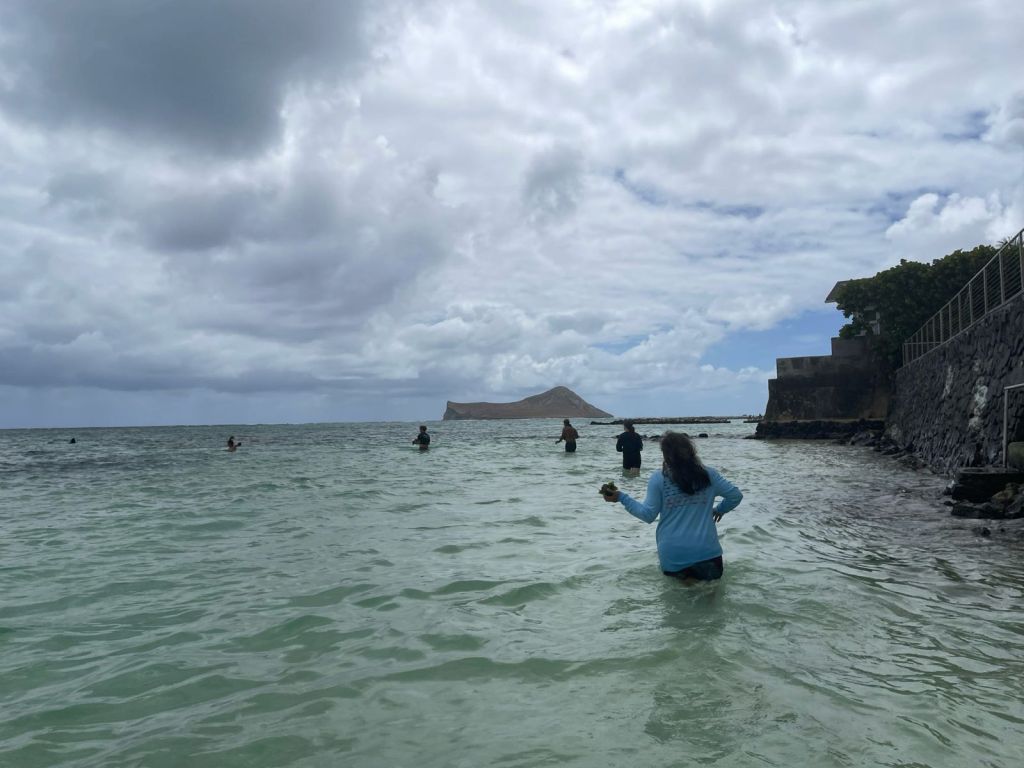
It was limu grown with this technique that I helped braid. After about an hour or so, most of us had our lei. We then walked down to the beach, found a stone about the size of a grapefruit, and waded into the water.
With about 5 feet of ocean around us, we dove to the floor and placed our lei in the sand. The stone would hold it fast from the currents. With the work now done, everyone seemed to loosen. They splashed around, made jokes and eventually swam back to shore for potluck and walaʻau.
The big question — the question Rogerson gets asked relentlessly — is does it work?
So far, University of Hawaiʻi and Hawaiʻi Pacific University have not sent marine botanists to do a detailed assessment, though a recent study did conclude that community limu replanting efforts are an important part of a comprehensive recovery strategy.
Anecdotally, Rogerson has noticed more fish in the water in recent years. Limu is a basis for the nearshore marine food system, so perhaps that’s a good sign.
In some sense, though, this feels like the wrong question. Instead, I think we should ask what Waimānalo Limu Hui means for the community and what good is it doing for people. The answer is a great deal.
The truth is, the hui is not simply about the physical act of replanting limu — though that is what binds them together. It’s also about transmitting cultural knowledge, teaching young people to care for the land and safeguarding our marine ecosystems.
The monthly gathering has become a civic ritual that unites people around something simple and pono. People of all ages and backgrounds join. There are kūpuna braiding alongside their moʻopuna. There are babies dozing in carriers. There are people who come from all over the state and beyond. Rogerson told me that over the last nine years, they’ve hosted about 20,000 people.
That, as I see it, is what matters. Hawaiʻi would do well to have more organizations like the Waimānalo Limu Hui, ones that give us a sense of belonging and purpose — and that may, in this case, help bring back the fragrant and delicious limu we all grew up around.
Tell us about a government program or service you think is working well. We’re also interested in people, especially public employees, who deserve to be celebrated for their service or their contributions to making Hawaiʻi a better place. Send to sunshine@civilbeat.org and include Bright Spots in the subject line please!
 Sign up for our FREE morning newsletter and face each day more informed.

Local reporting when you need it most
Support timely, accurate, independent journalism.
Honolulu Civil Beat is a nonprofit organization, and your donation helps us produce local reporting that serves all of Hawaii.
ContributeAbout the Author