13 Years Of Fighting Pesticide Use In Hawaiʻi. Another Year Of Nothing
Another failed legislative session means we continue to suffer from inadequate data and a lack of help for families and communities.
May 3, 2026 · 6 min read

About the Author
There is a particular kind of exhaustion that comes not from giving up, but from continuing to show up.
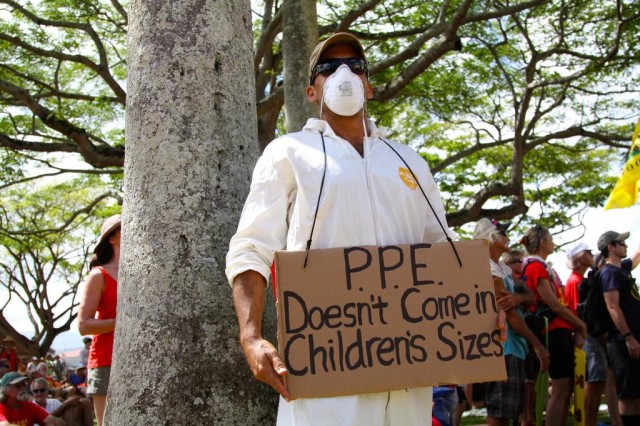
I know what it looks like when a community organizes itself around a cause with everything it has. I watched it happen on Kauaʻi in 2013 when residents, farmers, teachers, mothers, doctors, Native Hawaiian practitioners, surfers and scientists packed County Council chambers night after night to testify in support of Bill 2491.
They brought their children. They brought their medical records. They brought soil samples and water test results and peer-reviewed studies. They brought themselves, in numbers and with a conviction that was impossible to dismiss.
The bill passed. It was modest by any serious public health standard — buffer zones around schools, homes and medical facilities; disclosure of which restricted use pesticides were being sprayed and when; environmental and human health studies on the impacts of large-scale pesticide use near residential communities.
Basic. Reasonable. Long overdue.

The agriculture industry sued. The courts ruled that pesticide regulation is a state matter and that counties are preempted. The bill, along with similar measures on Maui and Hawaiʻi island, was overturned and thrown out.
That was 13 years ago.
Since then, session after session, advocates have returned to the Hawaiʻi Legislature carrying the same fundamental ask: protect us. Tell us what is being sprayed near our homes and schools. Create meaningful distance between the most toxic restricted use pesticides and the places where our children breathe, play and grow. Give us data we can actually use. Restrict the chemicals that science has most clearly linked to harm.
And session after session, the Legislature has found a way to let those bills die quietly, in committee, often without a hearing, or watered down past the point of meaning before being allowed a vote.
This year was no different. And this year, the details are worth naming.
House Bill 1880, a bill that would have banned 1,3-Dichloropropene (Telone), a fumigant pesticide classified as a probable human carcinogen, made it all the way through the full House of Representatives. That is not nothing. It takes real work to move a bill that far. It then went to the Senate Agriculture and Environment Committee, where it needed only a majority to advance. Sens. Mike Gabbard and Karl Rhoads voted yes. Sens. Tim Richards, Lynn DeCoite and Brenton Awa voted no. The bill was dead.
Senate Bill 2100, which would have strengthened reporting requirements for restricted use pesticides, requiring more detailed and more frequent disclosure of what is being applied, where, and in what quantities, passed out of the House Agriculture and Environmental Protection Committee but arrived gutted.

The provisions that would have made the data actually meaningful, the specificity, the geospatial detail, the accountability, were stripped out before it was allowed to move. What remained was a shell wearing the name of reform.
And Senate Bill 2103, the buffer zone bill, the direct legislative heir to what Kauaʻi tried to do in 2013, is now also dead. That is the landscape of this year’s effort. One bill killed by three votes in committee. One bill hollowed out before advancing. One bill racing a deadline.
‘Poisoning Paradise’
I have spent nearly 20 years working on this issue in various capacities, as a community organizer, as an environmental scientist, as someone deeply featured in the work that brought national attention to what was happening on Kauaʻi’s west side in the documentary “Poisoning Paradise.”
I have sat with families in Waimea who described watching their children suffer from nosebleeds, rashes and respiratory problems that tracked with spray schedules. I have reviewed the science. I have read the industry-funded counter-studies. I have watched the same legislative playbook run year after year, delay, dilute, defer, kill.
What I want to say to the Legislature, and to the industry interests that have for deades treated Hawaiʻi’s fields and Hawaiʻi’s communities as acceptable sacrifice zones, is this: We are not confused about what is happening. The appearance of consideration without the substance of action is its own form of contempt.
When a bill gets a hearing, generates hours of compelling testimony from doctors and scientists and community members, and then dies on a 2-3 committee vote, that is a choice. When reporting requirements are stripped down to meaninglessness before being allowed to advance, that is a choice.
When 13 years pass and children are still going to school in the shadow of pesticide drift with no legal buffer between them and the spray, that is a choice.
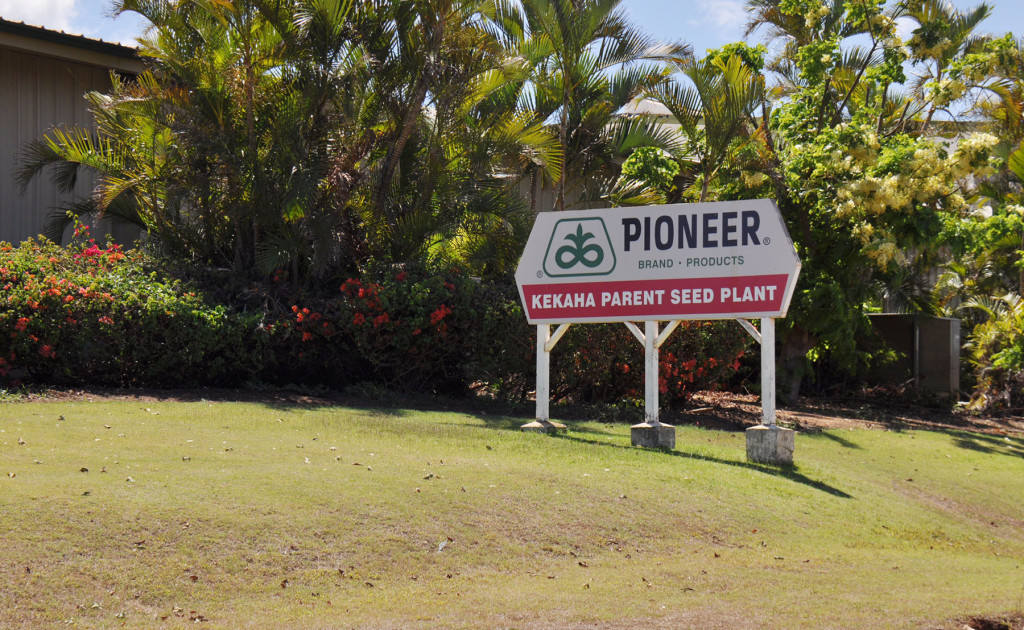
Hawaiʻi has a habit of celebrating its environmental values while declining to legislate them. We put them on signs and in tourism campaigns and in the preambles of resolutions that go nowhere. We tell ourselves and the world that we are stewards of this place, that aloha ʻāina is more than a phrase, that these islands are sacred. And then we send the same bills back to die in committee and call it a process.
The communities most affected by this, largely Native Hawaiian, Filipino and working-class families on the west sides of Kauaʻi and Oʻahu and on Maui, have not had the luxury of treating this as an abstract policy debate. For them it has never been abstract. It has been their lungs, their children’s development, their water, their land.
They have done everything right. They have organized, testified, sued, documented, published and persisted across more than a decade. They have been patient in ways that should not be required of anyone asking simply to know what chemicals are drifting into their neighborhoods.
What would it take? That is the question I keep returning to. What evidence, what study, what number of affected families, what documented health outcome would be sufficient? What is Hawaiʻi waiting for?
I am a Kauaʻi County Council member now, elected in part by people who have been fighting this fight far longer than I have. I carry that with me. And I will continue to carry this issue at every level of government I have access to, in partnership with the advocates, scientists, and community members who have never stopped showing up.
What is Hawaiʻi waiting for?
But I want to be honest about what another failed legislative session means. It means another year of inadequate data. Another year of families left to piece together their own exposure histories from incomplete records and their own bodies. Another year of the burden falling on communities rather than on the industry that created the problem.
Thirteen years after Kauaʻi tried to protect its people and was told it lacked the authority, the state that does have that authority continues to decline to use it.
That is not a process failure. It is a failure of political will. And it belongs to all of us until we decide it does not.
 Sign up for our FREE morning newsletter and face each day more informed.
Local reporting when you need it most
Support timely, accurate, independent journalism.
Honolulu Civil Beat is a nonprofit organization, and your donation helps us produce local reporting that serves all of Hawaii.
ContributeAbout the Author