Hawaiʻi Is Letting Wastewater Harm Our Ocean When It Could Power Our Future
Using wastewater to produce hydrogen gives us a chance to solve two major problems at the same time.
May 8, 2026 · 4 min read


About the Author

Even when wastewater is treated, it still affects the quality of our ocean. In Hawaiʻi, the ocean is everything it feeds us, connects us, and is a big part of our culture.
But treated sewage water is still being released back into the environment, carrying nutrients and pollutants that harm reefs, marine life, and overall water quality.
The bigger issue is that we’ve accepted this as normal.

Instead of just managing wastewater and dumping it, Hawaiʻi should be asking a better question: why aren’t we using it?
Using wastewater to produce hydrogen gives us a chance to solve two major problems at the same time. First, it reduces the amount of treated sewage going into the ocean. Second, it creates a clean energy source that can help Hawaiʻi finally move away from fossil fuels.
We talk a lot about going green in Hawaiʻi. Renewable energy, sustainability, climate goals: it all sounds good.
But too often, we fall into the same pattern of looking for short-term fixes instead of real, long-term solutions. Wastewater is one of those solutions that has been right in front of us this whole time.
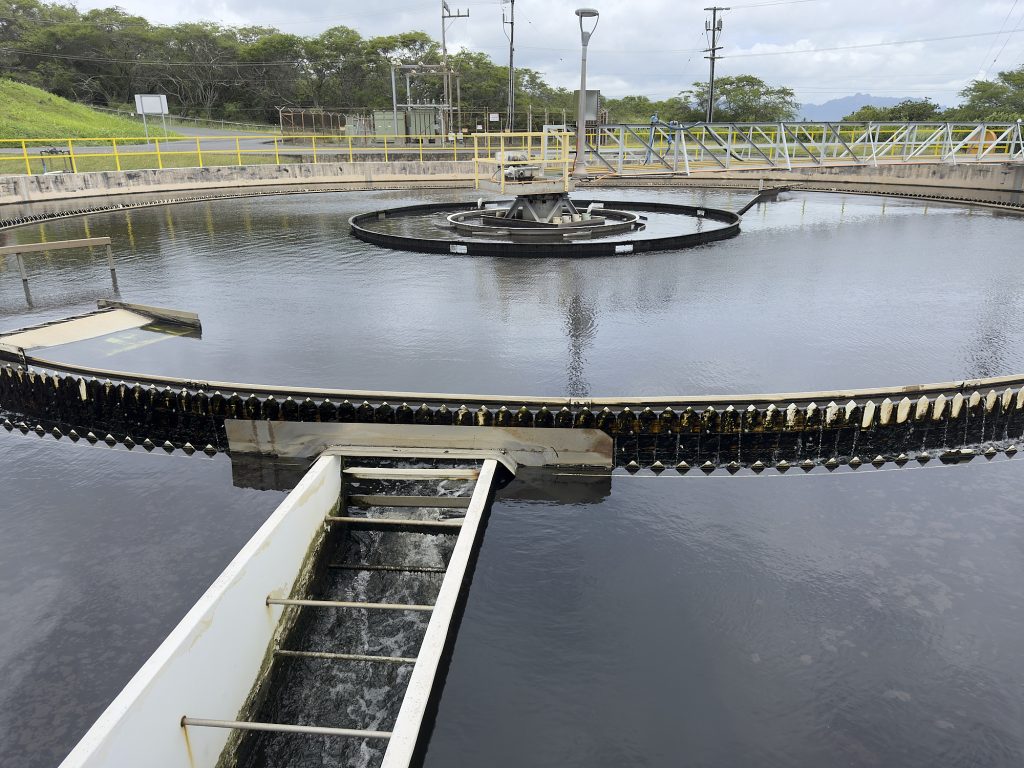
Hydrogen can be produced using water through electrolysis. The problem is that this process usually requires very clean water, which makes it expensive and puts pressure on our already limited freshwater supply. But new research shows that treated wastewater can be used instead, cutting water treatment costs by up to 47% and lowering energy use.
For Hawaiʻi, that should be a wake-up call.
This is not just an idea anymore. It is already happening. Countries like Australia, China, and Denmark are building large-scale projects that use treated wastewater to produce hydrogen.
Even here in the United States, California is investing in hydrogen projects that use wastewater and other waste sources to produce clean energy. These places are not waiting — they are moving forward.
So the real question is: why isn’t Hawaiʻi?
Wastewater also contains organic material from homes, farms, and businesses. That material can be broken down by microorganisms to produce biohydrogen. In simple terms, bacteria feed on the waste and release hydrogen gas, which can then be used as energy.
At the same time, newer systems show that wastewater can help improve treatment while producing energy. That means we are not just creating energy we are also reducing pollution.
Instead of paying to clean wastewater and then dumping it into the ocean, we can turn it into something valuable.
This is what a circular economy looks like. Where nothing is wasted and everything has a purpose. This idea is not new to Hawaiʻi. It reflects the value of mālama ʻāina, where we take care of our resources and use them responsibly. Our ancestors understood this through systems like the ahupuaʻa, where everything was connected and balanced.
What we are talking about now is just a modern version of that same thinking.
We reuse water instead of wasting it.
We reduce pollution going into the ocean.
We create local energy instead of importing fuel.
Yes, there are challenges. The technology is still growing. It requires investment, planning, and proper management. Hydrogen production depends on factors like pH, temperature, and the type of wastewater being used.
But none of these challenges are new.
And none of them are good enough reasons to keep doing nothing.
Hawaiʻi already struggles with high energy costs and heavy dependence on imported fuel. At the same time, we produce wastewater every single day across the islands. That is a constant, local resource that we continue to overlook.
Hawaiʻi can either catch up, or continue falling behind.
Wastewater treatment plants do not have to just be places that clean water. They can become energy production sites that support our communities, lower costs, and move Hawaiʻi closer to real energy independence.
We keep talking about innovation, but real innovation is not always about something new. Sometimes it is about finally using what we already have.
Wastewater is not just something to get rid of. It is a resource.
And right now, Hawaiʻi is wasting it.
If we are serious about protecting our ocean and building a sustainable future, we need to stop settling for the current system and start investing in better ones.
Turning wastewater into hydrogen energy is not just a possibility. It is already being done elsewhere.
Hawaiʻi can either catch up, or continue falling behind.
 Sign up for our FREE morning newsletter and face each day more informed.
Community Voices aims to encourage broad discussion on many topics of community interest. It’s kind of a cross between Letters to the Editor and op-eds. This is your space to talk about important issues or interesting people who are making a difference in our world. Column lengths should be no more than 800 words and we need a photo of the author and a bio. We welcome video commentary and other multimedia formats. Send to news@civilbeat.org. The opinions and information expressed in Community Voices are solely those of the authors and not Civil Beat.
Local reporting when you need it most
Support timely, accurate, independent journalism.
Honolulu Civil Beat is a nonprofit organization, and your donation helps us produce local reporting that serves all of Hawaii.
ContributeAbout the Author