Hawai‘i Has Proven Solar Works. Now it Needs Speed
Projects take too long to permit, interconnect and construct. Those delays carry real consequences.
May 20, 2026 · 4 min read


About the Author

Hawai‘i has long been an important proving ground for solar energy.
Back in 1996, I was fortunate to work alongside many of the people who helped bring online one of the state’s first market-based solar PV systems at Mauna Lani — a 100 kilowatt project that was ambitious for its time.
Three decades later, Hawai‘i has deployed more than two gigawatts of solar — enough annual generation to serve more than half a million homes — and expanded battery storage to roughly 1.8 gigawatt-hours. Solar now provides more than 25% of the state’s electricity.
Add wind and geothermal, and renewables now account for more than 35% of the grid. For an island chain sitting 2,500 miles from the mainland, that is remarkable progress.
But progress and completion are two very different things.

Ideas showcases stories, opinion and analysis about Hawaiʻi, from the state’s sharpest thinkers, to stretch our collective thinking about a problem or an issue. Email news@civilbeat.org to submit an idea or an essay.
Hawai‘i remains heavily dependent on imported oil and aging grid infrastructure. The state still burns more than 25,000 barrels of oil every day for electricity generation.
You don’t need a textbook on geopolitics to understand the vulnerability. One disruption in the Strait of Hormuz, oil jumps $40 a barrel, and Hawai‘i suddenly faces hundreds of millions of dollars in additional energy costs.
That volatility doesn’t stay confined to global commodity markets. It lands directly on monthly utility bills. Without the renewable energy now operating across the islands, electricity rates in Hawai‘i could be 25% to 75% higher today.
Utility-scale solar paired with battery storage is now one of the lowest-cost forms of new electricity available. More importantly for Hawai‘i, it offers something imported fuel never can: predictability. Sunlight does not become more expensive because of geopolitical instability, refinery outages, or disruptions in global shipping lanes.
Hawai‘i already knows this. The state has demonstrated how to build a more resilient energy system. The technology works. The deployment experience exists. The private capital is available. The workforce opportunity is real.
What is needed is urgency and speed.
Hawai‘i needs faster deployment, faster permitting, faster interconnection and collaboration between utilities, policymakers, developers and local communities. And the only way to get this done is to work together.
Projects take too long to permit, interconnect and construct. Those delays carry real consequences because every year the state remains more dependent on imported fuel than it needs to be, residents remain exposed to another cycle of global price shocks.
None of this is easy. Hawai‘i operates one of the most technically complex grid environments in the country. Integrating large amounts of renewable energy on island systems requires storage, transmission upgrades, careful planning, and close coordination between utilities, regulators, developers and communities.
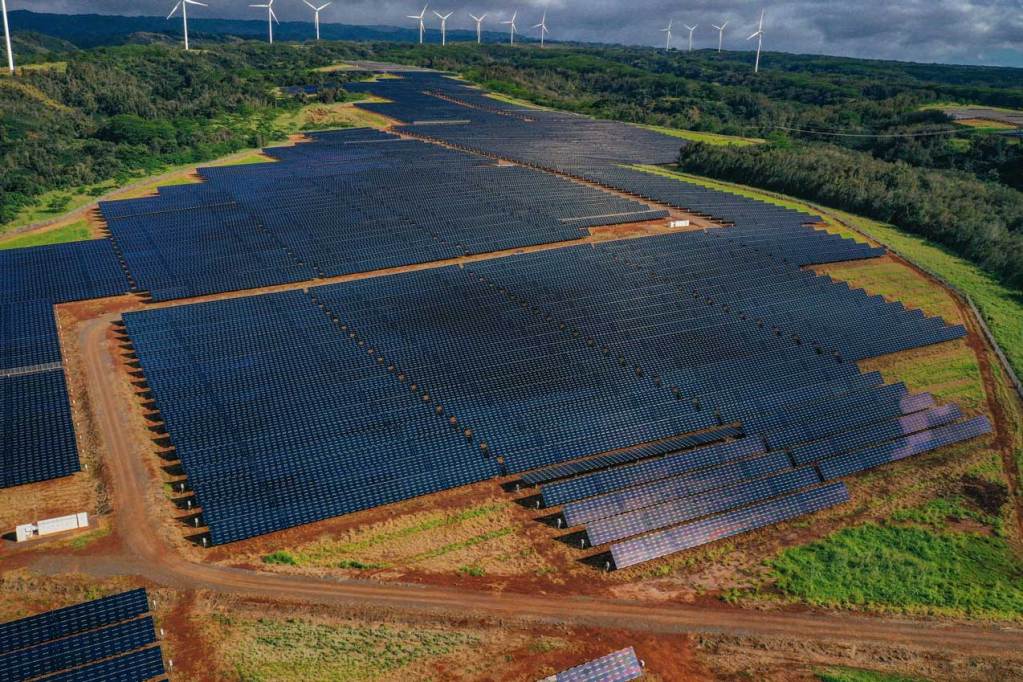
But again, Hawai‘i has already proven this model works.
In many ways, the state has already solved energy challenges the rest of the country is just now experiencing. Hawai‘i did not inherit cheap hydropower or abundant natural gas. It has had to build its transition through innovation, investment, and a willingness to move earlier.
Hawai‘i has an opportunity to become a global model for modern grid resilience — not someday, but now. Every solar project, every battery installation, and every improvement in interconnection speed delivers lower costs, greater energy security, and long-term stability for local communities.
The rest of the world is watching because Hawai‘i is solving problems many other regions will soon face themselves.
The energy transition is no longer a question. Hawai‘i knows it. Let’s get it done.
 Sign up for our FREE morning newsletter and face each day more informed.
Community Voices aims to encourage broad discussion on many topics of community interest. It’s kind of a cross between Letters to the Editor and op-eds. This is your space to talk about important issues or interesting people who are making a difference in our world. Column lengths should be no more than 800 words and we need a photo of the author and a bio. We welcome video commentary and other multimedia formats. Send to news@civilbeat.org. The opinions and information expressed in Community Voices are solely those of the authors and not Civil Beat.
Read this next:

Local reporting when you need it most
Support timely, accurate, independent journalism.
Honolulu Civil Beat is a nonprofit organization, and your donation helps us produce local reporting that serves all of Hawaii.
ContributeAbout the Author