Deadline: Midnight! We’re in the final hours of our spring campaign and just 18 new donors short of our goal. Give now and your donation will be DOUBLED!
Legislative Session Ended Strong For Kūpuna-Related Bills
They include a measure to temporarily provide in-home health care and support services to eligible participants.
May 15, 2026 · 5 min read


About the Author

Despite working with a lean state budget, Hawaiʻi legislators passed a handful of kūpuna-related bills this year that should help enhance the well-being of older adults in a state where their life expectancy, on average, surpasses the rest of the nation. More than 20% of the total population of Hawaiʻi is age 65 and over, and that number is expected to climb in the coming years.
Three of the five bills submitted as part of the Kūpuna Caucus package passed final reading and were transmitted to the governor’s office. House Bill 1973 establishes a one-year pilot program within the Department of Health called KupunAloha that will provide in-home health care and support services to eligible participants who do not otherwise qualify for government assistance for these services. An appropriation of $2 million is being made for the pilot year.
House Bill 1974 requires the state Health Planning and Development Agency to develop a comprehensive state plan on hearing loss. The plan will be focused on improving access, affordability, awareness, and early detection of hearing loss in collaboration with community stakeholders, relevant advisory boards, and state agencies.

Ideas showcases stories, opinion and analysis about Hawaiʻi, from the state’s sharpest thinkers, to stretch our collective thinking about a problem or an issue. Email news@civilbeat.org to submit an idea or an essay.
Hearing loss can be experienced by younger people, of course, but it is especially detrimental to older adults if it results in social isolation or lack of communication with others. A 2020 report of the Lancet Commission identified untreated hearing loss as one of the risk factors for developing dementia.
Senate Bill 2866 makes the state Rent Supplement Program for Kupuna, administered by the Hawaiʻi Public Housing Authority, permanent. Thus far this program has helped hundreds of vulnerable older adults from facing eviction and homelessness through monthly rental assistance, but the program was to sunset in 2028.
Two of the Kūpuna Caucus bills did not survive. Many eyes in the community were focused on House Bill 1972, which would have allowed eligible taxpayers to claim a family caregiver tax credit up to a maximum of $3,000 per taxable year. Versions of the bill in draft form remained alive up to the last day that bills could be submitted for a floor vote but the bill was not passed out of conference.
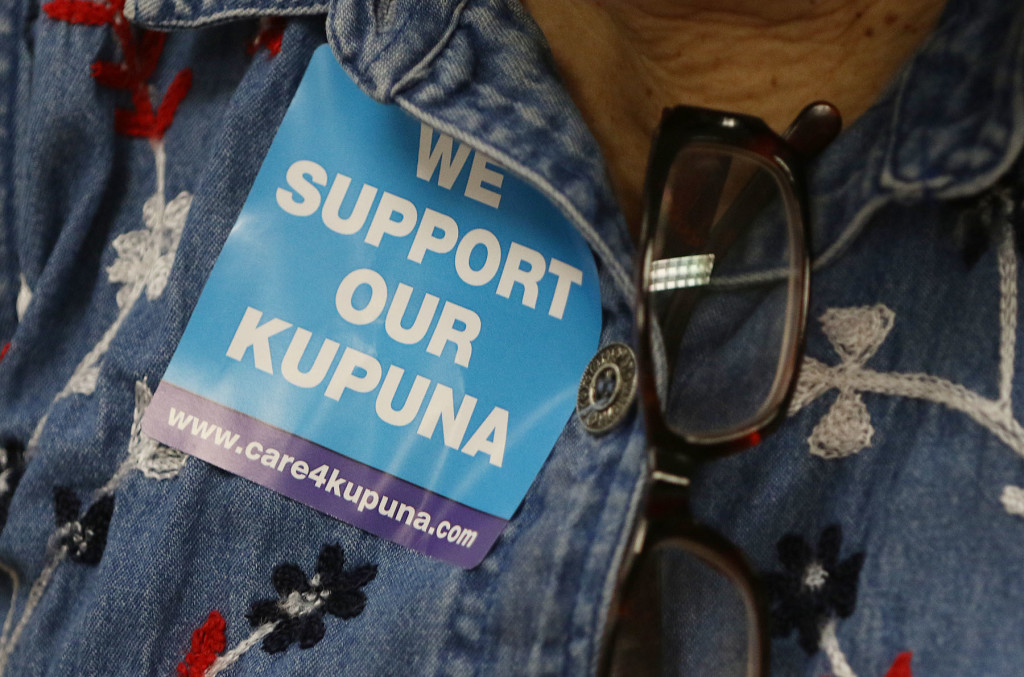
A bill to establish a family and medical leave and insurance program, House Bill 2360, also did not survive after it failed to move forward in mid-March.
A bill supported by dementia care advocates was House Bill 1976, which would have required the Hawaiʻi Emergency Management Agency, fire chiefs, Law Enforcement Standards Board, and Department of Health to make available at least one hour of dementia‑specific training for first responders, including law enforcement officers, fire first responders, and emergency medical services personnel. This bill also failed to make it out of conference on the last day that it was able to.
A law enforcement-related bill that saw an earlier death, House Bill 1577, would have required the 911 Board to establish a Statewide Emergency Safety Profile System Pilot Program and convene a working group. Senate committees deferred the House bill back in March.
However, other dementia-related bills fared better. Senate Bill 2259 is intended to create a dementia-friendly business environment by establishing “a business recognition program within the state’s Department of Business, Economic Development, and Tourism to promote brain health awareness in the business community and provide knowledge on the harmful effects of not only Alzheimer’s disease, but all forms of dementia, to better serve and support customers while creating a dementia-capable workforce.” The bill passed final reading and was enrolled to the governor.
L.J. Duenas, executive director of the Alzheimer’s Association Hawaii, just announced the creation of the Alzheimer’s Association’s HANAI Memory Network established by House Bill 1853. This $3 million memory care program, administered by the state’s Executive Office on Aging, is a historic investment in a statewide system to help people across Hawaiʻi receive earlier diagnosis, treatment, and support for Alzheimer’s and other types of dementia, especially on the neighbor islands where access to specialists and resources are limited.
One bill that didn’t make it was Senate Bill 2657, which would have created an Alzheimer’s Disease and Related Dementias Research Center within the University of Hawaiʻi. Another bill, House Bill 2159, which originally asked for $3,724,600 to hire additional faculty members at UH to teach in the health sciences fields and train the future health care workforce, was referred for a hearing before the Senate Ways and Means committee in late March, but it was not scheduled.
Finally, House Bill 1804, turns a lens to the future. The bill, which passed final reading, requires the Executive Office on Aging “to develop the framework and scope of work for a proposed study that examines the feasibility, impacts, and costs of different public and private financing options for long-term care services and supports and submit a report to the Legislature.”
With longevity in Hawaiʻi creating a sub-population of older people in the Islands living very long lives, the issue of cost to pay for long-term care is critical. Such a report will explore different options and how to pay for them.
Some of the bills that didn’t make this year will no doubt be back again in future years when the political climate may be more favorable for their passage. This year, funding for disaster recovery and preparedness, maintaining as much of the historic tax cuts promised to state taxpayers, and mitigating federal cuts to state programs all figured into the overall budget picture. Gov. Josh Green has until July 15 to sign or veto bills passed by lawmakers.
For bills kūpuna-related bills that get signed into law, there will be lots of work to do in an already busy kūpuna services and supports environment. For bills that didn’t make it, kūpuna advocates have a year to regroup for next year’s session.
 Sign up for our FREE morning newsletter and face each day more informed.
Community Voices aims to encourage broad discussion on many topics of community interest. It’s kind of a cross between Letters to the Editor and op-eds. This is your space to talk about important issues or interesting people who are making a difference in our world. Column lengths should be no more than 800 words and we need a photo of the author and a bio. We welcome video commentary and other multimedia formats. Send to news@civilbeat.org. The opinions and information expressed in Community Voices are solely those of the authors and not Civil Beat.
Local reporting when you need it most
Support timely, accurate, independent journalism.
Honolulu Civil Beat is a nonprofit organization, and your donation helps us produce local reporting that serves all of Hawaii.
ContributeAbout the Author