Makana Eyre: What's Behind Hawaiʻi's Love Affair With Toyota Tacomas?
I thought I was immune to the lure of the pickup. Then I hopped behind the wheel of my dad’s red stick shift.
May 11, 2026 · 7 min read

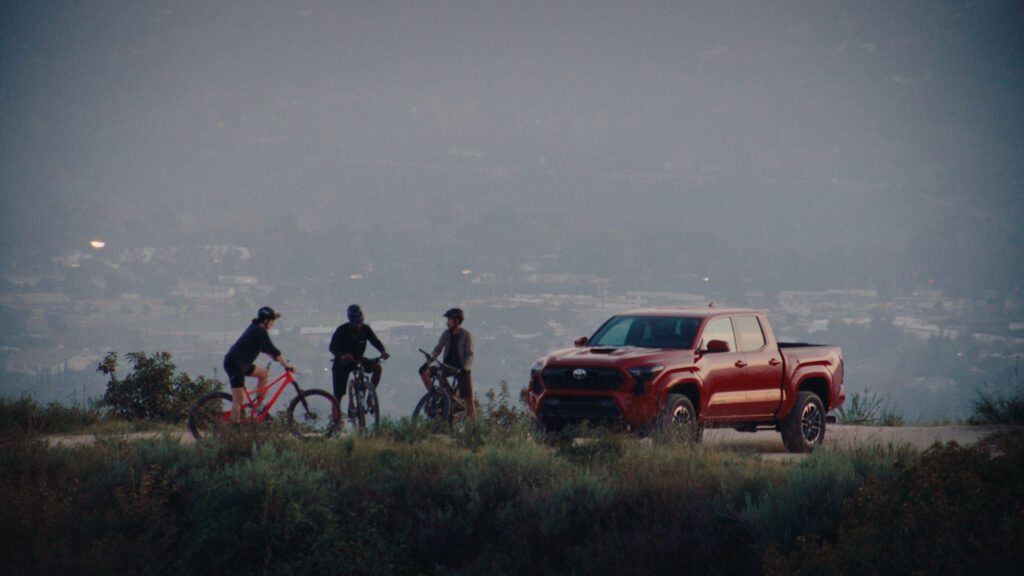
About the Author

What’s in a pickup? In Hawaiʻi, so much.
I’m always reminded of this when I come home. I find myself stupefied, staring at the enormous trucks you see in mall parking lots, outside restaurants and supermarkets.
I always wonder: who needs 400 pound-feet of torque? 400 horsepower? Do the owners make their living towing timber, slabs of quarried marble, solid gold?
The king of all trucks, of course, is the Tacoma, Hawaiʻi’s top-selling vehicle. It is so ubiquitous, so iconic that perhaps we should put it in the basket of quintessential Hawaiʻi things like the ʻukulele, the flower lei, Diamond Head.

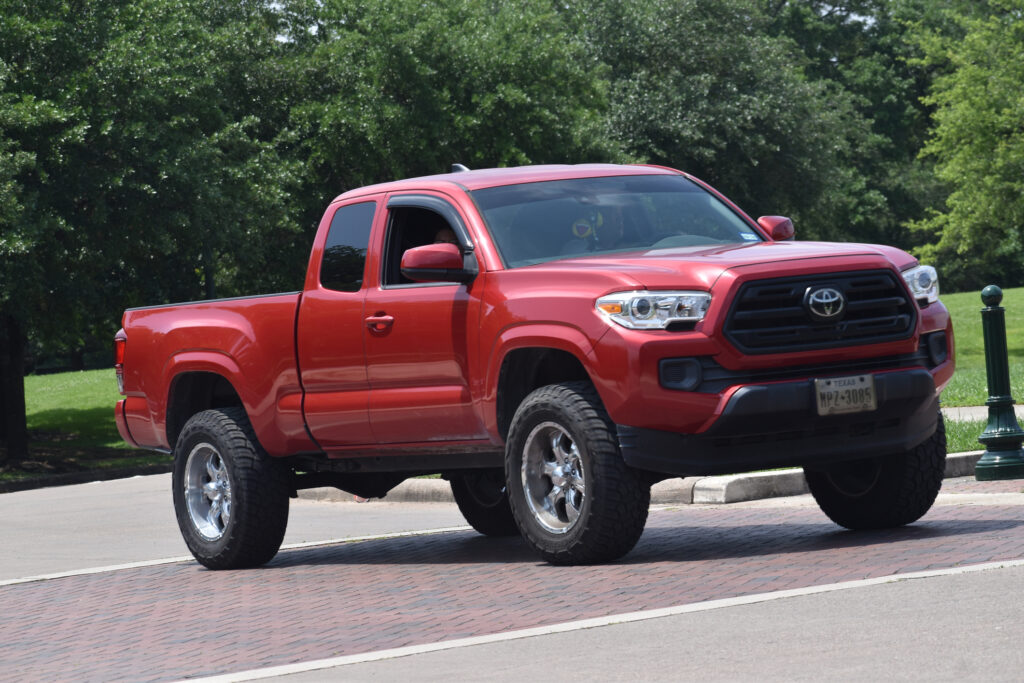
Tacomas are everywhere. There are shining new ones, brightly colored, fresh off the lot. And there are also thousands of older ones, stretching back to the 1990s.
People lift them, drop them, tint them, equip them with custom exhaust, subwoofers, surf racks, crossover toolboxes, boxes for hunting dogs. In each Tacoma there is a reflection of its owner.
Let me say it outright: for years, I was skeptical. A Tacoma is not necessarily a heavy-duty truck. Still, who really needs a vehicle like this? They aren’t cheap, they guzzle gas, and unless you have a full cab, they aren’t all that convenient for families.
And then I drove one.
My dad was the first person in the family to buy a Tacoma. He still owns it, in fact. It’s a modest one, red, single cab, stick shift, with window cranks.
He bought it when I was in college 15 years ago. When I came home on break, he’d sometimes give me the keys, and I’d drive around Honolulu listening to reggae, feeling the singular invincibility that comes during that sweet and dangerous age when adolescence gives way to adulthood.
Later, another member of my family bought one — steely blue, full cab, ever so slightly lifted.
Once, on Maui, I was asked to drive it home after a picnic day at Launiupoko. By then I was in my 30s, with gray in my beard, age in my eyes. Elevated in the cab, driving on the winding road along Maui’s southern coast, that 40 minutes brought me back to more youthful days.
Today, both my sister and brother own Tacomas. My sister’s is new, a 2024 model big enough to taxi her children around town. My brother has one from the late 1990s, a two-wheel drive that he treasures. (I once put a tiny ding in it while getting out of a car in the next stall. He shrieked like I’d never heard him do before.)
The question I’ve been pondering lately is why the Tacoma? As a former skeptic and a person who rides the subway, I thought I’d better ask around.
The first thing people told me was that it’s reliable. Everyone wants a Tacoma, they said, because it holds up, and if anything does go wrong, there is a myriad of mechanics and dealers with affordable parts in stock.
OK, fair.
But then I reminded them that there are a half-dozen trucks on the market that fit these parameters. And many other cheaper, more efficient non-pickup trucks as well.
The answers became foggier.
That’s the thing about culture. It’s slippery, hard to account for, hard to explain.
What’s certain is that there’s something about the Tacoma. It’s burrowed into our identity, so much so that Toyota held the global debut of its 2024 models in Puakō on the Big Island.
So, what explains this? Is it just a case of a feedback loop of cool, a situation where, as people bought into the idea of the Tacoma, it became more and more popular?
Maybe, but I’m not convinced. Car fads have come and gone. Remember the Hummer, the PT Cruiser, those boxy Scions? And before that the VW bug and the Willys MB jeep left behind by WWII and everywhere in rural Hawaiʻi in our grandparents’ times.
The Tacoma, on the other hand, has been Hawaiʻi’s best-selling car for almost a quarter century, nearly as long as the truck has existed under this name (it was introduced in 1995).
Is it its resale value, reliability?
Perhaps, at least a little bit — though I think putting much stock in this would be to give us all too much credit as rational decisionmakers.
Maybe it’s all about towing and hauling?
Unlikely. A 2023 study using national data found that only 7% of truck owners frequently use their pickups for towing, while 70% frequently use them for pleasure driving.
That data confirms what I’ve long thought: there’s something deeper, more emotional at work here.
To some extent, I think it has something to do with image. People like how Tacomas look and feel—and how they look driving them. That, so I’m told, was also the case with the WWII jeeps.
But more important, it seems to me that the Tacoma plays into our local lifestyle, no matter how much of a fantasy that might be.
With this truck, we can tell ourselves: I could go fishing or hunting. I could drive up old plantation roads. I could tow stuck friends out of mud or sand. I could do all those things even if I’ve never tied a hook or fired a rifle, never driven off-road or helped a buddy in a pinch.
And to be sure, some truck owners haul one-man canoes or longboards, fill them up with soil or gravel, tow boats. But for so many owners, I suspect it’s a lot more about what they could do than what they actually do.
In many ways, these trucks are also vessels for nostalgia — including for me. Most Tacomas are modern, filled with gadgets and doodads. But they have a clear link with an earlier, more rural version of Hawaiʻi, where small Japanese pickups and simple jeeps existed all over the islands.
My parents had a few of them in the ’80s and ’90s — Mazdas, if memory serves. They were tiny things compared to their modern descendants. We all squeezed in the cabs, dodging the gear shift and sweating — there was no air conditioning — but content, with family, perhaps headed to the beach.
There’s nothing inherently wrong about owning a Tacoma or a big pickup. In some ways, I get it. Yet we might all do well to think about the danger big trucks pose to pedestrians, children above all, and their overall poor environmental performance.
Do they really make sense? Probably not.
But that’s the thing about humans. Emotion so often trumps logic. We like things because of how they make us feel.
I’m as guilty of this as anyone. My mom owns a Tacoma. When I was last at home, I drove it around Kailua to immense enjoyment, listening to music, feeling like I was 20 again. If I move home for good, I’ll have to think hard about what kind of vehicle to buy.
 Sign up for our FREE morning newsletter and face each day more informed.
Local reporting when you need it most
Support timely, accurate, independent journalism.
Honolulu Civil Beat is a nonprofit organization, and your donation helps us produce local reporting that serves all of Hawaii.
ContributeAbout the Author