Remembering Women Who Held The Line For Hawaiʻi In WWII
The Women’s Air Raid Defense remains largely unknown outside the broader historical narrative.
May 6, 2026 · 6 min read

About the Author
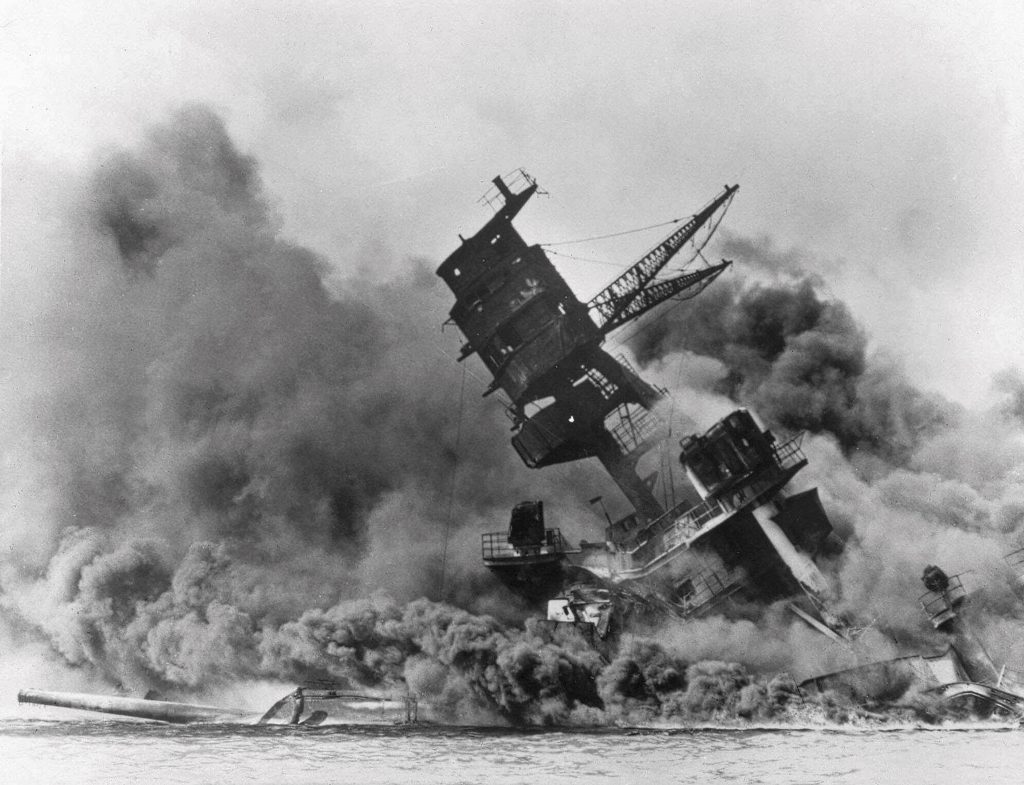
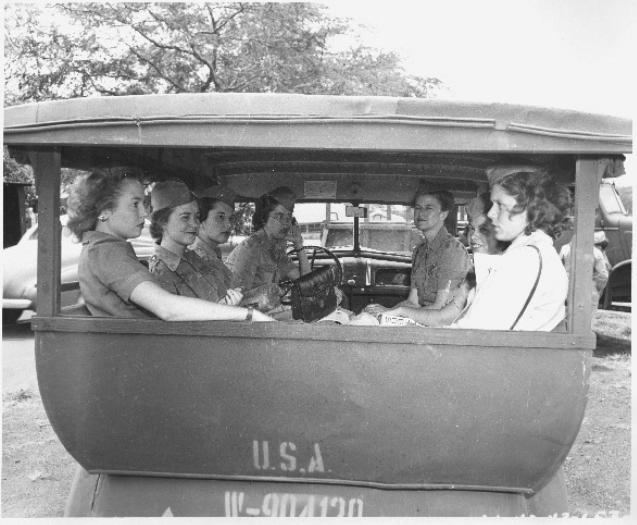
In the wake of the attack on Pearl Harbor on Dec. 7, 1941, a group of young Hawaiian women — and military wives who refused to evacuate — had been quietly recruited into a top-secret Army mission and launched into one of the most critical roles in Hawaiʻi’s emerging radar-based air defense systems.
From 1942-1945, they protected the islands during World War II in the Pacific, conducting continuous radar plotting and aircraft tracking operations that contributed directly to the detection, identification, and coordination of responses to aircraft approaching the Hawaiian Islands.
Within days, newly appointed Air Defense commander of the Information and Control Center, Brigadier General Howard C. Davidson contacted trusted Honolulu civic leaders Alexander “Sandy” Walker and Una Craig Walker to identify 20 trustworthy and reliable women from the local community.

Through Una’s Red Cross network, the first volunteers were assembled within an hour. Their initial meeting took place at the Royal Hawaiian Hotel on Dec. 26.
By Jan. 1, a larger group met in the Mauka Ewa in the Territorial Senate Chambers at one of Hawaiʻi’s most historically significant sites, ‘Iolani Palace. The juxtaposition of place and purpose reflected a unique wartime reality: a civilian community transforming itself into a critical partner with the military.
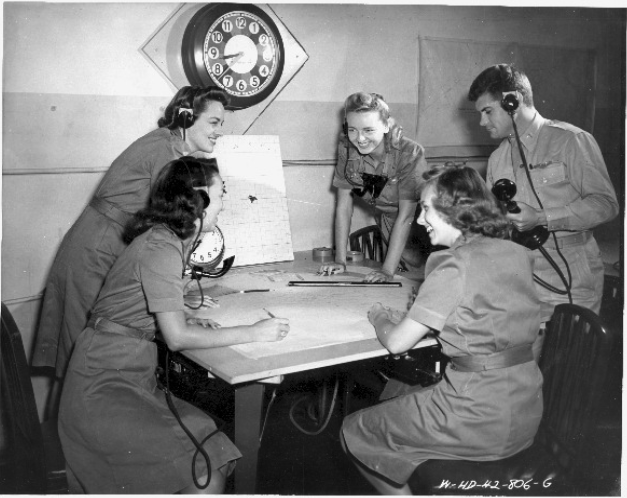
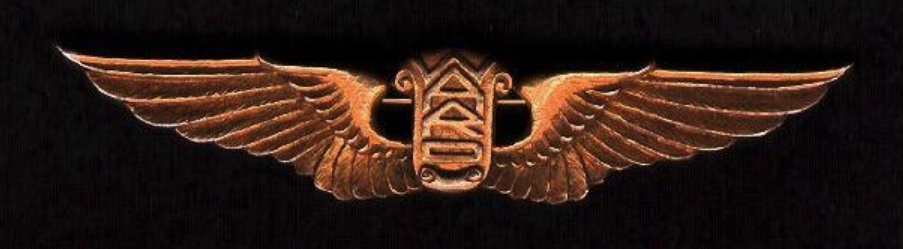
The group became the Women’s Air Raid Defense. Requirements were strict: age 20- 34, have no children, pass a physical, an Army intelligence examination, and work 24/7. Salary, $120 per month.
On Feb. 1, 104 WARDs stepped inside the covert tunnel leading to the ICC at Fort Shafter affectionately called “Lizard.” They worked around the clock until the end of the war.
President Roosevelt’s Executive Order 9063 marked the first time in American history that women replaced active-duty combat soldiers without congressional approval.
A Wartime Kuleana
Soon, young WARDs from neighboring islands were secretly recruited and organized to become an official detachment. Radar stations were set up. Training sites included Hale Nani and Līhuʻe Grammar School (Kauaʻi), Good Shepherd Church (Maui), and Kahuku Ranch and Pāhoa Village (Hawaiʻi Island).
Many of the Kauaʻi WARDs learned to intercept unidentified flights and vector P-40 fighter planes under the supervision of trained soldiers at Barking Sands. Many were barely out of high school and, because their work was classified, lived together under supervision while training and continuing their studies with private tutors.
Phyllis and Beatrice Dang were granted special permission to attend their graduation from Kapa‘a High School; despite a heart murmur, Kee Soon Kim, recruited from the front of her house, joined them at the Royal Theatre in Līhuʻe.
Families supported the effort in deeply personal ways. Mr. Dang would bring servicemen home for home-cooked Chinese noodles and any extra milk from his cows. Lt. Davis, a pilot stationed in Hanapepe, famously dropped cookie tins from his plane — to be refilled with Mrs. Dang’s homemade goodies.
Tracking Real Threats
On March 5, two Japanese flying boats carrying two 550-pound bombs each, were tracked on both radars at Kōkeʻe, Kauaʻi, and Opana on Oʻahu. Japanese pilots, frustrated by the heavy cloud coverage at night, dropped their bombs off the entrance of Pearl Harbor and a mile from Roosevelt High School behind Tantalus in the Makiki section of Honolulu. WARD Jean Fraser was the first to pick up and track the small group on the plotting board.
As preparations for a rapidly evolving operational mission soon to be executed near or around Midway, Davidson warned the women that despite wearing officers’ uniforms that granted them the same protections as POWs under the Geneva Convention Protocols, no one would be coming to help them if the Japanese invaded Hawaiʻi. They were instructed to keep their helmets and gas masks on at all times and be prepared to fight fires with available equipment — ladders, buckets of sand and water.
Fraser later recalled the emotional weight of plotting aircraft, knowing that husbands — Navy and Army Air Corps — were aboard those very missions.
Born and raised on Hawaiʻi, WARD Kathleen “Kak” Lowery Hamlin continued her duties knowing her husband was a POW following the sinking of the USS Houston during the Battle of the Java Sea.
WARD Ford Fluff tracked her husband’s aircraft into the Battle of Midway — and returned to duty after learning it had been lost.
The Deeper Story
The WARDs remain largely unknown outside the broader historical narrative. Yet they stood at the powerful intersection of structured military command and trusted civic leadership — deeply rooted in Hawaiian kuleana.
In Hawaiʻi, the Walker family stood at this intersection. As kamaʻāina leadership, they operated quietly — through responsibility and service.
Sandy and Una’s son, Lt. Henry Alexander Walker, served aboard the USS Missouri and stood just feet from the Japanese surrender ceremony in Tokyo Bay on Sept. 2, 1945.
Their grandson, Captain Michael A. Lilly, would be instrumental in founding the USS Missouri Memorial Association — continuing a legacy of stewardship.
A Call To Remember
Over 650 young military wives and local Hawaiian women stepped forward during World War II in the Pacific — serving in secrecy and pioneering work in radar technology with unwavering dedication. They left a legacy of adaptability, community resilience, and sacrifice.
They are not footnotes.
As the 85th Commemoration of Pearl Harbor approaches and we mark Memorial Day later this month, the story of the WARDs call us to remember it — and share it. Most importantly, it reminds us that some of history’s most essential contributions are the ones we must work the hardest to recover.
“I ka hoʻomanaʻo ʻana, ke ola nei lākou” — In remembering, they live on.
 Sign up for our FREE morning newsletter and face each day more informed.
Community Voices aims to encourage broad discussion on many topics of community interest. It’s kind of a cross between Letters to the Editor and op-eds. This is your space to talk about important issues or interesting people who are making a difference in our world. Column lengths should be no more than 800 words and we need a photo of the author and a bio. We welcome video commentary and other multimedia formats. Send to news@civilbeat.org. The opinions and information expressed in Community Voices are solely those of the authors and not Civil Beat.
Local reporting when you need it most
Support timely, accurate, independent journalism.
Honolulu Civil Beat is a nonprofit organization, and your donation helps us produce local reporting that serves all of Hawaii.
ContributeAbout the Author