The Sunshine Blog: And So Ends Another Conference Committee Scramble
Short takes, outtakes, our takes and other stuff you should know about public information, government accountability and ethical leadership in Hawai‘i.
May 3, 2026 · 7 min read


About the Author

Dazed and confused: Friday was quite chaotic at the Hawaiʻi Legislature as lawmakers and staff scrambled to pass dozens of bills that faced a 6 p.m. deadline. They included measures on the conveyance tax and Hawaiian homelands, redevelopment of the Aloha Stadium complex, enforcement of federal immigration activities and setting benchmarks for the production of lei. And yes, Friday was Lei Day!
The Sunshine Blog was particularly interested in the fate of Senate Bill 2471, described by government reform advocates as a historic bill that would take “a transformative approach” to getting money out of politics. It barely passed, and just as the clock ran out. The last-minute — literally — amending as negotiators talked it through across the table left many of us perplexed as to what really passed. Another example of the insane and opaque process that is known as conference committee.
SB 2471, as initially proposed, would effectively nullify the 2010 Citizens United decision by the U.S. Supreme Court that allowed unlimited corporate spending in elections. But only a handful of legislators and their aides knew what the latest draft of the bill actually said.
The conference draft of SB 2471 was not posted on the legislative website until well into the evening and long after the vote, and testimony is not allowed during conference, anyway, meaning the public could not weigh in. The latest draft of the bill is also more than 7,600 words long. Good luck getting through it all without a lawyer’s or lobbyist’s assistance.

So crazy busy were the final hours of Friday that two senators and two representatives missed the vote. They included Rep. Amy Perruso, who was in another room voting on another bill. Earlier in the week she had emailed a newsletter to her constituents arguing why the bill is so important: “It’s a question about power — who has it, how it’s structured, and whether our laws still reflect the kind of democracy we want to have.”
What exactly happened to SB 2471? Clean Elections Hawai’i, in an email to its supporters early Friday before the vote, lays the blame on members of the Hawai’i House for proposing an “alternative approach” to SB 2471 that “would doom the effort entirely.”
“The approach they are considering wouldn’t go as far in ending the influence of corporate money in politics,” the Clean Elections Hawaiʻi email says. “Instead, it would try to put a cap on these contributions — an approach that has been repeatedly rejected by courts across the country since the Citizens United ruling in 2009. Moreover, this dramatically new bill was not even heard by the Hawai’i legislature this year, meaning it runs the risk of being considered a ‘gut and replace’ which could be deemed unconstitutional by our own courts. This latest, last minute move by the Hawai’i House jeopardizes our entire effort to get corporate money out of politics this year.”
After the vote, Camron Hurt of Common Cause Hawaiʻi said he was encouraged by the compromise.
“These people have been grappling with this all session long, and over the past two weeks, they’ve been really dug in trying to figure out how to make this work from all perspectives,” he told The Blog. “So I think today was the best work that they could come up with.”
But Evan Weber of Clean Elections Hawaiʻi expressed bewilderment and disappointment.
“It’s hard to react without seeing the text. I mean, this had the opportunity to be a historic measure to stop money in politics, corporate money in politics, in a huge way,” he told The Blog. “And it’s unclear whether what was just put in it was a poison pill or not.”
SB 2471 now awaits full floor votes in the House and Senate on Wednesday. But if there is not a better illustration of why the Legislature seriously needs to reform the conference committee process, The Blog can’t think of one.
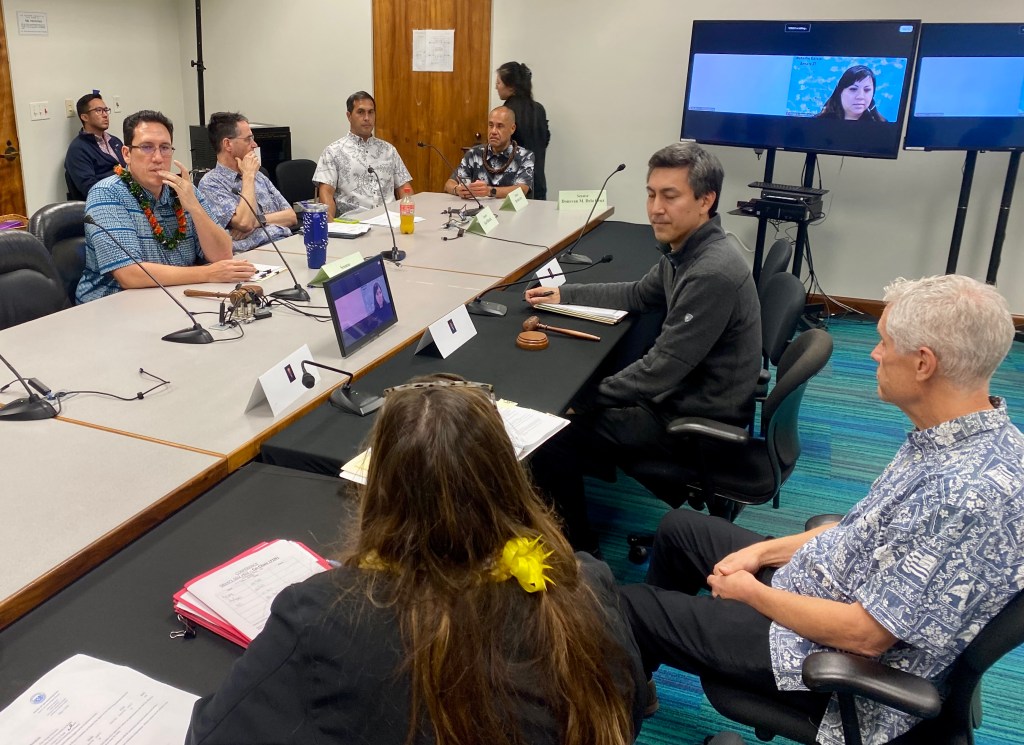
It became apparent days ago that many bills were stalling as budget negotiators scrambled to come up with a spending plan and didn’t know how much money they’d have for other intiatives. So why didn’t legislative leaders lift their own rules, as they’ve done in past sessions, and let conference committee run a few more hours or even days?
It all seems rather by design, doesn’t it?
Another reason to seriously consider moving to a longer, even year-round session. Oh yeah, that bill already died days ago.
All we are saying is give peace a chance: Lost in the shuffle of all the late-session legislating was the passage of House Concurrent Resolution 137, which urges an “immediate and permanent ceasefire and an end to the hostilities in Iran.”
A reso can request action or state the Legislature’s position on an issue. In this case, both the House and Senate agreed unanimously on HCR 137 last week. It says the U.S. “lacks coherent objectives and has failed to provide a clearly defined timetable” and that the White House will not tell the Congress exactly how much it all costs.
“Independent experts have provided an approximation of $25 billion to $35 billion,” the reso states. The skyrocketing costs of gasoline is noted as well (it’s currently averaging $5.63 for a gallon of unleaded in Hawaiʻi).
HCR 137 will be transmitted to President Trump, Vice President JD Vance, Secretary of State Mark Rubio, Secretary of Defense Pete Hegseth and the Hawaiʻi congressional delegation, where it will have no impact at all. But at least lawmakers took a stand.
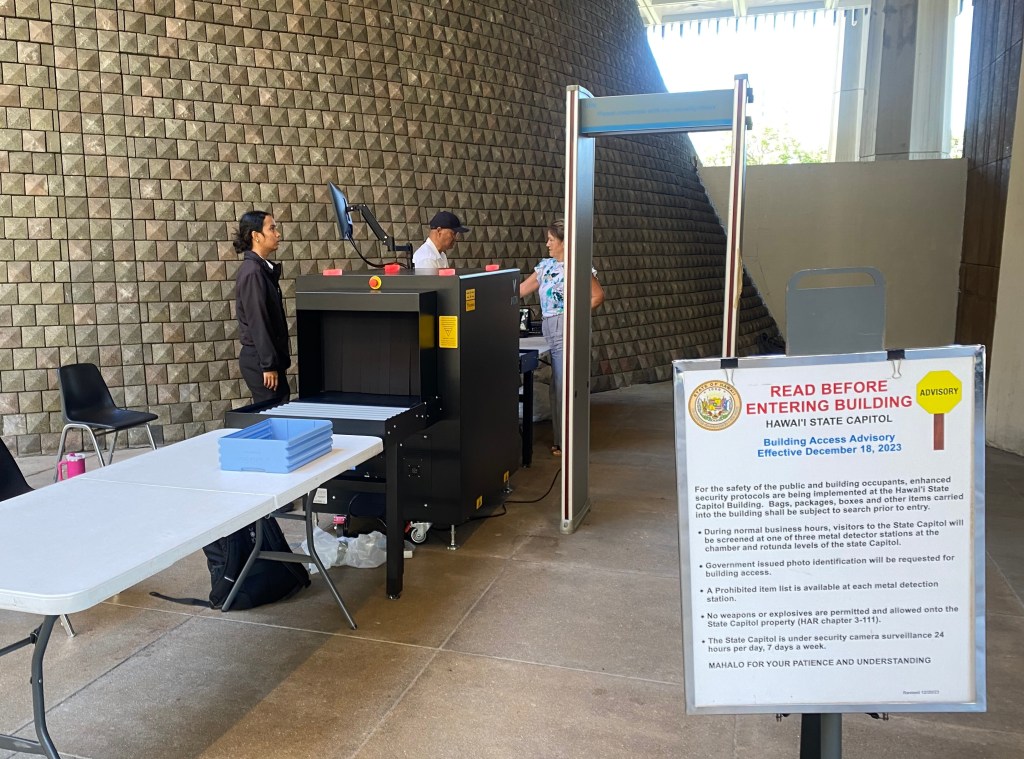
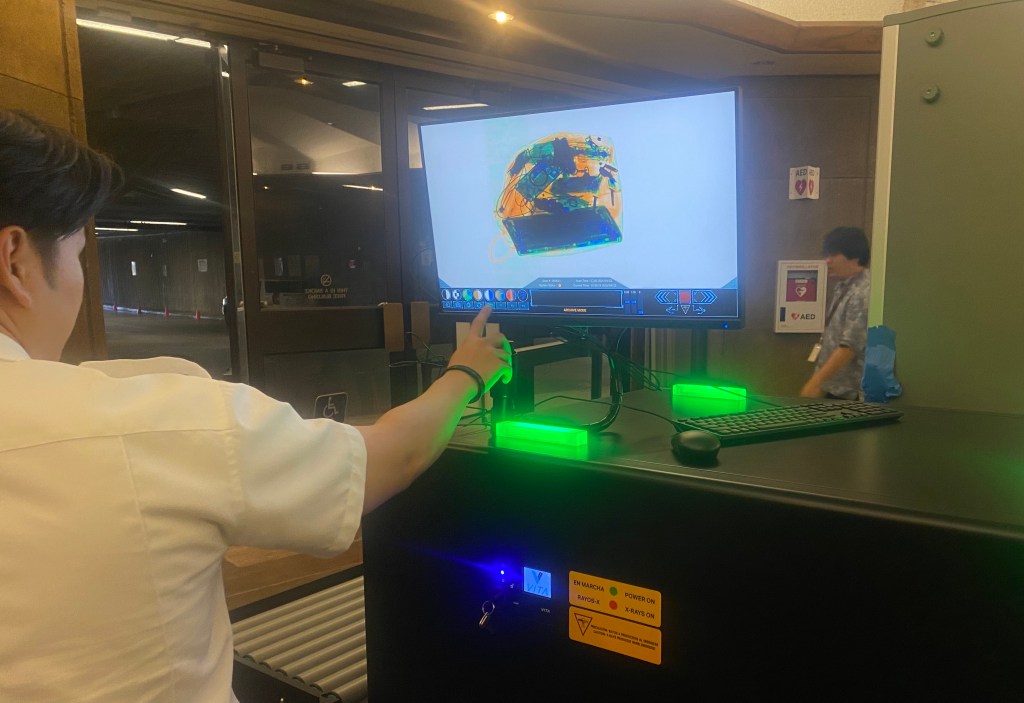
Government transparency: Adding to the increased security that has become standardized in recent years, the Hawaiʻi Department of Law Enforcement has set up three scanners at the State Capitol. They are located at the three public entrances: two on the Rotunda level and one in the basement.
David Patterson, the PIO for the DLE, said the scanners (they are similar to the ones found in airports) had been in the works for several years.
“There is no specific reasons or incidents that spurred the implementation of using scanners other than improving security,” he said in an email to The Blog.
DLE was not able to provide a cost for the machines.
Party line: State election officials have finalized the order of political parties on Hawaiʻi’s primary ballot this year, which was done through a drawing. The party order will be:
- Nonpartisan
- Libertarian Party
- Green Party
- Republican Party
- Democratic Party
Why is this important? Because voters can only vote for candidates of one party. If someone chooses, say, a Republican in a congressional race and a Green in a legislative race, the votes won’t count.
If you end up voting only for Democrats, it does not mean you are officially registered with the party. But it is frustrating to The Blog, which thinks a voter should be able to vote for the candidates of their choice.
The primary election ballot will also include candidates for Office of Hawaiian Affairs and county contests, which are nonpartisan. That means you may vote in those contests regardless of your selected political party preference.
Primary election ballots are expected to arrive in the mail by July 21. The primary is Aug. 8.
 Sign up for our FREE morning newsletter and face each day more informed.

Local reporting when you need it most
Support timely, accurate, independent journalism.
Honolulu Civil Beat is a nonprofit organization, and your donation helps us produce local reporting that serves all of Hawaii.
ContributeAbout the Author