The Sunshine Blog: Did A State Senator Kill A Rep's Bill Out Of Spite?
Short takes, outtakes, our takes and other stuff you should know about public information, government accountability and ethical leadership in Hawai‘i.
May 17, 2026 · 10 min read

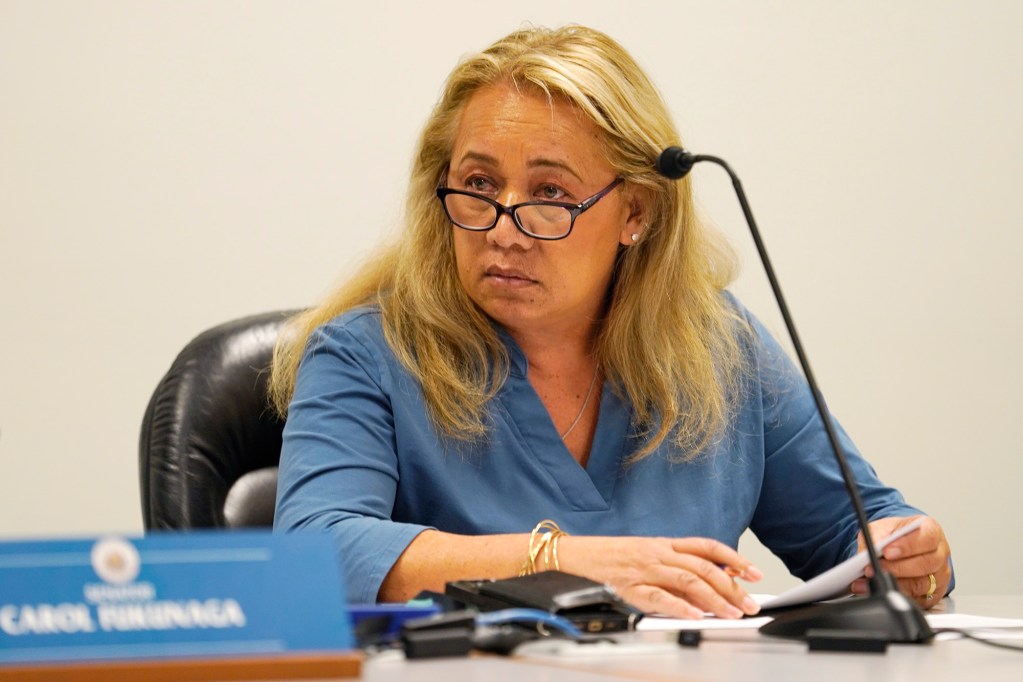
About the Author

The power of one: Approximately 268 bills passed the Hawaiʻi House and Senate this year, which is roughly par for the course in a typical session. Two that did not make it across the finish line but probably should have were important criminal justice reform measures that seemed sure bets.
Instead, Capitol denizens are grumbling that those bills and several others were killed by Sen. Lynn DeCoite in a snit after Rep. David Tarnas killed one of her bills.
The Sunshine Blog, who lives for these little moments that demonstrate the many things that need to be changed (like the absolute power of a committee chair) if only lawmakers would start thinking of the public rather than themselves, pieced together this account:

DeCoite’s bill, Senate Bill 2575, would under the House draft have boosted the penalty for possessing, controlling or transferring ownership of any firearm or ammunition by someone who is restrained by court order from “contacting, threatening, or physically abusing any person.” The bill would have upped the crime from a misdemeanor to a class C felony. It was supported by, among others, the Maui Police Department and the county’s prosecuting attorney. DeCoite represents parts of Maui County.
But in conference the Senate wanted to change the bill so that people caught with a firearm would be subject to a harsher Class A felony. Tarnas, the chair of the House Judiciary and Hawaiian Affairs Committee, would not budge on amending the bill further.
“I know the police chiefs were really pushing it,” he told The Blog last week. “They even framed it as a bill in honor of a fallen police officer who was killed on duty.”
Tarnas, however, told them that the bill would have no impact at all on that offense. He also said the Senate was pushing for a mandatory minimum penalty of 10 years — even though Tarnas has consistently opposed mandatory minimums.
“I don’t believe that they are effective,” he said. “I think I want to maintain the ability of judges to decide what is the best sentence in the case.”
DeCoite, who didn’t return The Blog’s call last week to share her side of the story (shocker), then killed a bill championed by Tarnas.
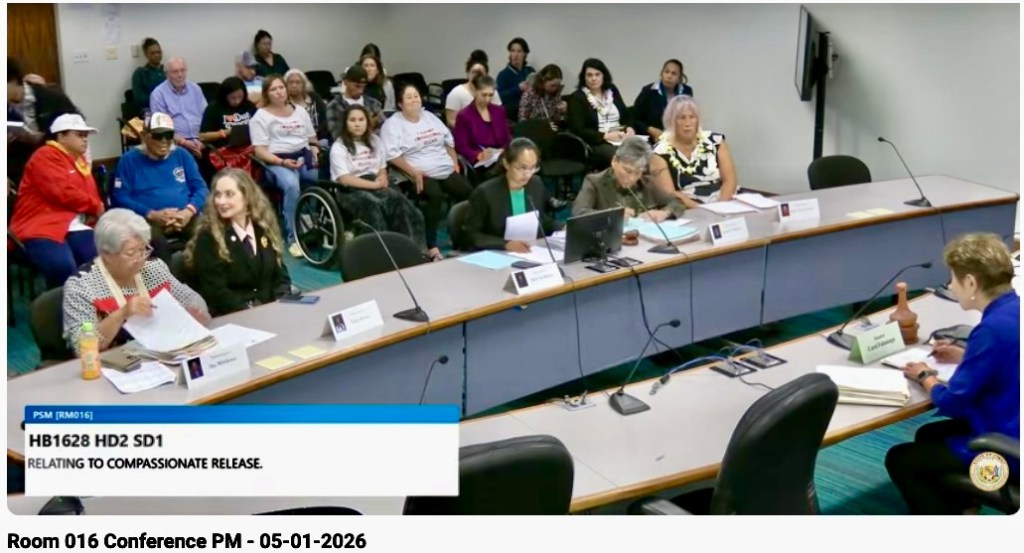
That one, House Bill 1628, would have made it easier for compassionate release for some ill or seriously debilitated incarcerated persons. DeCoite, the Ways and Means Committee conference designee on compassionate release, killed it by simply and repeatedly not showing up to discuss the bill — even though she and the entire Senate had voted to approve the Senate’s version of the bill just weeks earlier.
Capitol insiders are also blaming DeCoite for killing another Tarnas bill, House Bill 1516, which would have required certain factors to be considered when determining a defendant’s financial ability to afford bail.
House and Senate conferees actually were able to agree on a conference draft of HB 1516 and pass it early during the conference period. But then, in an unusual development, the Senate voted to recommit the bill — that is, kill it as time ran out — during a floor vote May 1. The 13 senators voting no included DeCoite.
Did DeCoite conduct a vendetta against Tarnas and other House reps?
“And all I can say is that Sen. Decoite never talked to me,” said Tarnas. “She never called me, she never talked to me about anything, but I was told the same thing that you were told. But I can’t validate that, because she never called me.”
Rep. Kim Coco Iwamoto, one of the conferees on the compassionate release bill who did show up for negotiations, told The Blog, “It’s very interesting that she waited to be in a position where she could unilaterally kill the bill by refusing to show up. That’s the way it looks to the public.”
Individual lawmakers unilaterally terminate legislation all the time, of course, especially during the murky, chaotic and kabuki theater-esque conference period and often without public explanation. This happens because legislative rules and the legislators who support them allow it.
Is this any way to run a Legislature? The Blog isn’t the only one who considers this a very irresponsible and petty way to do the people’s business.
The revolution will not be televised: Hawaiʻi legislation hailed as innovative, bold, historic and even revolutionary was quietly approved by Gov. Josh Green Thursday, who normally would call a press conference where he signs the bill surrounded by the legislators who sponsored it. And then give them all pens later.
Instead, the announcement that Green had signed Senate Bill 2471, the much-ballyhooed anti-Citizens United bill, came buried in a brief press release that also reported the governor had approved bills banning the use of some license plate covers, establishing the Hawaiʻi Leadership Awards Program and designating the first Friday in February of each year as “Love My Library Day.”
Others, however, had a great deal to say about the law that establishes new restrictions on political spending activities by corporations and other “artificial persons” organized under Hawai’i law. They include effusive praise from a nonprofit political reform group in Washington, D.C., called Issue One, which blasted out a press release that featured this eloquent quote from Hawaiʻi state Rep. Garner Shimizu:
“I previously voted no on this measure. But on this final reading, I’m deciding to take a braver step of faith and courage … Hawaiʻi and this 2026 Legislature has the chance to make history, to reset a new precedent, to eliminate unlimited money sources that totally affect our elections and bring back some sanity and sanctity to our voting process.”

The Blog has heard not a peep from Green on what he actually thinks about SB 2471 and is eager to see what comes next for this one since it would appear to rein in Hawaiʻi’s biggest contributor to super PACs, the Pacific Resource Partnership, which is a creation of the 6,000-member Hawaiʻi Carpenters Union and hundreds of contractors who employ them. PRP’s super PACs have become infamous for playing political hardball that has many times succeeded in getting their candidates, including the governor, into office.
But appearances can be deceiving. And the bill’s sponsors have already hedged a bit, saying they want to tinker with it next session to clarify exactly how political spending from labor unions is regulated. And they’ve cautioned it’s probably only a matter of time before somebody files a lawsuit challenging the constitutionality of the new law.
Tough on crime, soft on facts: U.S. Rep. Ed Case, ever the maverick, crossed party lines yet again this week. This time to vote in favor of a House resolution supporting the nation’s law enforcement officers.
Sounds like something any politician would back regardless of party affiliation, right? Turns out it was a clear attempt by Republicans to make Democrats look soft on crime and anti-cop before the midterms.
Just consider a few of the “Whereases” in the text of the resolution. There are “leftist activists” seeking to dismantle local police departments, sanctuary cities interfering with federal immigration operations and overt praise of President Donald Trump for falling homicide rates:

Fact check: Despite Trump’s claims he’s responsible for fewer U.S. murders, homicide rates were already falling before he came into office.
The resolution passed 243-173 on Wednesday, with 29 Democrats, Case included, voting in favor and three others voting “present.” And right on cue Republicans started attacking their colleagues for their no votes.
Iowa Rep. Zachary Nunn, who authored the resolution, immediately issued a press release decrying the 173 Democrats who voted no.
“It shouldn’t be controversial to stand with the men and women who put their lives on the line to keep our communities safe,” Nunn said. “But from the ‘defund the police’ radicalism to sanctuary city policies that prevent cooperation with federal law enforcement, too many politicians have put ideology ahead of public safety — and Americans are paying the price.”
Nunn wasn’t the only one calling out Democrats. Fox News, the not-so-objective mouthpiece for the GOP, also repeated the narrative hook, line and sinker. Here’s the headline: “173 House Democrats vote against resolution honoring police amid rising attacks.”
So why did Case vote the way that he did? Civil Beat reporter Nick Grube is still awaiting a response.
Seeing the forest for the trees: Hawaiʻi is just one of seven states without a national forest and the Trump administration appears set on keeping it that way.
For years, Hawaiʻi’s congressional delegation has pushed to study the feasibility of expanding the national forest system into the islands to help protect and conserve some of the state’s native tree species, including koa, ʻōhiʻa and sandalwood.
But just last month, Agriculture Secretary Brooke Rollins announced in a letter to Congress that the results of that study, which was originally approved in 2022, don’t support opening up a new national forest in Hawaiʻi. Rollins was vague on reasoning, however, and didn’t actually provide a copy of the findings.
Instead, she offered a sweeping explanation about “feedback from focus groups, the complexity of land management designations in Hawaii, and the need to right-size the current Federal estate and reduce Federal costs for land management and asset maintenance.”
“The Trump Administration recognizes that those closest to lands and the people who use them — State and local governments that understand and respect the needs and desires of their communities — are in the best position to manage lands to meet those needs,” she wrote.

Turns out that answer didn’t sit well with U.S. Sen. Mazie Hirono, a Democrat, who usually doesn’t need much to fire off criticism at the president and those working for him. At a committee hearing on Wednesday she pressed Forest Service Chief Tom Schultz to release the study, saying that the fact that she even had to ask for it was a problem.
While Schultz told Hirono that he would get her a copy of the report, he apparently never followed through. Hirono demanded — again — that he turn it over. In a Friday letter to Schulz, Hirono said that his staff told her office that they were “unable to transmit the report as it is currently held up in clearance.”
“This is profoundly unacceptable and is a disturbing example of this administration’s disrespect for Congress and the law,” Hirono said.
 Sign up for our FREE morning newsletter and face each day more informed.

Local reporting when you need it most
Support timely, accurate, independent journalism.
Honolulu Civil Beat is a nonprofit organization, and your donation helps us produce local reporting that serves all of Hawaii.
ContributeAbout the Author