Less than 3 days left to help us reach 250 donors by May 15. Make a gift of any amount today!
The Sunshine Blog: How Will The Anti-Citizens United Bill Affect Unions?
Short takes, outtakes, our takes and other stuff you should know about public information, government accountability and ethical leadership in Hawai‘i.
May 10, 2026 · 10 min read

About the Author

The $64,000 question: Lawmakers last week dropped a political bombshell when they passed a bill that would ban corporations — and maybe unions — from, essentially, contributing to political action committees that support and oppose candidates and ballot measures, the so-called super PACs. They worked on the bill for months, consulted numerous learned legal experts and tweaked and re-tweaked the bill until, literally, the minute before they would have run out of time and it would have died.
But can anyone say definitively what Senate Bill 2471 would do to Hawaiʻi’s most influential and most feared operator of super PACs, the Pacific Resource Partnership? Nope.
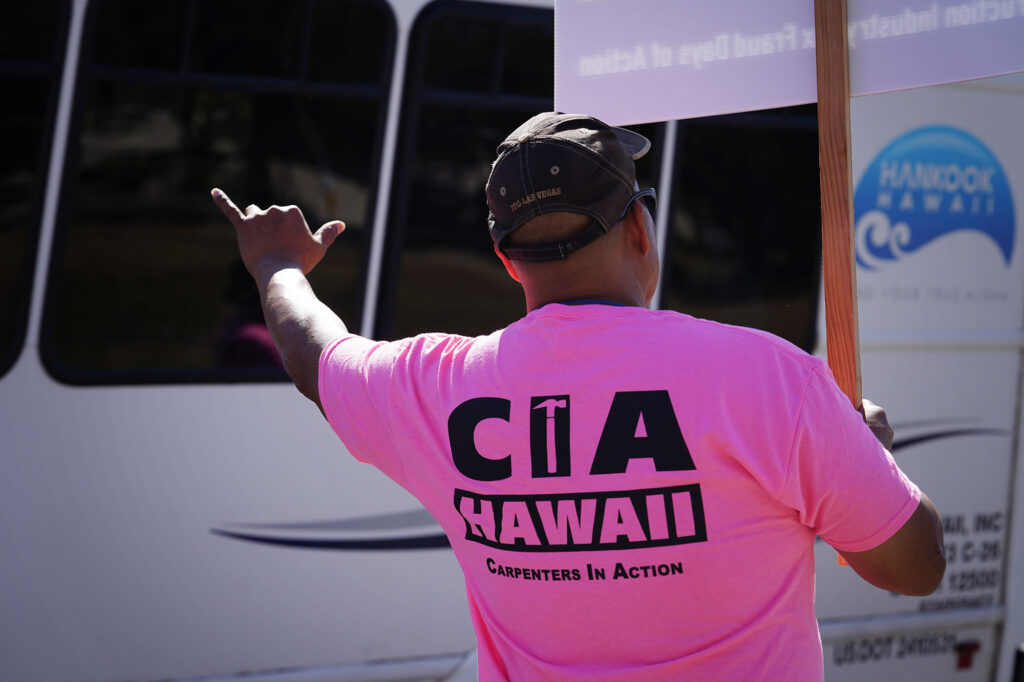
Surely The Sunshine Blog can’t be the only one wondering if legislators really just bit the hand that feeds them. For 15 years, PRP, which we all know by now is a creation of the Hawaiʻi Carpenters Union, has spent millions of dollars strategically putting in place governors and lieutenant governors, mayors and council members, and more than a few legislators too.
And what about all the other unions, public sector and private, that spend a lot of money on candidates and actively work on political campaigns?
The Blog scrolled through 290 pages of testimony submitted at the final hearing on the bill before the House Judiciary and Hawaiian Affairs Committee last month and found Hawaiʻi’s Building and Trades Council unions (Plumbers, Teamsters, IBEW, Ironworkers, Laborers, Operating Engineers and more) sounding the alarm, uncertain how it would affect them, but nary a peep from PRP or the carpenters.

As the floor votes on SB 2471 loomed this week, The Blog asked lawmakers and lobbyists whether the bill, which would prohibit “artificial persons” including corporations, nonprofits, associations and other business entities from spending money or contributing anything of value to influence elections or ballot measures, would apply to unions and in particular to PRP. Could they no longer contribute to candidates or run endless attack ads or flood the airwaves to promote their choice for, say, lieutenant governor?
It’s complicated, they all said.
Finally, on Friday during the House floor debate, Rep. Scot Matayoshi who led the House negotiations on the bill acknowledged that the bill applied to unions too.
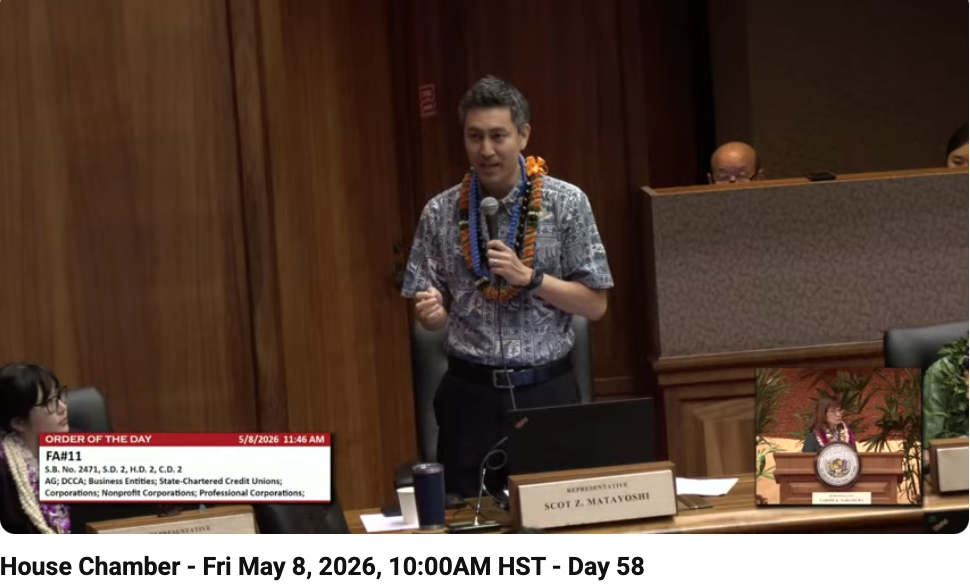
Rep. Della Au Belatti, who also worked on it, noted that lawmakers had early on decided against a special carve out for unions.
But does it really mean that it also restricts union political spending and other activity?
Later, at a press conference, Matayoshi downplayed any impact. “Unions generally shouldn’t really be affected,” he said, adding that the bill doesn’t go into effect until 2027 giving lawmakers one more legislative session to refine it if needed, “to make sure that they’re not impacted too much.” (Right. No one wants an unhappy union especially this election season.)
And here’s the key in his mind: PRP is not a union, it’s a stabilization fund, and because its incorporated on the mainland (Matayoshi says) it wouldn’t be allowed to funnel money to a super PAC trying to influence Hawaiʻi elections.
“PRP is a different beast and a different matter,” Matayoshi said. “If the bill holds, then organizations like PRP and other organizations on the mainland, NRA, you name it, will not be able to come here to engage in election activity.”
Sen. Jarrett Keohokalole, the Senate lead negotiator on SB 2471, artfully dodged the PRP question. He said the bill is aimed at not allowing corporations to form PACs that shield the identities of contributors, so-called dark money operations.
“So you know PRP — everybody knows who’s behind PRP,” he said. “This is about the dark money that can be shielded from view by the creation of shell corporations. Individuals still maintain their individual right to spend on elections, to form super PACs, but you cannot hide behind a corporate form in Hawaiʻi and influence elections anymore.”
He suggested asking PRP if the bill would hinder its political operation.
PRP professed not to know much about the bill at all. Right.
“We haven’t submitted any testimony on that, and I really haven’t been briefed on that, as far as what the union feels about that,” Andrew Pereira, director of public affairs for PRP, told The Blog on Friday. “So I’d hate to do the pass along, but you’d really have to reach out to the union on that one.”
Uh huh.
Next call: the Carpenters Union political director, Mark Anthony Clemente. The Blog left a voicemail.
Clemente emailed back right away. “I am not authorized to speak on behalf of PRP, and you may want to reach out to them on their thoughts. The Hawaii Regional Council of Carpenters supports transparency, accountability, and public trust in our democratic process. We understand and respect the public concern surrounding the influence of money in politics, and we are continuing to review the legislation.”
Next stop for the bill: the desk of Gov. Josh Green, whose chief of staff, Brooke Wilson spent years with the Carpenters Union and PRP before she went to work for Green. And of course the governor himself has enjoyed millions of dollars in campaign support from PRP and the Carpenters Union and other organized labor groups.
The Blog is pretty sure those two will know whether and how this bill affects PRP and the unions and will act accordingly.
Riotous behavior: Turns out a full presidential pardon wasn’t enough for Nicholas Ochs, the Hawaiʻi Proud Boy who stormed the capitol on Jan. 6, 2021. He also wants a refund.
Ochs was initially sentenced to four years in prison in 2022 for his part in the riot, which included throwing smoke bombs at police officers and posing for pictures inside the U.S. Capitol in front of a door scrawled with the words “Murder the Media.” Part of that sentence included paying a $5,000 fine, $2,000 in restitution to the Architect of the Capitol and a $100 special assessment.
But Ochs never had to serve the full term in part because his initial conviction was overturned and the Justice Department, which had brought new charges, eventually abandoned its case when President Donald Trump pardoned Ochs and more than 1,500 others who had stormed the Capitol to stop the certification of the 2020 election.
After receiving that pardon, Ochs and his public defender filed a motion to recoup the money he had already paid as part of his original sentence, a move that Trump’s DOJ did not oppose.
U.S. District Court Judge Beryl Howell — who’s made no secret of her disdain for Trump’s pardons — wasn’t convinced Ochs had a right to those funds and last week ruled he’d have to eat those costs, which totaled $1,569.93, an amount she described as “relatively small.”
Beryl noted in her order that the estimated property damage to the Capitol building and its grounds was around $2.9 million, and that the total cost, which includes those borne by police and other federal agencies, was estimated by the Government Accountability Office to be closer to $2.7 billion. Those costs, she said, have largely been paid by U.S. taxpayers.
She also pointed out that Ochs had raised nearly $14,000 for his defense through an online fund in which he claimed he was being “selectively prosecuted for being a political dissident.”
(He actually repeated a variation of this line when he spoke with Civil Beat’s Nick Grube last year after getting his pardon.)
Most importantly, Beryl wrote, once the money was deposited in the U.S. treasury she didn’t have the authority to force the release of the funds because Congress controls the purse strings, not the Judiciary. Ochs’ argument that he’s entitled to a refund, she said, “boils down to asking this Court simply to follow the government and turn a blind eye to the legal obstacles posed.”
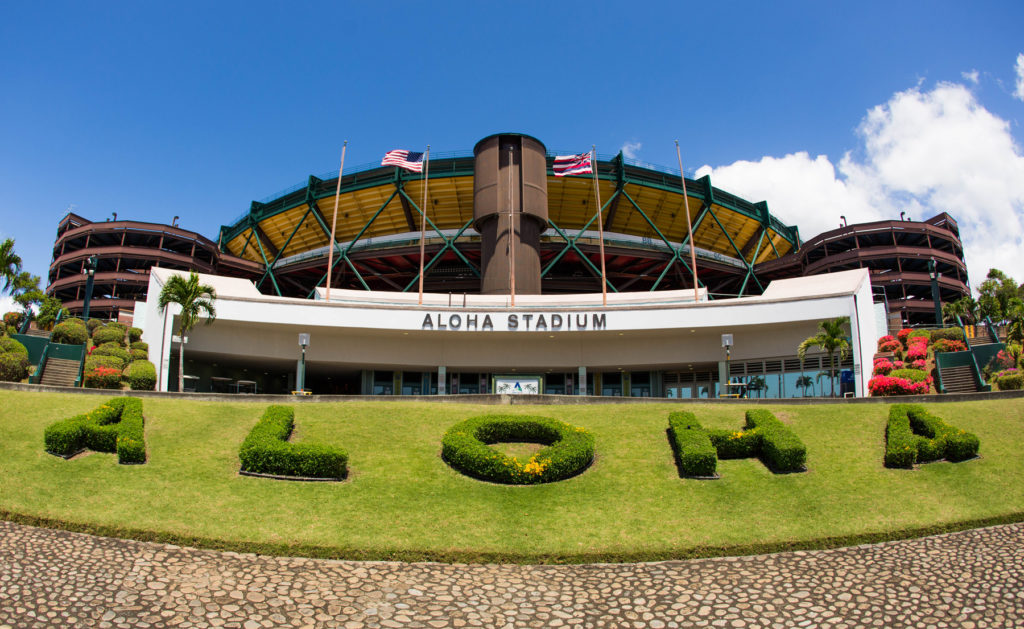
Say aloha to Trump Stadium?: There used to be a Trump International Hotel Waikīkī that’s since been rebranded. But could Donald J. Trump still grace a prominent Honolulu facility? Sen. Kurt Fevella worries about exactly that. And he’s a Republican.
In a floor speech Wednesday opposing a bill allowing the naming rights of the former Aloha Stadium facility to be leased to any public or private entity, Fevella said, “This was said in conversation, whether it was joking or not, but it could be a fact — the highest bidder could be Trump and the stadium could be named Trump Stadium. So those are the things I think we should consider when we’re talking about naming rights, unless we have something within that to have more parameters.”
Fevella and fellow GOP Sens. Brenton Awa and Samantha DeCorte also voted no. The bill passed anyway.
Wash, rinse, repeat: And still nothing of interest from the Hawaiʻi Attorney General’s Office about the state investigation into the potential bribery of a mysterious yet prominent lawmaker. This despite the governor suggesting last month that the AG probe would be wrapping up. Soon.
The AG’s office issued its regular biweekly update on Friday and, if anything, had less to say then usual:
“Since the last update, the department’s Special Investigation and Prosecution Division (SIPD) has engaged in additional interviews, issued more subpoenas and continues to examine documents received in response to the subpoenas.”
“Recent media coverage has contributed to increased public interest and speculation surrounding this investigation.”
And this quote from Attorney General Anne Lopez: “It continues to be my intent to protect the confidentiality of the individual or individuals who may be subject to this investigation along with numerous witnesses. We continue to work as expeditiously as possible while adhering to best practices. I cannot predict when I will have more meaningful updates, but I want to assure residents of Hawaiʻi that this investigation remains one of our highest priorities.”
The Blog also vows to keep you posted.
Sine die bye-bye: The last day of session marked the retirement of several prominent lawmakers. They include Rep. Della Au Belatti, who is stepping down after 20 years in the House to run for Congress, and Sen. Karl Rhoads, who spent 10 years in the House and 10 in the Senate and is retiring from public office.
Belatti championed many causes during her tenure, including marriage equality and good governance. Rhoads led the Senate Judiciary Committee and is credited for a slew of progressive legislation including the anti-Citizens United bill this year.
In his farewell remarks on the Senate floor Friday, President Ron Kouchi joked that Rhoads was “by far the farthest left” in the Democratic caucus.
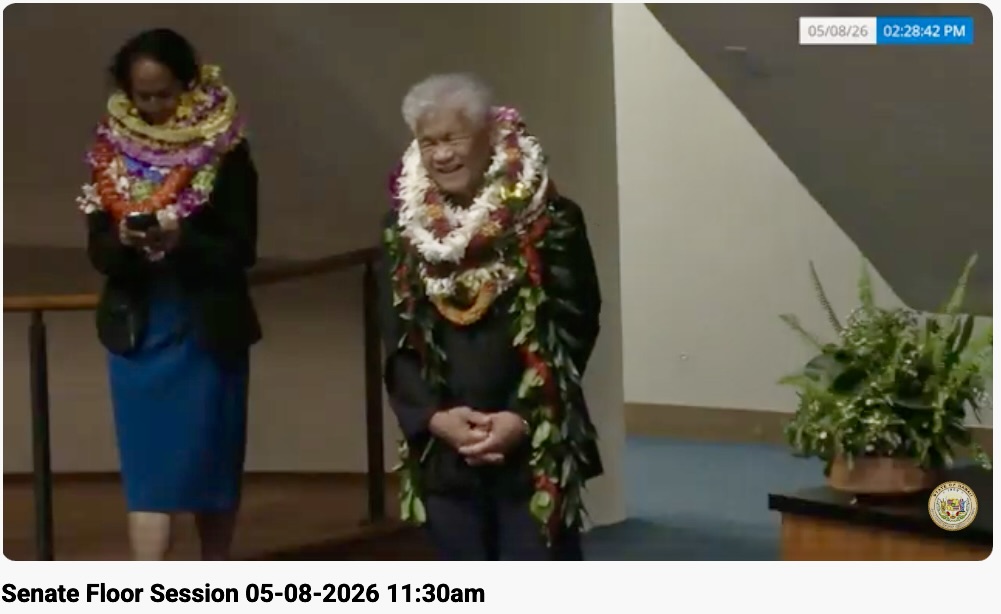
Also leaving the Lege (although they hope not for good) are Reps. Elijah Pierick and Jackson Sayama, both of whom are running for state Senate seats this year. All four departing lawmakers were heavily bedecked with lei, as if they were at a high school graduation. (Commenters: Insert jokes here!)
Special recognition also went to Ben Villaflor, who served for nearly 50 years as the Senate sergeant at arms. Villaflor is a former professional boxer who, his notable pugilistic skills aside, was recognized by senators for a steady yet kind demeanor in a chamber that has itself often resembled a sweaty boxing ring.
 Sign up for our FREE morning newsletter and face each day more informed.

Local reporting when you need it most
Support timely, accurate, independent journalism.
Honolulu Civil Beat is a nonprofit organization, and your donation helps us produce local reporting that serves all of Hawaii.
ContributeAbout the Author